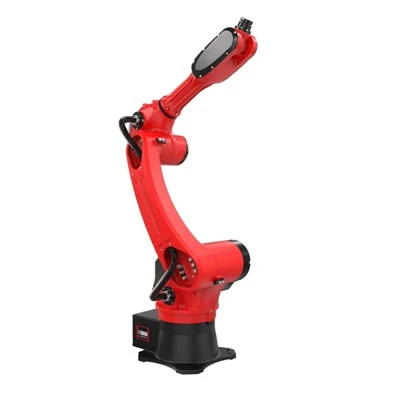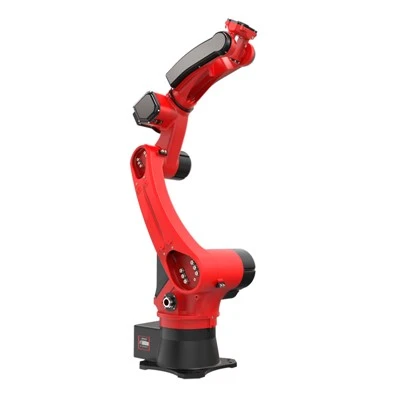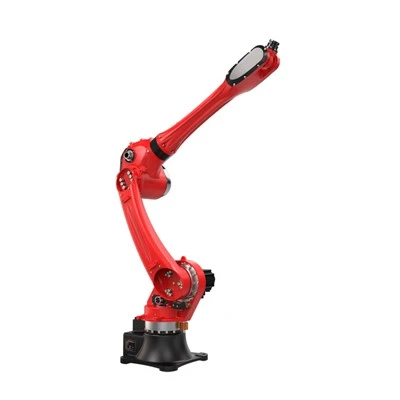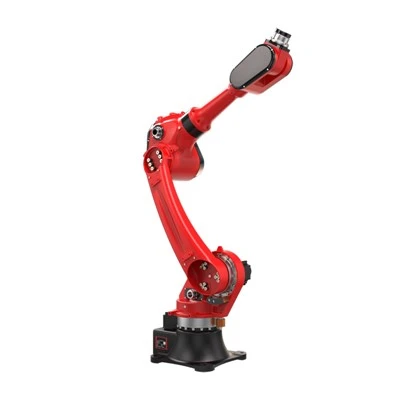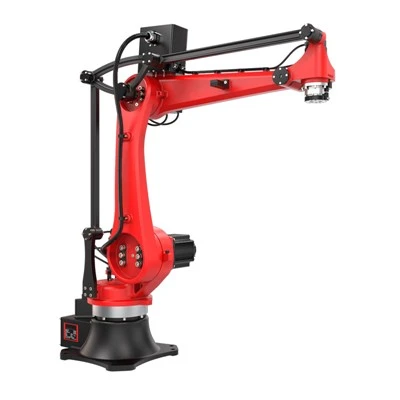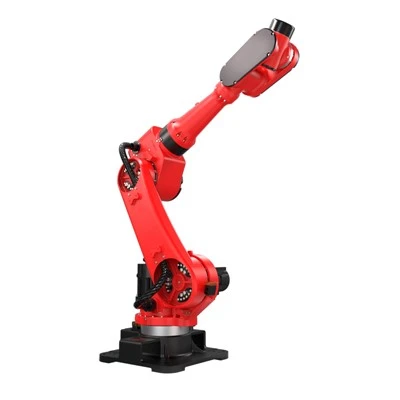

Robot installation takes place on-site, but the actual production environment is affected by factors such as space utilization, which limits many of the robot's postures. This can easily lead to vibrations and displacement of the industrial robot during actual operation, ultimately preventing it from operating at its designed speed. Therefore, on-site debugging and calibration after installation and before putting the industrial robot into actual production is crucial. Specifically, debugging work mainly includes the following two aspects:
Zeroing each axis of the industrial robot: After the robot leaves the factory, its axes may not be zeroed out. If such a robot is put into production directly, the center of gravity of each axis may not be accurately fixed on the support point, potentially causing tilting during production. This not only affects normal industrial production but may also endanger the lives of workers. Therefore, zeroing each axis of the industrial robot is essential. Typically, industrial robots have zero-return markers on each axis. Simply operating each axis back to this position indicates that it has been zeroed. Additionally, the robot's base usually has markers indicating the origin of each axis and the corresponding angles for the six axes; these are important reference points during debugging. However, specific debugging requires analysis based on the site environment and the task at hand. For example, the debugging personnel can plan a reasonable zeroing "route," then use a teach pendant to move the robot to each point sequentially, record the relevant data, and finally, combine their calibration experience with repeated experiments to zero-return each axis of the industrial robot according to the actual production requirements.
Signal Processing Debugging of Industrial Robots Modern, improved industrial robots can operate automatically according to specified principles and guidelines using artificial intelligence. For instance, they can complete the trajectory specified by the signal commands based on received signals, thus quickly adapting to new environments. Industrial robot systems are not used in isolation; during production, they must be connected to other peripheral devices. The signals from these peripheral devices must be linked to the industrial robot system's signals via CC-link. Therefore, signal processing and debugging of industrial robots is a crucial step after installation and before they are put into actual production. Specifically, during debugging, CC-link settings need to be configured. However, it is important to note that the CC-link signals set by the debugging personnel must be consistent with the PCC model, master station, slave station, and station information. After the signal settings are completed, all signals need to be listed and commented out during PLC programming. Only after such signal debugging can the industrial robot be officially put into production.