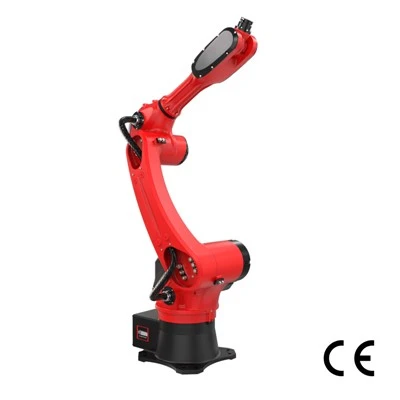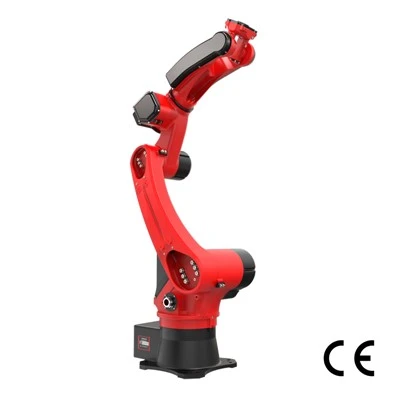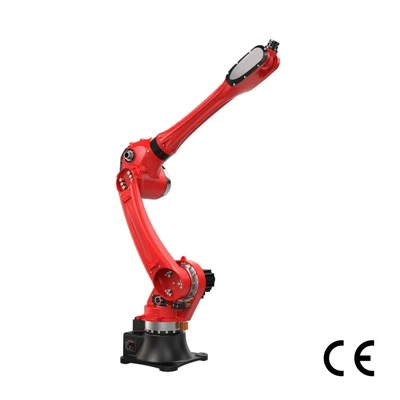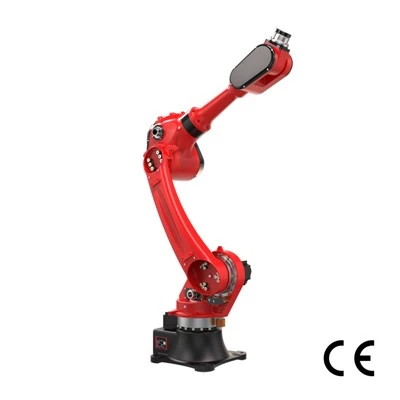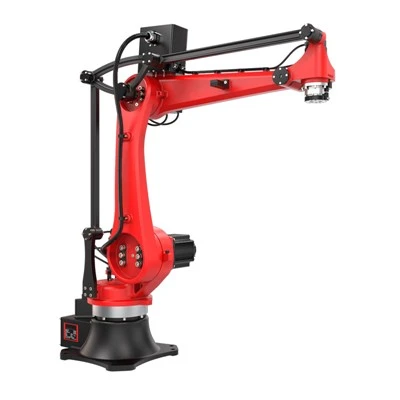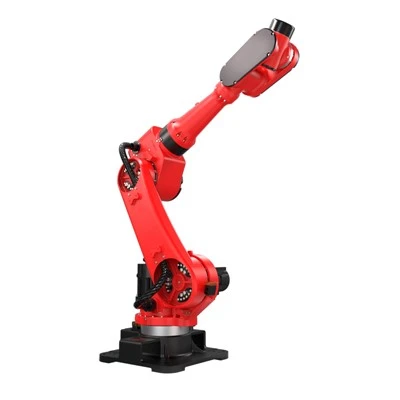

Based on their mechanical structure and motion characteristics, industrial robots can be broadly classified into three categories: serial, parallel, and hybrid serial-parallel robots. Different types of industrial robots have distinct characteristics in terms of workspace, motion methods, and applicable scenarios.
A serial mechanism is an open-chain mechanism consisting of links and joints connected sequentially from the base. Typical serial robots include coordinate robots and articulated robots. Coordinate robots define their workspace through a combination of linear and rotary axes, suitable for precise operations along fixed paths; while articulated robots achieve large-range and complex trajectory operations through the flexible movement of multiple joints, making them more suitable for tasks requiring high flexibility and multiple degrees of freedom.
A parallel mechanism is a closed-chain mechanism where a moving platform and a stationary platform are connected by at least two independent kinematic chains, driving each other in parallel. Typical parallel robots include Delta robots, Stewart robots, and five-bar robots. Parallel robots have a more complex overall structure than serial robots, with Delta robots being the most common in industrial applications. In addition, Stewart robots and five-bar robots are also well-known. These parallel robots, due to their unique structure, demonstrate unique advantages in tasks requiring high precision and high speed, such as precision assembly, rapid sorting, and heavy-duty environment simulation.
Serial-Parallel Hybrid Robots are robots that combine the advantages of serial and parallel robots. They organically combine the wide range of motion of serial mechanisms with the high precision and rigidity of parallel mechanisms, achieving high flexibility, high precision, and high load capacity in three-dimensional space. These robots do not have a specific structural form; existing serial-parallel hybrid robots typically use a parallel mechanism as a base to provide stable and accurate positioning capabilities, while the serial mechanism acts as an extension to improve the accessibility and obstacle avoidance capabilities of the auxiliary end effector. They exhibit excellent performance in various fields such as precision assembly, parts machining, medical surgery assistance, and material handling, and are suitable for complex motion tasks.
In general, industrial robots of different structural types have different focuses in industrial production. In practical applications, they are usually selected reasonably according to the characteristics of the task, spatial layout and process requirements in order to give full play to the efficiency and stability advantages of industrial robots in automated production.