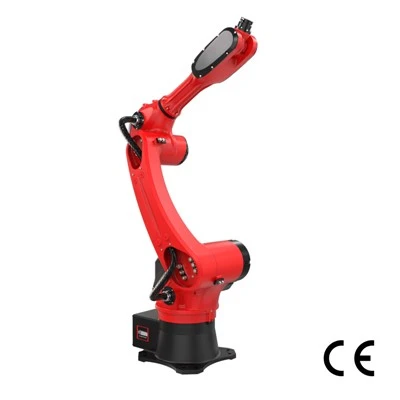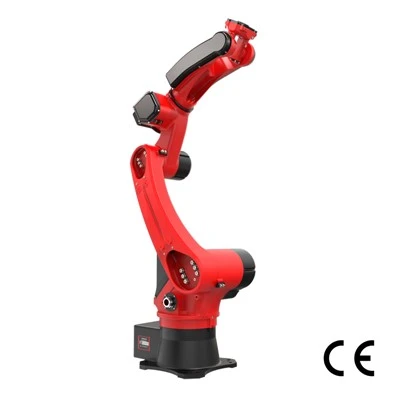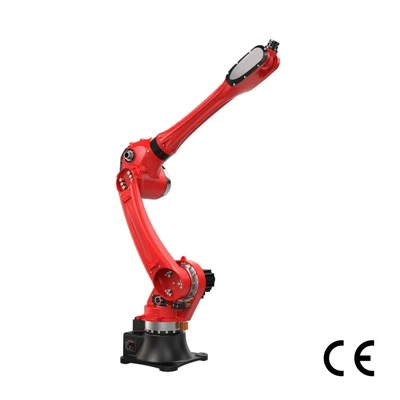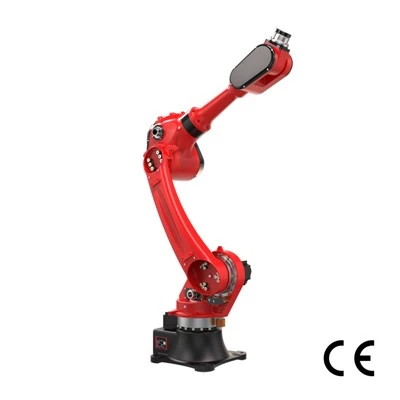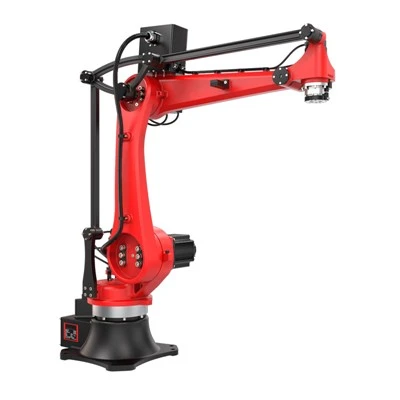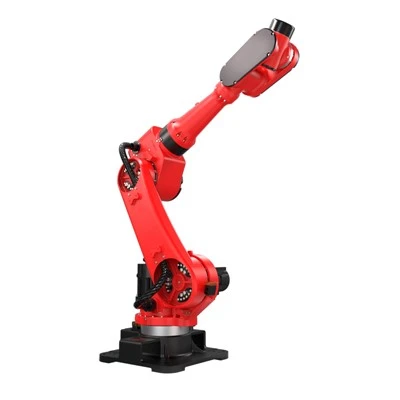

Compared to traditional industrial equipment, industrial robots offer numerous advantages. These include ease of use, high levels of intelligence, high production efficiency and safety, ease of management, and significant economic benefits, enabling them to operate in high-risk environments.
1. Ease of Use of Robots
In my country, industrial robots are widely used in manufacturing, not only in the automotive industry, but also in everything from spacecraft production, military equipment, and high-speed rail development to the production of ballpoint pens. Their applications have expanded from relatively mature industries to fields such as food and medicine. Due to the rapid development of robot technology, the price difference between industrial robots and traditional industrial equipment is narrowing, and products offer greater customization. Therefore, in complex manufacturing processes, industrial robots can replace traditional equipment, significantly improving economic efficiency. Statistics show that from 2016 to 2017, global sales of industrial robots increased from 294,000 units to over 346,000 units, demonstrating the wide range of applications for industrial robots.
2. High Level of Intelligence
With the continuous advancement of computer control technology, industrial robots will gradually be able to understand human language and assemble product components, freeing workers from complex operations. In industrial production, welding robot systems can not only achieve automatic real-time tracking of weld seams but also realize online adjustment of welding parameters and real-time control of weld quality, meeting the urgent requirements of complex welding processes and welding quality and efficiency for technical products. Furthermore, with the expansion of human space exploration, industrial robots can also successfully complete tasks in extreme environments such as space, deep water, and nuclear environments using their intelligence.
3. High Production Efficiency and Safety
A robotic arm, as the name suggests, is a mechanical arm produced by mimicking the shape of a human hand. The time it takes to produce one product is fixed. Within the same life cycle, the output using a robotic arm is also fixed, without fluctuations. Moreover, the production time for each batch of products is fixed, and the product yield is high, making robotic production more in line with the interests of the management.
Factory adoption of industrial robots can solve many safety production problems. Safety hazards caused by personal reasons, such as unfamiliarity with work processes, negligence, or fatigue, can all be avoided.
4. Easy to manage and significant economic benefits
Enterprises can clearly understand their daily production volume and accept orders and produce goods based on their achievable capacity. This avoids blindly predicting output or producing too much and resulting in waste. Managing industrial robots is also much simpler than managing employees.
Industrial robots can work 24/7, maximizing production line output without requiring overtime pay. For enterprises, this also avoids employee fatigue and illness leading to missed work hours. After switching to industrial robots, enterprises only need a small number of employees skilled in operating and maintaining the robots. The economic benefits are substantial.