

Quick Answer: A CNC robot automatically loads raw workpieces into a CNC machine, removes finished parts after machining, and transfers them to trays, conveyors, inspection stations, or the next production process. By taking over repetitive loading and unloading operations, robotic machine tending can reduce machine idle time, improve production consistency, and allow operators to focus on higher-value tasks.
What Is a CNC Robot?
A CNC robot is an industrial robotic system used alongside computer numerical control machines to automate manufacturing or material-handling tasks. Depending on the application, a robot can interact with CNC lathes, milling machines, machining centers, grinders, drilling machines, and other automated machine tools. Unlike a CNC machine, which performs the actual machining process, a CNC robot is generally responsible for handling workpieces, tools, or auxiliary manufacturing operations. In machine tending applications, the robot functions almost like an automated operator. It can pick up a raw component, position it accurately inside the machine, wait for the machining cycle to finish, remove the completed part, and load the next workpiece.
If you are planning CNC machine tending automation, explore RBTIC CNC robot series to review configurations and specifications.
What Can a CNC Robot Do?
Industrial robots can support a wide range of CNC manufacturing processes, including CNC milling, drilling, turning, cutting, grinding, deburring, polishing, loading and unloading, part transfer, workpiece positioning, inspection and sorting, and palletizing finished components. The exact task depends on the robot configuration, end-of-arm tooling, machine interface, workpiece characteristics, and production requirements.
For example, in a CNC turning application, a six-axis robot may pick a shaft from a tray, insert it into a lathe chuck, communicate with the CNC machine to start the cycle, retrieve the finished shaft, and place it into an output tray.
How Does a CNC Robot Work in an Automated Production Cell?
A CNC robotic system usually operates as one component of a larger automated production cell. A typical workflow may look like this:
Raw material supply → Robot picking → CNC loading → Machining → CNC unloading → Inspection or secondary processing → Finished-part storage
Communication between the robot and CNC machine is especially important, and through I/O signals or other industrial communication methods, the system can coordinate actions such as machine ready, door open or closed, chuck open or closed, part loaded, machining cycle start, machining completed, and finished part removed. When these steps are properly synchronized, the robot and machine can operate as one automated production unit rather than as separate pieces of equipment.
What Is CNC Machine Tending?
CNC Machine tending is the process of loading materials or workpieces into a machine, allowing the machine to complete its operation, and then unloading the finished or partially finished part. Traditionally, machine tending has been performed manually. An operator may spend an entire shift opening a CNC machine door, removing a finished component, cleaning or checking the fixture, inserting another blank, closing the door, and restarting the machining cycle. A machine tending robot automates these repetitive actions.
Machine tending automation is commonly used with CNC lathes, CNC milling machines, machining centers, grinding machines, presses, injection molding machines, die-casting equipment, laser cutting systems and other automated production equipment.
How Does CNC Robotic Machine Tending Work?
Although every installation is different, CNC machine tending normally follows several basic steps.
|
Step |
Process Description |
|
1 |
First, raw workpieces are presented to the robot through a tray, conveyor, feeder, drawer system, or other positioning device. |
|
2 |
The robot then uses a gripper or another end-of-arm tool to pick up a workpiece. |
|
3 |
Next, the robot moves to the CNC machine. Depending on the machine configuration, an automatic door may open before the robot enters the loading area. |
|
4 |
The robot places the workpiece into a chuck, fixture, vise, or other workholding device. Once correct positioning is confirmed, the robot moves away and signals the CNC machine to begin machining. |
|
5 |
After the machining cycle is completed, the robot returns, removes the finished component, and transfers it to the required location. |
|
6 |
The cycle then repeats automatically. |
Some systems use dual grippers, allowing the robot to remove a finished workpiece and load a new blank during the same machine visit. This can reduce non-machining time and improve cycle efficiency.
Main Components of a CNC Robot Machine Tending System

A complete machine tending cell typically includes several components rather than just the robotic arm.
|
Component |
Description |
|
CNC machine |
The machine tool performs turning, milling, drilling, grinding, or another manufacturing process. |
|
Industrial robot |
The robot handles workpieces and moves them between material storage, the CNC machine, and downstream stations. |
|
Robot gripper |
The end-of-arm tooling holds and manipulates components. Pneumatic, hydraulic, electric, magnetic, or vacuum grippers can be selected depending on the workpiece. |
|
Robot controller |
The controller executes robot programs and manages motion, I/O signals, and communication with peripheral equipment. |
|
Teach pendant |
The teach pendant allows technicians or operators to configure robot positions, movements, speeds, and process sequences. |
|
Safety system |
Industrial robotic cells may incorporate safety fencing, interlocked doors, light curtains, scanners, emergency stops, and other protective devices depending on the application and risk assessment. |
Additional equipment may include trays, conveyors, vision systems, part-flipping stations, automatic doors, cleaning equipment, measurement stations, and inspection systems.
CNC Robot vs. CNC Machine: What Is the Difference?
Although the terms are sometimes confused, a CNC robot and a CNC machine serve very different purposes.
A CNC machine is primarily designed to manufacture or modify a workpiece. It follows programmed toolpaths to cut, drill, mill, turn, grind, or otherwise process material.
A CNC robot is a programmable mechanical manipulator that moves components or tools through three-dimensional space.
The main differences can be summarized as follows:
|
Feature |
CNC Machine |
CNC Robot |
|
Primary purpose |
Machining materials |
Handling or manipulating parts/tools |
|
Typical operations |
Milling, turning, drilling, grinding |
Loading, unloading, transfer, tending |
|
Motion system |
Machine axes and spindle |
Multi-joint robotic arm |
|
Flexibility |
Optimized for machining |
Can perform multiple handling tasks |
|
Work area |
Defined machining envelope |
Robot working envelope |
|
Typical role |
Performs the manufacturing process |
Supports and automates the process |
The two technologies therefore complement rather than replace each other.
A CNC machine performs the machining. The robot keeps that machine supplied with parts.
Together, they can create an automated production cell capable of operating with much less manual intervention.
Benefits of Using a CNC Robot for Machine Tending
Introducing robotic machine tending can affect much more than loading and unloading. When properly designed, an automated tending system can improve the utilization of the entire machining process.
|
Benefit |
Description |
|
Higher Production Efficiency |
Manual machine loading inevitably involves small delays. An operator may be tending several machines, preparing another job, inspecting components, or simply walking between workstations. A robot follows a repeatable sequence and can begin the next loading cycle immediately after machining is completed. Reducing these intervals can increase the productive time of CNC equipment. |
|
Lower Labor Requirements |
CNC machine tending is repetitive and generally adds little value to the component itself. Automating the process allows skilled employees to focus on tasks such as CNC programming, quality control, production planning, tool management, maintenance, and process optimization. This can be particularly valuable for manufacturers experiencing difficulty recruiting operators for repetitive production roles. |
|
Longer Continuous Production |
Robots do not require conventional shift breaks and can support extended production periods when the rest of the system is designed for unattended operation. With sufficient raw-material capacity, tool life, chip management, and process monitoring, automated CNC cells can continue producing parts for long periods with limited operator intervention. This creates opportunities for evening, overnight, or weekend production. |
|
Better Process Consistency |
A robot can load every part using the same programmed motion and positioning sequence. Consistent loading reduces variation caused by fatigue, differences between operators, or inconsistent manual placement. Repeatable workpiece positioning is particularly useful in high-volume machining where small variations can affect downstream quality or process stability. |
|
Greater Manufacturing Flexibility |
Industrial robots can often be reprogrammed for different components or handling sequences. Changing production may involve adjusting:Robot positions,Gripper fingers,Workholding fixtures,Part trays,CNC programs,Robot programs. This flexibility makes robotic tending useful not only for extremely high-volume manufacturing but also for manufacturers producing multiple part families. |
|
Improved Workplace Safety |
Machine tending can expose operators to sharp chips, cutting fluid, moving machine components, heavy parts, and hot workpieces, and repetitive handling. Moving operators away from these repetitive machine interactions can reduce direct exposure to such hazards. RBTIC, for example, positions its CNC tending system specifically for automated loading and unloading in metal cutting and machining environments, where separating operators from metal chips and cutting fluids can improve workplace safety. |
How to Choose the Right CNC Robot for Machine Tending
Selecting a CNC tending robot based only on price is an impressively efficient way to create an expensive engineering problem. The correct robot should be selected according to the complete application, including the workpiece, machine layout, required cycle time, working environment, and future production plans.
Here are eight factors to evaluate.
|
Factor |
What to Evaluate |
Why It Matters |
|
Payload Capacity |
Workpiece weight, gripper weight, additional tooling, dual-gripper load, and a suitable safety margin |
Ensures the robot can handle the total load without sacrificing acceleration, stability, or future tooling flexibility |
|
Reach and Working Envelope |
Distance to raw-material trays, CNC chuck or fixture, finished-part trays, conveyors, inspection stations, cleaning stations, and part-flipping fixtures |
Confirms that the robot can access every required position within the automation cell without unnecessary oversizing |
|
Speed and Cycle Time |
Robot travel distance, acceleration and deceleration, CNC door opening time, chuck operation, gripper operation, part positioning, safety logic, and machining time |
Helps determine the true part-to-part cycle time, which is more important than maximum robot speed alone |
|
Ease of Programming |
Teaching positions, adjusting paths, changing speeds, configuring I/O, diagnosing errors, and switching programs for different parts |
Reduces setup time and makes the system easier to manage, especially for manufacturers without dedicated robot engineers |
|
CNC Machine Compatibility |
Machine-ready signals, door status, chuck status, cycle start, cycle complete, alarm signals, and physical access to the workholding area |
Ensures reliable communication between the CNC machine and robot while avoiding interference with doors, tooling, fixtures, or guarding |
|
Adaptability to Different Parts |
Replaceable gripper fingers, adjustable fixtures, recipe-based programs, multiple tray layouts, automatic tool changes, and vision guidance |
Makes the system easier to reconfigure when product types, part dimensions, or production requirements change |
|
Durability and Working Environment |
Protection rating, operating temperature, controller placement, cable protection, gripper materials, coolant resistance, contamination protection, and maintenance access |
Helps ensure reliable operation in environments with cutting fluid, oil mist, metal chips, dust, vibration, and temperature variation |
|
Total Cost of Ownership |
Robot, controller, gripper, fixtures, feeding system, safety equipment, CNC interface, integration, installation, programming, training, maintenance, and spare parts |
Provides a more accurate view of ROI than robot purchase price alone and helps evaluate the productive capacity created by the complete system |
RBTIC CNC Tending Robot for Automated CNC Loading and Unloading
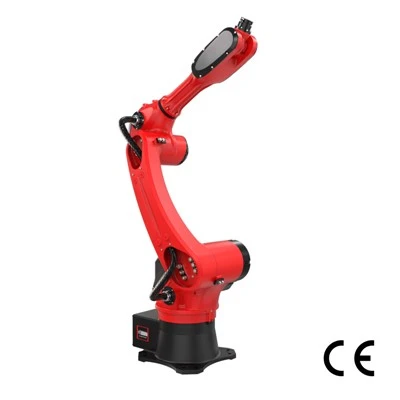
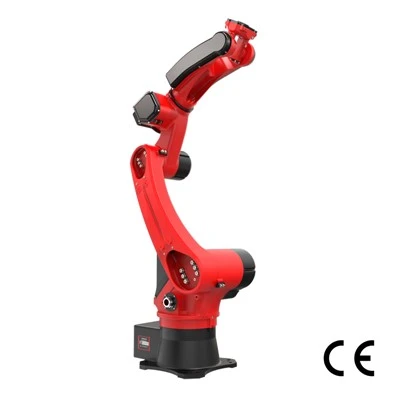
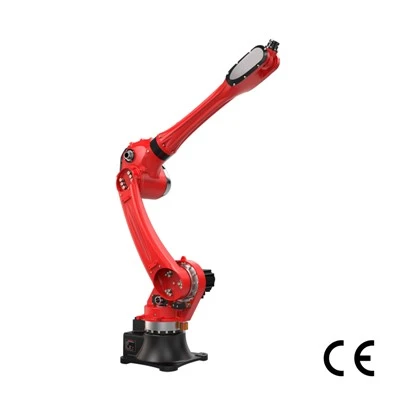
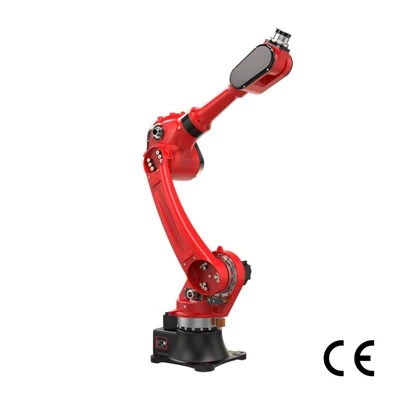
For manufacturers looking to automate repetitive CNC machine loading and unloading, RBTIC provides industrial robotic solutions designed for machining applications. The RBTIC BRTIRUS0805A CNC Tending Robot is a six-axis industrial robot developed for automatic workpiece handling around CNC equipment.
|
Specification |
Details |
|
Loading Capacity |
5 kg |
|
Arm Length |
990 mm |
|
Repeatability |
±0.05 mm |
|
Number of Axes |
6-axis articulated robot |
|
Control System |
HC control system |
|
Power Supply |
220V |
|
Robot Weight |
Approx. 53 kg |
|
Protection Grade |
IP40 |
Its individual axes provide wide ranges of motion, supporting flexible workpiece positioning within compact CNC automation cells.

Designed for CNC Loading and Unloading
The robot is intended to automate repetitive workpiece handling in metal cutting and machining applications.
A typical installation can be configured to: Pick raw workpieces from a tray or feeding station → Move to the CNC machine → Load the blank into the chuck or fixture → Coordinate with the CNC machining cycle → Remove the finished component → Place the finished part onto a tray or conveyor → Repeat the cycle
This type of automation can be used for components such as shafts, gears, precision hardware, and other machined metal parts. RBTIC's published applications include automated bearing-shaft turning and aluminum-alloy gear machining. Its product examples demonstrate robot-based loading and unloading as well as coordinated production with CNC equipment.
Compact Payload and Reach for CNC Applications
With a 5 kg payload and 990 mm arm length, the BRTIRUS0805A is particularly suited to relatively lightweight components and compact machine tending layouts where a larger industrial robot may not be necessary.
The robot's ±0.05 mm specified repeatability supports consistent workpiece handling and positioning during repetitive production. However, robot selection should always be based on the combined weight of the component and end-of-arm tooling, as well as the actual distance between the robot, CNC machine, and material stations.
Flexible System Deployment

A CNC tending solution can be customized around the production process rather than treating the robot as a standalone device. Depending on project requirements, the automation cell may incorporate custom grippers, raw-material trays, finished-part conveyors, CNC communication interfaces, automatic machine doors, safety fencing, part-positioning devices, dual-station tooling, and inspection equipment. RBTIC also provides industrial robots, turnkey automation systems, and engineering support for manufacturing applications.
For manufacturers evaluating CNC automation, reviewing workpiece dimensions, weight, machine model, production cycle, shop-floor layout, gripping requirements, and communication requirements before system design can help determine the appropriate robot and cell configuration. View the RBTIC CNC Tending Robot or submit an inquiry with your workpiece specifications and CNC machine details to discuss a suitable machine tending solution.
Conclusion
CNC machine tending automation offers manufacturers a practical path toward higher productivity, more consistent production, lower dependence on repetitive manual labor, and better utilization of existing CNC equipment. A CNC tending robot can automatically load blanks, remove finished parts, transfer components, serve multiple processes, and support longer periods of continuous production. Instead of replacing the CNC machine, the robot works alongside it, keeping the machining process supplied with parts while reducing routine operator intervention.
Successful automation, however, depends on selecting the right system. Payload, reach, cycle time, CNC compatibility, programming, environmental protection, flexibility, and total project cost should all be evaluated before choosing a robot.
For lightweight CNC machine tending applications, the RBTIC BRTIRUS0805A CNC Tending Robot, with a 5 kg payload, 990 mm arm length, and ±0.05 mm specified repeatability, provides a compact six-axis option for automated loading and unloading applications.
Ready to Plan a CNC Robot Project?
Whether you are upgrading your end‑of‑line automation or searching for a reliable CNC robot supplier, contact RBTIC for free custom CNC machine tending solutions and layout designs, or to book a factory tour.