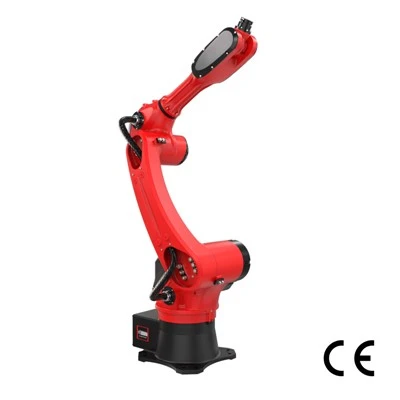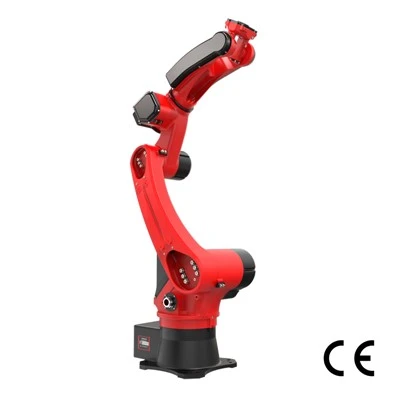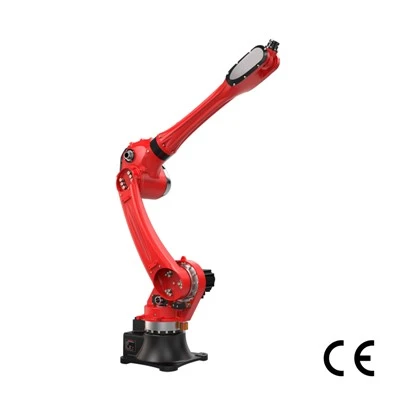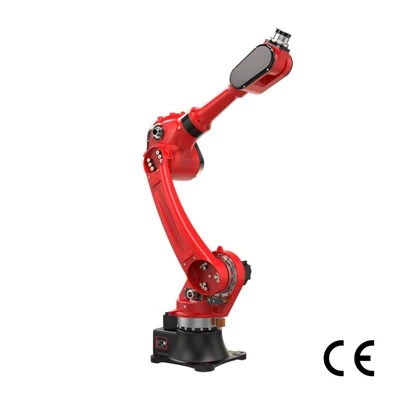


To choose a pick and place robot, define the product, required output, gripping method, motion path, and placement tolerance first. Use those requirements to shortlist robot types, then verify that the complete system can achieve the required performance with the actual tooling and products. The detail that changes the shortlist is often easy to miss: a carton's center of gravity, a bag that will not release cleanly, a fixture requiring a tilted approach, or a conveyor delivering products in bursts.
This guide explains how to turn those application requirements into a practical selection process-from comparing robot architectures to preparing a supplier assessment.
If you are planning pick-and-place automation, explore RBTIC pick-and-place robot series to review configurations and specifications.

Define the Pick and Place Application Before Comparing Robots
Start with a written description of the operation. "Move products from a conveyor into a tray" leaves too many questions unanswered for meaningful selection.
|
Requirement |
Information to collect |
|
Product range |
Minimum and maximum weight, dimensions, material, surface condition, and product variants |
|
Product presentation |
Fixed positions, organized lanes, random conveyor flow, or parts in a bin |
|
Required output |
Good products per minute or hour, peak arrival rate, and available production time |
|
Pick-and-place motion |
Pick locations, destination locations, transfer distance, height changes, and required orientation |
|
Placement quality |
Position and angular tolerances, damage limits, and confirmation requirements |
|
Workstation constraints |
Available space, mounting options, obstacles, maintenance access, and surrounding equipment |
|
Production changes |
Changeover frequency, expected new products, and credible increases in demand |
Check the full product range. The heaviest item may determine the load requirement, while the largest item determines clearance and the most fragile item limits gripping force or acceleration. Also identify whether product presentation can be improved. A guide rail, locating fixture, or upstream separation step may simplify the application enough to change which robot, gripper, or vision system is needed.
At this stage, the goal is a clear application brief that every supplier can evaluate against the same requirements.
Compare Robot Types Against the Required Motion
Robot architecture helps narrow the search, but it does not establish application feasibility. Payload, work envelope, motion axes, and cycle performance still need to be checked for each candidate model.
|
Robot architecture |
Applications worth evaluating |
Main selection checks |
|
Delta |
Rapid picking and packaging, particularly for relatively lightweight products |
Tooling mass, available orientation axes, vertical stroke, overhead mounting, and usable picking area |
|
SCARA |
Fast transfers and assembly tasks involving horizontal movement, vertical insertion, and rotation about a vertical axis |
Required tool tilt, vertical travel, reach, load inertia, and access to fixtures |
|
Six-axis articulated |
Transfers requiring multiple approach angles, product reorientation, or motion around equipment |
Joint configuration, clearance, cycle time, and payload throughout the planned motion |
|
Cartesian or gantry |
Transfers suited to linear axes or a rectangular working area |
Supporting structure, axis travel, moving mass, required rotational axes, and access for maintenance |

Select the Gripper and Check the Complete Payload
The robot and gripper should be selected together. A pick and place robot may comfortably lift the product yet become unsuitable once the tool's weight, offset, and gripping requirements are included. For an initial payload calculation, include: Total carried mass = products held simultaneously + gripper + attached adapters, sensors, and other tooling
Then check the manufacturer's applicable load diagrams and limits for center of gravity, moments, and inertia. Mass alone is insufficient: a long tool holding a product away from the flange creates a different loading condition from a compact tool carrying the same weight. Avoid applying an arbitrary payload margin as a substitute for this check. Allowance for future tooling should follow a realistic tooling scenario.
Match the gripping method to the product

|
Gripping approach |
Potential fit |
What to verify |
|
Vacuum |
Products with surfaces that can support a workable seal |
Leakage, porosity, surface contamination, deformation, holding force, and release time |
|
Mechanical fingers |
Parts with accessible, consistent gripping features |
Finger access, tolerances, gripping force, surface marking, and collision clearance |
|
Magnetic |
Suitable ferromagnetic workpieces |
Material compatibility, holding force, unintended multiple pickup, and reliable release |
|
Soft or custom tooling |
Delicate, irregular, or variable products |
Stability, product damage, cleanability, wear, and repeatability |
Test difficult products early. A flexible bag may lift successfully while stationary but swing during transfer or cling to the tool during release. A useful gripping trial covers pickup, acceleration, reorientation, placement, and release using representative product variation. It should also show how the pick and place system detects and handles a failed grip.
Calculate the Required Pick and Place Cycle Time
Define throughput in successfully placed products, not just pick and place robot movements. A multi-product tool may move several products in one cycle, while retries and rejected placements reduce usable output. For a simple preliminary estimate: Maximum cycle time in seconds = 60 × products per cycle ÷ required products per minute
Validate the actual production sequence
The cycle review should include detection, approach, grip establishment, transfer, reorientation, placement, release, confirmation, and return motion. Identify which actions happen sequentially and which can overlap. Vision processing for the next product, for example, may run while the robot transfers the current product.
Verify Reach, Orientation, and Placement Tolerance
A reach specification does not prove that the robot can complete the required motion. Check access to every pick and place location, including approach and withdrawal paths. Review the largest product and full tooling geometry for interference with fixtures, conveyors, guarding, and adjacent machines. Include locations needed for rejected products, tool changes, and recovery where applicable.
Separate repeatability from application accuracy
Repeatability describes how consistently a robot returns to a position. Application accuracy also depends on how correctly the system identifies and reaches the required placement location.
Evaluate the complete tolerance chain:
Product location and dimensional variation.
Fixture location and manufacturing tolerances.
Robot and tool calibration.
Vision measurement performance, if used.
Gripper deflection or product movement within the grip.
Required final position and orientation.
For an insertion task, the approach direction and part fit may matter as much as positional repeatability. Specify the acceptable placement result, then ask the supplier to demonstrate it under representative conditions.
Decide Whether Vision and Conveyor Tracking Are Needed

Vision requirements follow product presentation. Products held in repeatable fixtures may be picked using taught positions. Random positions or orientations can justify vision, while overlapping parts or variable picking heights may require additional depth information and more complex handling. Before choosing a camera system, identify what it must determine: location, orientation, identity, a usable gripping surface, or a quality condition.
Conveyor tracking does not automatically require vision
Product location and conveyor movement are related but separate inputs. An encoder can provide conveyor movement information; a sensor or camera may establish when and where a product enters the tracking process. Universal Robots documents conveyor tracking configurations using incremental or absolute encoders. For moving products, verify the usable picking window, position uncertainty, communication timing, and behavior when a product cannot be picked before leaving reach.
For vision-guided applications, test difficult conditions as well as clean samples: reflections, shadows, closely spaced products, packaging changes, and partially obscured features.
Check Pick and Place Robot Integration, Environment, and Daily Operation
A feasible pick and place robot motion is only one part of a functioning production cell.
Controls and exception handling
Confirm who controls the sequence-the robot controller, line controller, or another system-and define the required signals. The integration review should address product-ready signals, machine permissions, grip confirmation, blocked destinations, rejected products, and restart behavior.
Such as: What happens when a product is detected, picked successfully, and then the destination machine stops?
The answer exposes requirements for holding time, buffering, recovery, and coordination that a normal-cycle demonstration may miss.
Operating environment
Identify exposure to water, cleaning chemicals, dust, temperature extremes, or other application-specific conditions. Confirm suitability for the pick and place robot, gripper, sensors, connectors, and cabling. For food handling, clarify whether equipment contacts exposed food and how it will be cleaned. A protection rating alone does not answer every hygiene or material-compatibility question.
Operator and maintenance requirements
Have the intended users evaluate a product changeover and a representative fault recovery. Check recipe selection, access permissions, alarm clarity, backup procedures, preventive maintenance, spare parts, and local technical support. Record what requires a programmer and what a trained operator can complete independently.
Compare Total Installed and Operating Cost
Compare supplier proposals against an equivalent scope. An inexpensive pick and place robot arm can be part of a costly system if it requires extensive feeding equipment, custom tooling, or difficult integration.
|
Cost category |
Items to include |
|
Robot package |
Robot, controller, software, and required options |
|
Tooling and presentation |
Grippers, tool changers, fixtures, feeders, conveyors, and vacuum equipment |
|
Sensing and controls |
Cameras, lighting, sensors, control hardware, and integration |
|
Cell installation |
Mounting structure, protective measures, utilities, and commissioning |
|
Production readiness |
Programming, trials, training, documentation, and acceptance testing |
|
Operating life |
Maintenance, consumables, energy, licenses, support, and expected changeover or downtime costs |
When estimating payback, use costs and benefits your operation can substantiate. Labor reassignment, added saleable output, and reduced scrap have different financial effects and should not be counted interchangeably. Assess future flexibility against named changes: a larger carton, an additional product family, or a second destination. Ask what each change would require in tooling, programming, space, and validation.
Require Evidence Before Final Selection
|
Acceptance area |
Evidence to request |
|
Output |
Sustained good-product throughput across an agreed test duration |
|
Product coverage |
Performance with representative and challenging product variants |
|
Placement quality |
Measured results against the required tolerances |
|
Handling quality |
Damage, marking, dropped-product, and mispick results |
|
Changeover |
Demonstrated changeover time and required operator actions |
|
Recovery |
Demonstrations of agreed fault and restart scenarios |
|
Integration |
Coordinated operation with relevant upstream and downstream equipment |
A brief demonstration with one ideal product does not establish performance across the full application.
Ready to Plan a Pick and Place Robot Project?
Whether you are upgrading your end‑of‑line automation or searching for a reliable pick-and-place robot supplier, contact RBTIC for free custom pick-and-place solutions and layout designs, or to book a factory tour.
FAQs: Choosing a Pick and Place Robot