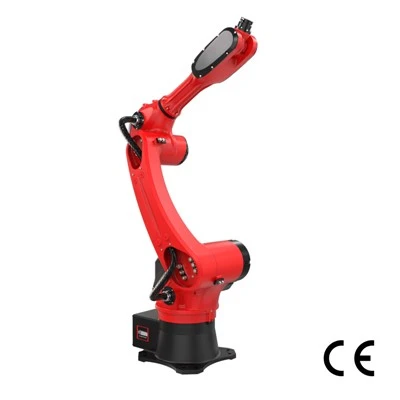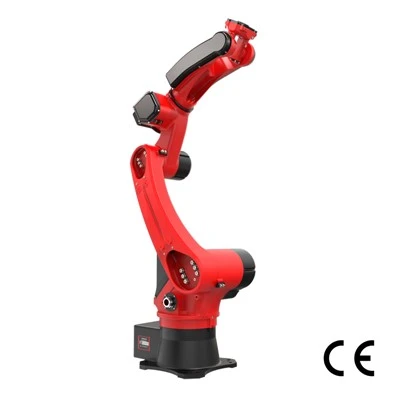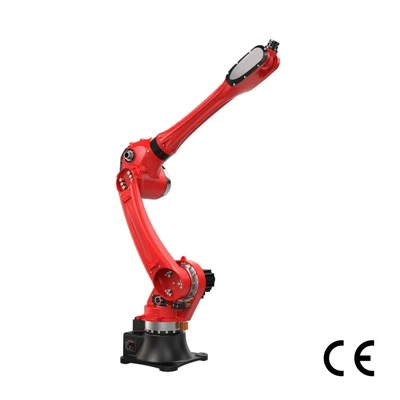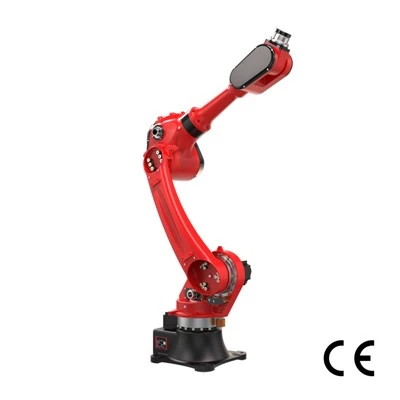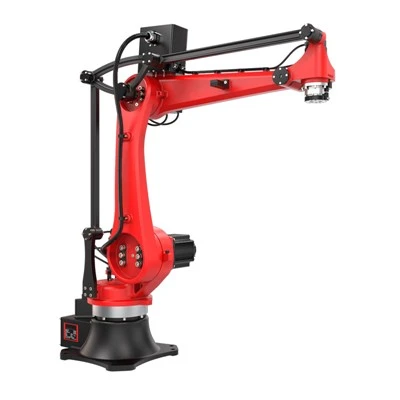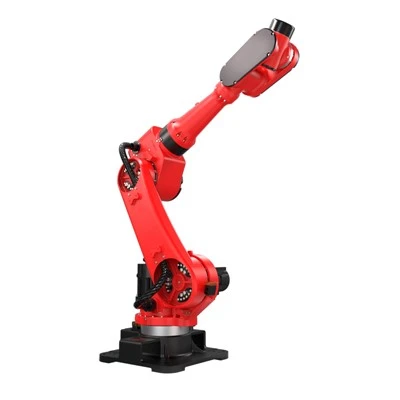


Quick Answer: A successful pick and place robot project typically moves through seven stages: defining application requirements, testing representative products, selecting the robot, EOAT, and vision system, validating reach and cycle time, integrating equipment and software, completing FAT and commissioning, and optimizing the system during production ramp-up. The key is to reduce technical uncertainty before major hardware, fabrication, and integration decisions are finalized.

A successful pick-and-place project is not just a robot purchase. It is an automation project that must move from requirements and feasibility testing through design, integration, acceptance, and production ramp-up. The most reliable sequence is to reduce uncertainty before expensive hardware and fabrication decisions are locked in.
Define Pick and Place Robot Project Requirements
Robot selection should begin only after the process requirements are clear. Start by documenting the product, current process, target throughput, quality requirements, available space, environment, and changeover expectations.
|
Category |
Description |
|
Product data |
Product data should include dimensions, weight, important geometry, allowable contact areas, and variation between SKUs. |
|
Current-process baseline |
The current process provides the baseline: how products arrive, how they are handled today, where failures occur, and what upstream and downstream equipment the automation must interact with. |
|
Target throughput |
Target throughput should be defined as an actual production requirement rather than simply "as fast as possible." |
|
Quality requirements |
Quality requirements should specify placement tolerance, acceptable damage, inspection needs, and reject handling. |
|
Site & system constraints |
Available floor space, access requirements, washdown or contamination constraints, and expected SKU changeovers also influence the eventual architecture. |
These inputs establish the project baseline. Without them, robot selection becomes specification shopping rather than engineering.
Test Representative Products for Feasibility
Feasibility testing should use the products most likely to challenge the system-not only the easiest SKU. That means testing representative extremes such as the largest and smallest products, heaviest and lightest variants, hardest surfaces to grip, reflective or transparent items, and samples with realistic deformation or manufacturing variation.
If flexible pouches arrive wrinkled in production, testing perfectly flat samples provides limited evidence. If a product family contains several surface finishes, the gripping and vision concepts should be evaluated against those differences before the design is finalized. Testing should answer practical questions: Can the vision system locate every relevant variant? Can the gripper establish a reliable hold? Does the product deform or slip during acceleration? Can the robot release it consistently? What happens after an unsuccessful pick?
Representative testing is especially important when product behavior-not robot motion-is the largest technical uncertainty. A convincing feasibility test demonstrates repeated performance across realistic variation, not one successful pick under ideal conditions.

Select the Robot, EOAT, and Vision System
The pick and place robot, end-of-arm tooling, and sensing strategy should be selected as a system. Choosing the robot first and attempting to fit the gripper and vision around it later can create unnecessary constraints. A heavier EOAT may change the required payload class. A larger gripper may reduce usable reach or create collision problems. A vision requirement may change the preferred product presentation or robot mounting arrangement.
Selection should therefore bring together the earlier decisions around payload, reach, work envelope, cycle time, orientation, gripping method, and positional uncertainty.
A fixed product may require no vision, while random conveyor picking may require 2D sensing and tracking. Random-bin picking may introduce 3D perception and more complex path planning. Likewise, a simple suction tool and a multi-SKU adaptive gripper create very different payload and control requirements.
The objective is not to maximize every specification. It is to select a robot, EOAT, and sensing combination that works together for the complete application.
Validate Robot Reach and Cycle Time
Before mechanical fabrication begins, the proposed cell should be checked for reach, layout, collision risk, and cycle-time feasibility.
Simulation can reveal whether the robot can reach the pick and place poses at the required orientations, whether the gripper clears fixtures and guarding, and whether the transfer path creates awkward joint configurations or unnecessary travel. It can also expose throughput problems that are not obvious from robot specifications. A robot may reach every required point but still fail the production target because approach distances, orientation changes, gripping delays, conveyor tracking, or return paths consume too much time.
Finding these issues before fabrication is significantly easier than redesigning a completed cell. Simulation should not, however, be treated as final proof of production performance. Models depend on assumptions about gripping time, product behavior, sensing latency, acceleration, and surrounding equipment.
The strongest process uses simulation to eliminate obvious design problems, then validates critical assumptions through physical testing and commissioning.
Integrate Equipment, Controls, and Software
Once the pick and place cell design is established, the robot must be connected to the rest of the production process mechanically, electrically, and logically.
|
Integration Type |
Description |
|
Mechanical integration |
Mechanical integration includes mounting, tooling, conveyors, fixtures, guarding, cable routing, and access for operation and maintenance. |
|
Electrical integration |
Electrical integration connects the robot, sensors, safety devices, actuators, conveyors, and other machines.PLC logic may coordinate product availability, machine states, interlocks, recipes, alarms, and recovery sequences. |
|
Vision integration |
Vision integration requires more than connecting a camera. Detection results must be converted into robot coordinates, synchronized with the correct product, and handled properly when no valid pick is available. |
|
Higher-level system interfaces |
Where relevant, the system may also communicate with MES, WMS, production databases, inspection systems, or machine controllers. Those interfaces may exchange SKU information, production orders, routing instructions, machine-ready signals, inspection results, or traceability data. |
The key integration question is therefore: which system sends which information, when, and what should happen if that signal is missing or invalid?

Complete FAT and Robot Commissioning
Before the system enters production, its performance should be tested against agreed acceptance criteria. A Factory Acceptance Test (FAT), where applicable, evaluates the system before shipment or final site installation. Site commissioning then verifies performance in the real production environment.
|
Item |
Description |
|
Acceptance testing scope |
Acceptance testing should evaluate more than whether the robot completes a normal cycle. The system should be checked across representative product variants, required cycle rates, quality criteria, safety functions, alarms, and recovery conditions. |
|
Fault recovery validation |
Fault recovery is particularly important. The team should understand what happens after a failed pick, missing product, vision error, blocked downstream station, emergency stop, or loss of machine communication. |
|
Handover documentation review |
Documentation should also be reviewed during handover, including operating procedures, drawings, backups, maintenance information, spare-parts recommendations, and relevant safety documentation. |
A cell that runs correctly only when nothing goes wrong is not ready for production.

Ramp Up and Optimize Production Performance
Commissioning does not automatically mean the system has reached full production performance. Early production often reveals conditions that were difficult to reproduce during engineering: product variation, changing conveyor behavior, operator interactions, contamination, different shift practices, or unexpected upstream disturbances.
The ramp-up period is therefore used to refine the process. Robot speeds and trajectories may be adjusted. Gripper timing or vacuum thresholds may need tuning. Vision parameters can be improved to reduce false rejects. Operators become more familiar with loading, changeover, and fault recovery. Maintenance teams learn which wear components require the most attention.
Performance data should also be reviewed. Repeated failed picks, particular SKUs with lower success rates, excessive recovery events, or recurring cycle delays can identify where further optimization is worthwhile. The goal is not simply to make the robot move faster. It is to achieve a stable production process with acceptable throughput, quality, uptime, recovery behavior, and changeover performance.
Pick and Place Robot Project Checklist
Bring these requirements to your feasibility review:
Product dimensions, weights, materials, and representative variants
Current process description and known failure points
Pick and place locations, orientations, and tolerances
Required products per minute and picks per finished unit
Product presentation method and conveyor behavior
Proposed gripping surfaces and damage limitations
Vision or sensing uncertainty
Available cell footprint, mounting constraints, and maintenance access
Environmental and cleaning requirements
SKU count and expected changeover frequency
Upstream and downstream machine interfaces
Required inspection, reject, and traceability logic
Safety and operator-access requirements
Representative products for feasibility testing
Acceptance criteria for cycle time, quality, recovery, and documentation
A good automation project reduces uncertainty in this order: requirements → product testing → system selection → simulation → integration → acceptance → production optimization. By the time the system reaches fabrication, the major technical risks should already be understood rather than discovered on the factory floor.
Ready to Plan a Pick and Place Robot Project?
Whether you are upgrading your end‑of‑line automation or searching for a reliable pick-and-place robot supplier, contact RBTIC for free custom pick-and-place solutions and layout designs, or to book a factory tour.
Frequently Asked Questions About Pick and Place Robot Projects