

Quick Answer:Choosing the right pick and place robot supplier requires more than comparing robot brands, payload specifications, or quoted prices. A capable supplier should be able to test representative products, engineer the robot, EOAT, vision, and controls as one system, validate reach and cycle time, integrate the complete cell, define clear acceptance criteria, and support the equipment after production begins.

The most useful question is not simply, "Which robot do you supply?" It is: Can this supplier prove the process, engineer the complete application, validate the promised performance, and support the system after installation?
A supplier with extensive robotics experience may still be a poor fit if they have limited experience with your product behavior, presentation method, gripping challenge, production rate, operating environment, or surrounding equipment.
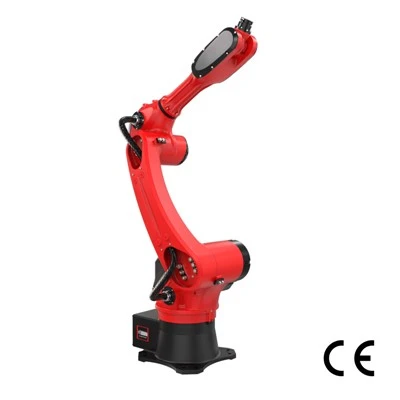
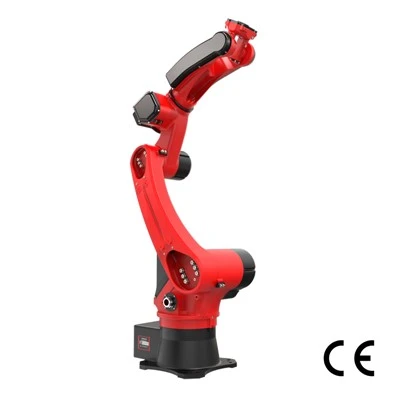
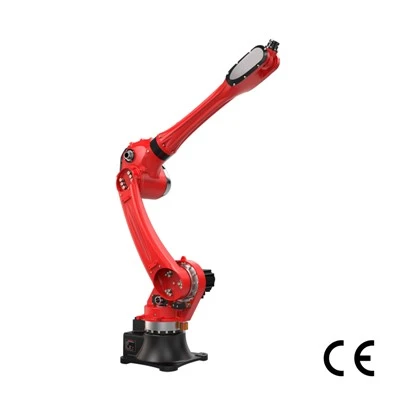
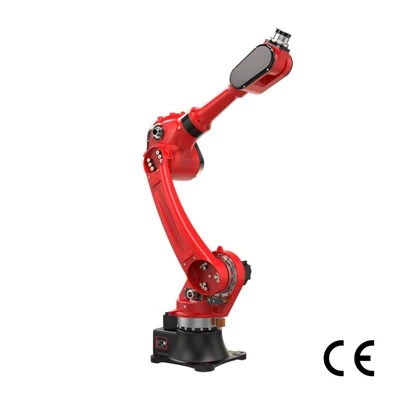
If you are planning pick-and-place automation, explore RBTIC pick-and-place robot series to review configurations and specifications.
Evaluate the Supplier's Application Testing Capability
One of the strongest indicators of pick and place supplier capability is whether the supplier can test the application using representative products before the final design is committed. Ask whether the supplier can test actual samples and, more importantly, whether they will test the products most likely to expose technical problems.
Representative testing may need to include:
The largest and smallest SKUs
Heavy and lightweight variants
Difficult gripping surfaces
Deformed or flexible products
Reflective or transparent packaging
Closely packed or overlapping products
Products with realistic manufacturing variation
The purpose of a feasibility test is not to prove that one ideal product can be picked once. A useful test should help determine whether the proposed gripping and sensing concept can perform repeatedly across realistic production variation. It should also reveal what happens when a pick fails, a product shifts, vision cannot identify a valid target, or the gripper cannot establish a reliable hold. If a supplier cannot test representative products, ask what evidence supports the proposed concept and which assumptions will remain unverified until commissioning.
For applications with significant product variation, understanding common pick and place robot limitations before finalizing the concept can also help identify risks that should be tested during feasibility work.
Check EOAT and Robot Vision Expertise
A pick and place robot supplier should understand more than the robot arm. In many applications, the largest technical uncertainty is not whether the robot can move between two positions. It is whether the system can reliably identify, grip, move, and release the actual product. Evaluate whether the supplier can design or select end-of-arm tooling around the application.
Relevant capability may include:
Vacuum grippers
Mechanical or servo grippers
Custom fingers
Product-specific contact materials
Grip confirmation
Vacuum monitoring
Multiple gripping zones
Tool changing
Handling of multiple SKUs
Testing of gripping forces and product damage
Vision capability should also match the level of positional uncertainty in the application.
|
Application Scenario |
System Vision Requirement |
|
A repeatably fixtured product |
May require little or no vision. |
|
Random conveyor picking |
May require 2D vision and conveyor tracking. |
|
Applications involving height variation, overlap, stacking, or random bins |
May require 3D sensing and more complex pose estimation. |
Do not ask only whether the supplier "offers vision." Ask whether they have experience with the type of sensing problem your application creates, including lighting, calibration, reflective surfaces, occlusion, product variation, conveyor tracking, and communication between the vision system and robot.
A useful way to evaluate this decision is to compare no vision, 2D vision, and 3D pick-and-place robot vision based on the actual product presentation rather than selecting the most advanced camera system by default.
The key question is whether the supplier can solve the complete gripping + sensing problem, not merely provide compatible hardware.
Verify Pick and Place System Integration Capability
A production-ready robotic cell has to operate as one coordinated system.
The pick and place robot may need to communicate and integrate with various production equipment and systems, including PLCs, conveyors, vision systems, safety devices, sensors, machines, HMIs, inspection equipment, and MES, WMS, or production management platforms.
A supplier that delivers only the robot portion may still be appropriate when your organization has experienced internal controls and integration resources. However, if you are purchasing a turnkey system, the supplier should be able to explain how the complete robotic cell will be engineered, integrated, tested, documented, and accepted.
This distinction is fundamental: A robot is not the same as a complete robotic cell. Teams planning a full automation project should therefore consider the entire pick and place robot project process, from requirements and feasibility testing through integration, FAT, commissioning, and production ramp-up.

Review Service, Spare Parts, and Technical Support
Supplier selection should also address what happens after the equipment enters production. A cell that performs well during acceptance testing can still become a production problem if the manufacturer cannot obtain technical support, replacement parts, software backups, or troubleshooting assistance when a failure occurs.
Ask what the support model actually looks like.
Important questions include:
Is technical support local, regional, or remote?
How are service requests submitted and escalated?
What support is available outside normal working hours?
Which spare parts should be stocked on site?
How quickly are common replacement components normally available?
Are critical components proprietary?
Are robot and PLC software backups included?
Will operators receive fault-recovery training?
Will maintenance personnel receive deeper troubleshooting training?
What documentation is supplied at handover?
A maintainable system should normally include the electrical drawings, software backups, manuals, component information, maintenance procedures, safety documentation, and spare-parts recommendations required for the project.
Custom equipment deserves particular attention. A specialized gripper may perform extremely well, but the procurement team should still understand how wear components are replaced, whether replacement parts can be manufactured locally, whether critical components depend on the original supplier, and what happens if something fails several years after installation.
The real question is not simply whether support exists. It is: How quickly and reliably can production recover when something stops working?
Validate Robot Reach and Production Cycle Time
Cycle-time claims deserve careful scrutiny because they affect both technical feasibility and the expected business case.
Ask the supplier how the proposed production rate was established.
Was it based on:
A robot specification sheet?
Offline simulation?
A physical bench test?
A previous comparable application?
Testing with representative products?
Robot motion time is not the same as the complete production cycle time, which may also include product detection, vision processing, approach motion, gripping and confirmation, conveyor tracking, product transfer and orientation changes, placement and release, verification, and return travel. For moving-conveyor applications, the estimate should also consider real product spacing, conveyor speed, tracking windows, missed products, and the amount of useful robot workspace available while the product is moving.
Simulation is valuable because it can identify reach, collision, layout, and timing risks before mechanical fabrication begins. However, simulation is only as reliable as its assumptions. Gripping time, sensing latency, product behavior, acceleration, release behavior, conveyor conditions, and machine interactions may still require physical validation.
Do not accept robot arm motion time as though it were proven production cycle time.
Look for Relevant Pick and Place Application Experience
"Years of robotics experience" is useful background information, but it is not enough by itself. The more useful question is whether the supplier has completed applications with characteristics similar to yours. Look for experience involving similar products, product presentation, production rates, gripping challenges, vision requirements, operating environments, SKU mixes, upstream and downstream equipment, and overall integration complexity.
For example, experience with high-speed carton handling may be more relevant to another conveyor-based packaging project than experience with a slow machine-tending cell, even if both applications use six-axis robots. Likewise, a supplier experienced with random bin picking may be better prepared for occlusion, 3D pose estimation, and grip-planning problems than a supplier whose previous applications have mainly used fixed fixtures.
Environmental similarity also matters. Washdown, dust, food-contact requirements, clean manufacturing, aggressive contamination, temperature variation, or restricted operator access can significantly change the appropriate robot, tooling, sensing, materials, guarding, and maintenance strategy.
Relevant application experience is usually more useful than generic robotics experience. Ask potential suppliers to explain which previous technical problems are comparable to your application. Also ask which parts of your project are genuinely new. A capable engineering supplier should be comfortable identifying uncertainty and proposing a test plan rather than presenting every requirement as already solved.
Compare Project Scope, Cost, and Acceptance Criteria
Price comparisons are meaningful only when competing suppliers are quoting comparable project scopes.
|
Scope / Item |
Supplier A |
Supplier B |
|
Robot hardware |
✓ |
✓ |
|
Robot controller |
- |
✓ |
|
Basic EOAT |
✓ |
- |
|
Custom EOAT |
- |
✓ |
|
Programming |
✓ |
✓ |
|
Vision system |
- |
✓ |
|
Conveyors |
- |
✓ |
|
Safety system |
- |
✓ |
|
PLC controls |
- |
✓ |
|
Machine interfaces |
- |
✓ |
|
Installation |
- |
✓ |
|
FAT |
- |
✓ |
|
SAT |
- |
✓ |
|
Training |
- |
✓ |
|
Documentation |
- |
✓ |
|
Production support |
- |
✓ |
Before evaluating the quoted price, confirm what is included, excluded, assumed, or supplied by others. The supplier proposal should also define measurable acceptance criteria. Depending on the project, these may include the required production rate, representative SKU performance, placement tolerance, product damage limits, vision detection performance, fault recovery, machine communication, safety functions, changeover requirements, documentation, training, and the scope of FAT and SAT.
This is also why procurement teams should evaluate the complete pick and place robot system cost rather than comparing robot arm prices alone. A lower initial quotation does not necessarily represent a lower-cost project if critical integration, tooling, safety, commissioning, or support requirements have been excluded.
Pick and Place Robot Supplier Checklist
Use the following checklist when comparing potential suppliers.
|
Evaluation Area |
Key Questions |
|
Application & Feasibility |
Can the supplier test representative products? |
|
Will they test difficult SKUs and realistic production variation? |
|
|
Can they explain the main technical uncertainties? |
|
|
Are important assumptions identified before final design? |
|
|
Is physical feasibility testing available where required? |
|
|
Robot, EOAT & Vision |
Is the robot selected based on the complete application? |
|
Can the supplier engineer the required gripper or EOAT? |
|
|
Can they validate gripping reliability? |
|
|
Do they understand the required 2D or 3D vision problem? |
|
|
Can they handle calibration, lighting, tracking, and vision-to-robot communication? |
|
|
Integration |
Who owns PLC programming? |
|
Who owns robot programming? |
|
|
Who integrates conveyors and tracking? |
|
|
Who integrates upstream and downstream equipment? |
|
|
Who designs machine interlocks and fault logic? |
|
|
Who integrates the safety system? |
|
|
Are MES, WMS, recipe, inspection, or traceability interfaces required? |
|
|
Are responsibility boundaries clearly documented? |
|
|
Performance Validation |
How was the proposed cycle time calculated? |
|
Has the complete sequence been considered? |
|
|
Has reach and collision risk been simulated? |
|
|
Which assumptions have been physically tested? |
|
|
What remains to be confirmed during commissioning? |
|
|
Are acceptance criteria measurable? |
|
|
Service & Maintainability |
What technical support is available? |
|
Where is the support team located? |
|
|
What response process is used during downtime? |
|
|
Which spare parts should be kept on site? |
|
|
Are proprietary components clearly identified? |
|
|
Are software backups included? |
|
|
Are electrical drawings and manuals provided? |
|
|
Is operator and maintenance training included? |
|
|
Relevant Experience |
Has the supplier handled similar products? |
|
Have they worked with a similar presentation method? |
|
|
Have they delivered comparable production rates? |
|
|
Do they understand the required operating environment? |
|
|
Have they integrated similar upstream and downstream equipment? |
|
|
Can they explain comparable project challenges instead of only showing robot brands? |
|
|
Commercial Scope |
Is the proposal scope clearly defined? |
|
Are exclusions clearly identified? |
|
|
Are FAT and SAT responsibilities defined? |
|
|
Are installation and commissioning included? |
|
|
Are documentation and training included? |
|
|
Are acceptance criteria included in the proposal? |
|
|
Are warranty and post-installation support terms clear? |
A supplier does not necessarily need to perform every activity internally. What matters is that the complete project scope is understood and responsibility for each critical function is clearly defined.
Information to Prepare Before Contacting a Pick and Place Robot Supplier
Better supplier evaluations start with better application information. Before requesting a feasibility assessment or quotation, prepare as much information as possible, including product dimensions and weights, materials and gripping surfaces, representative samples, photographs or CAD data, product presentation method, conveyor speed and product spacing, required products per minute, picks per finished unit, pick and place positions, required product orientation, placement tolerances, SKU count and variation, changeover requirements, available installation space, environmental conditions, cleaning or contamination requirements, upstream and downstream equipment, existing PLC or controls architecture, inspection and traceability requirements, safety and operator-access requirements, preferred project schedule, and expected acceptance criteria.
With these inputs, a supplier can begin evaluating robot architecture, gripping, sensing, cycle-time feasibility, integration scope, and which parts of the application should be physically tested before the final system concept is developed.
Ready to Plan a Pick and Place Robot Project?
Whether you are upgrading your end‑of‑line automation or searching for a reliable pick-and-place robot supplier, contact RBTIC for free custom pick-and-place solutions and layout designs, or to book a factory tour.
Frequently Asked Questions About Pick and Place Robot Suppliers
How to Make the Final Supplier Selection
The best pick and place robot supplier is not necessarily the company offering the lowest robot price, the largest robot catalog, or the longest list of automation projects. The stronger choice is the supplier that can demonstrate a clear engineering path from application requirements to validated production performance.
Before placing an order, make sure the supplier can answer four questions clearly:
Can the process be proven?
Can the complete cell be engineered and integrated?
Can the promised performance be validated?
Can the system be supported after production begins?
If those answers are supported by representative testing, clearly defined scope, realistic cycle-time validation, relevant application experience, and measurable acceptance criteria, the project is much easier to evaluate before major hardware and fabrication decisions are committed.