

Quick Answer: The total cost of a pick and place robot system depends on much more than the robot arm itself. The main cost drivers are robot hardware, end-of-arm tooling, vision, conveyors and fixtures, safety equipment, integration and programming, and commissioning and training. A reliable budget should therefore be based on the application requirements and complete system scope rather than the robot arm price alone.
The price of a robot arm is only one part of the total project budget. Robot arm price ≠ complete pick-and-place system price. A production-ready system may also require gripping, vision, conveyors, fixtures, safety equipment, controls, programming, installation, commissioning, and training. In many projects, these integration elements can be just as important to cost as the robot itself. For that reason, the better question is not "How much does a pick-and-place robot cost?" but "What drives the total installed cost of the complete automation system?"
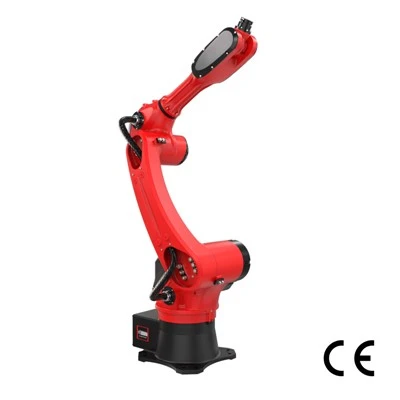
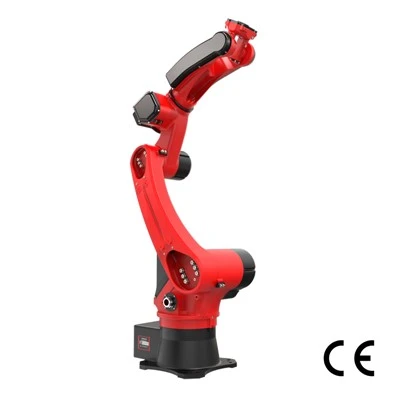
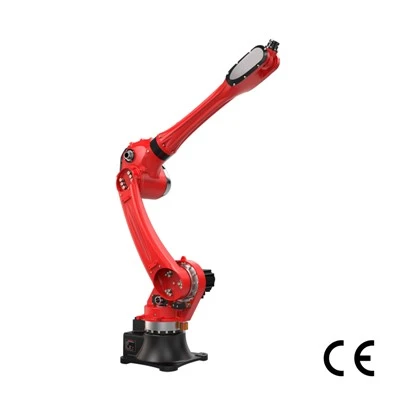
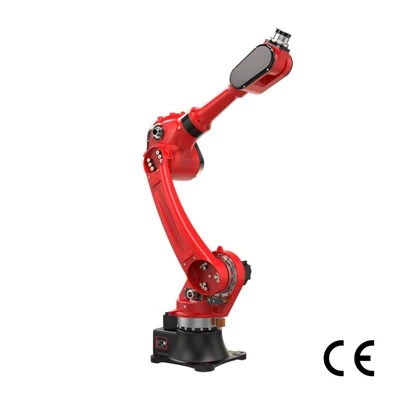
If you are planning pick-and-place automation, explore RBTIC pick-and-place robot series to review configurations and specifications.

Pick and Place Robot Hardware Cost
A pick and place robot hardware cost depends primarily on the required architecture, payload and reach class, performance level, and available features. A lightweight delta robot designed for high-speed packaging solves a different problem from a long-reach six-axis robot handling heavier parts. Likewise, a compact SCARA system and a collaborative robot may have very different performance, controls, and integration requirements even if both can technically perform the same basic transfer.
Specifications such as payload capacity, reach, environmental protection, integrated safety functions, controller options, and specialized interfaces can all influence the hardware package. This is why comparing robot prices without first defining the application can be misleading. A lower-cost arm that cannot meet the real reach, payload, cycle-time, or environmental requirements is not a lower-cost solution once redesign or replacement is considered.
End of Arm Tooling Cost
EOAT cost can range from relatively simple tooling to a heavily engineered subsystem. A basic vacuum setup for one stable product may require only cups, mounting hardware, valves, tubing, and vacuum generation. A custom gripper handling several SKUs may instead require machined fingers, compliance devices, multiple actuators, sensors, independent gripping zones, or automatic adjustment.
Additional cost drivers can include tool changers, custom fingers, part-present sensors, vacuum switches, manifolds, ejectors, pumps, compliance devices, and product-specific contact materials.
Tooling becomes more expensive when one gripper must accommodate a wide range of product sizes or when fast changeover is required. The important point is that EOAT should be budgeted as an engineered part of the system, not as a small accessory added after the robot is selected.
Robot Vision System Cost for Pick and Place

Vision cost depends less on the price of the camera alone and more on the complexity of the perception problem. At the simplest level, a system may need no vision because fixtures establish repeatable product coordinates. A 2D vision application may require a camera, lens, lighting, mounting, calibration, and software for locating products on a plane. A 3D system can introduce depth sensors, more demanding calibration, point-cloud or pose-processing software, and additional integration with gripping and path planning. Multi-camera systems can add further complexity when larger fields of view, multiple inspection angles, or occlusion management are required.
The hidden cost is often engineering time. The vision system must be mounted, calibrated, connected to the robot or PLC, validated across real product variation, and maintained so that lighting and camera conditions remain stable. For budgeting purposes, think of vision as hardware + lighting + software + calibration + integration, not simply a camera purchase.
Conveyor and Fixture Costs for Pick and Place
Conveyors, fixtures, feeders, and product-presentation equipment are frequently underestimated because they sit outside the robot specification itself. A pick and place robot can only pick products consistently if the products arrive in a usable condition. Achieving that may require singulation, indexing, lane control, fixtures, guides, accumulation buffers, tracking encoders, or custom nests. For example, a packaging application may initially appear to need only a robot and conveyor. But if products arrive overlapping or with inconsistent spacing, additional equipment may be required to separate them before they enter the robot's tracking area. Similarly, a machine-loading application may need accurately designed fixtures or part nests to ensure the robot can locate and release products reliably.
In many projects, a significant amount of engineering is spent simply making sure the product appears in a predictable, pickable state. That makes material presentation part of the automation budget, not an upstream problem that can be ignored during robot selection.
Pick and Place Robot Safety Equipment Cost
Safety equipment must be designed around the complete application. Depending on the pick and place cell, this may include physical guarding, access doors, interlocks, safety scanners, light curtains, emergency stops, safety-rated controls, safety PLC components, monitored zones, or other protective measures. The required design depends on the robot, EOAT, product, speeds, surrounding machinery, operator access, and process hazards.
This applies to collaborative robots as well. Selecting a cobot does not automatically remove safety-system cost. The final application still requires an appropriate risk assessment, and hazards introduced by tooling, parts, motion, or neighboring machinery may require additional protective measures.
Safety therefore affects both hardware and engineering. Guard layout, access strategy, safe operating modes, restart logic, and interactions with upstream and downstream equipment all need to be designed into the cell.
Pick and Place Integration and Programming Cost

Integration is one of the most commonly underestimated cost categories in pick-and-place projects. A working cell may require mechanical integration, electrical design and wiring, PLC programming, robot programming, vision integration, machine communication, conveyor controls, production recipes, fault handling, and line-level logic. The pick and place robot must communicate with the rest of the process. It may need to know whether a conveyor is running, whether a machine door is open, whether a product has been inspected, which SKU is active, whether a downstream station is ready, and what to do after a failed pick.
Those interactions can become more complex than the basic robot motion itself. Integration effort also increases as flexibility increases. A cell handling one product from a fixed fixture may be relatively straightforward. A system handling dozens of SKUs, dynamic destinations, conveyor tracking, automatic tool changes, and multiple machines requires substantially more control logic and testing.
Integration should therefore be treated as a core project deliverable, not reduced to a generic "labor" line item.
Commissioning and Training Costs
A pick and place system is not complete when the hardware has been assembled. It must be installed, tested, debugged, handed over, and supported in its production environment. Commissioning can include factory acceptance testing (FAT) and site acceptance testing (SAT) where applicable, installation, robot mastering or verification, calibration, production debugging, cycle-time optimization, and validation against agreed acceptance criteria. Training may include both operator and maintenance instruction. Operators need to understand normal startup, changeover, fault recovery, and basic troubleshooting. Maintenance teams may need additional knowledge of robot alarms, gripper service, sensor adjustment, preventive maintenance, and backup procedures.
Documentation can also represent meaningful engineering effort, particularly where the project requires electrical drawings, manuals, spare-parts information, safety documentation, maintenance procedures, or validated operating instructions.
These activities do not usually appear in a robot catalog, but they are part of delivering a system that can actually run in production.
Pick and Place Robot Cost Breakdown
|
Cost category |
What it includes |
Main cost drivers |
Often underestimated? |
|
Robot hardware |
Robot, controller, mounting options, hardware features |
Architecture, payload, reach, performance, environment |
Sometimes |
|
EOAT |
Gripper, tooling, vacuum or actuation hardware, sensors |
Product variation, gripping difficulty, changeover requirements |
Yes |
|
Vision |
Cameras, lighting, sensing hardware, software, calibration |
2D vs 3D, product variability, occlusion, number of views |
Yes |
|
Conveyors and fixtures |
Conveyors, feeders, indexing, singulation, nests, buffers, encoders |
Product presentation and line synchronization |
Frequently |
|
Safety equipment |
Guards, scanners, interlocks, safety controls |
Risk assessment, access requirements, surrounding hazards |
Sometimes |
|
Integration and programming |
Mechanical, electrical, PLC, robot, vision, machine and line logic |
Number of interfaces, SKUs, tracking, exceptions, flexibility |
Frequently |
|
Commissioning and training |
FAT/SAT where applicable, installation, debugging, training, documentation |
Site conditions, acceptance testing, process complexity |
Yes |
How to Estimate a Pick and Place Robot System Budget
The largest budgeting mistake is therefore to start with the robot arm price and add a small allowance for everything else.
A more reliable budgetary estimate starts with the application inputs: product size and weight, presentation method, required throughput, pick and place locations, orientation changes, SKU count, gripping difficulty, sensing requirements, environment, machine interfaces, and safety constraints. Once those inputs are defined, a supplier or system integrator can estimate the cost of the complete installed pick-and-place system rather than quoting a robot that represents only one part of the project.
Ready to Plan a Pick and Place Robot Project?
Whether you are upgrading your end‑of‑line automation or searching for a reliable pick-and-place robot supplier, contact RBTIC for free custom pick-and-place solutions and layout designs, or to book a factory tour.
Frequently Asked Questions About Pick and Place Robot Cost