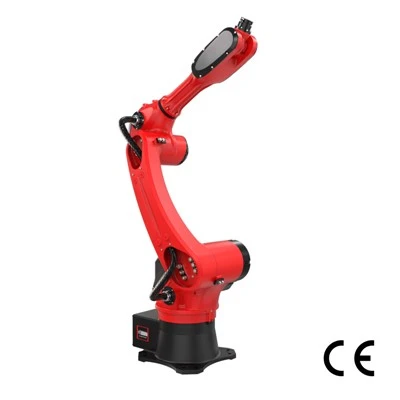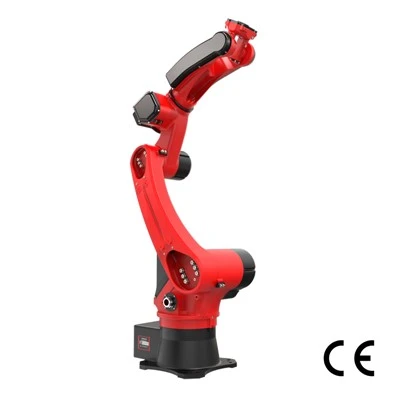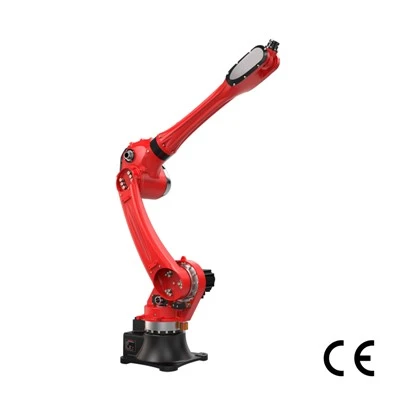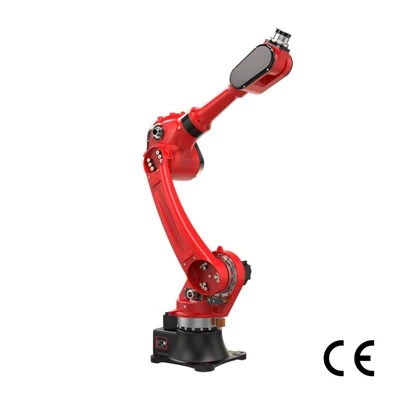


Robotic pick and place systems can deliver high speed and repeatability, but their performance depends on much more than robot payload, reach, and advertised cycle time.
Many of the most important pick and place limitations appear when real products behave differently from ideal CAD models, controlled demonstrations, or carefully prepared samples. A robot may be fast enough on paper yet still miss production targets because the vision system cannot locate products consistently, the gripper cannot establish a reliable hold, products arrive unpredictably, or changeovers consume too much operating time. For this reason, evaluating a robotic picking application should focus on the complete process rather than the robot alone.
The most common limitations can be grouped into four areas:
vision and product detection;
gripping and product access;
robot motion and product presentation;
production variability and process economics.
Understanding these limitations before equipment is purchased can prevent a technically impressive robotic pick and place cell from becoming an unreliable production system.
If you are planning pick-and-place automation, explore RBTIC pick-and-place robot series to review configurations and specifications.
Vision Limitations in Robotic Pick and Place Systems
A robot cannot pick accurately if its sensing system cannot consistently determine where the product is and how it is oriented. In vision-guided robotic applications, the vision system typically detects a part, determines its position and orientation, and provides alignment information that allows the robot to correct its pick pose. This means reliable image acquisition and part detection are fundamental to the picking process.
Several product characteristics can make this difficult.

|
Product Type |
Description |
|
Reflective products |
Polished metal, glossy plastic, foil packaging, and other reflective surfaces can produce glare and highlights that change with viewing angle. The problem is not simply that the image looks bright. Changing reflections can hide edges, alter apparent features, or make a product look different as its position changes. A vision system that recognizes one carefully positioned sample may therefore perform less reliably when products rotate, tilt, become contaminated, or move through changing ambient light. |
|
Transparent products |
Clear bottles, trays, plastic packaging, glass components, and transparent films create a different challenge. The camera may capture features from the conveyor or background through the product instead of obtaining a stable representation of the product surface itself. Edge detection and segmentation can therefore become strongly dependent on illumination and background conditions. |
|
Low-contrast products |
Products can also become difficult to locate when their appearance is similar to the conveyor, tray, bin, or surrounding objects. For example, separating a dark component from a dark conveyor may be much less reliable than detecting the same component against a controlled contrasting background. |
Why a higher-resolution camera may not solve the problem
One of the most important pick and place limitations to understand is that poor visibility is not always a resolution problem. Increasing camera resolution does not automatically eliminate reflections, transparency, shadows, unstable contrast, or unsuitable lighting geometry.
Depending on the application, better results may come from changing lighting direction or intensity, polarization, exposure settings, camera position, conveyor or background color, product presentation, the sensing method itself.
In some applications, making the physical scene more repeatable is more effective than continuously increasing software complexity.
The practical question is therefore not simply: Can the camera see the product? It is: Can the vision system locate every representative product variant reliably under actual production conditions?
That distinction should be tested before the final vision architecture is selected.
Gripper Limitations and Difficult-to-Pick Products

Accurate product detection does not guarantee a successful pick. The pick and place robot still needs a repeatable location where the end-of-arm tooling can contact, secure, move, and release the product without unacceptable damage.
This creates another major category of robotic pick and place limitations.
Deformable and flexible products
Bags, pouches, textiles, soft food products, films, and other flexible products can change shape between cycles. A grip point that appears suitable in one image may wrinkle, collapse, fold, or move while the gripper approaches it. The challenge becomes more difficult when product shape is influenced by fill level, trapped air, temperature, stacking pressure, or upstream handling. For these applications, the engineering problem is not only identifying the product. The system also needs a gripping strategy that tolerates product variation.
Porous, rough, and leaking surfaces
Vacuum gripping depends on the interaction between the suction system and the product surface. Porous or rough products can require different vacuum strategies because leakage and sealing behavior differ from those of smooth, airtight surfaces. Commercial gripping systems are specifically designed for difficult conditions such as porous materials, uneven surfaces, and undefined pickup positions, which illustrates why gripper selection must match the physical product rather than rely on a generic suction concept.
Products that deserve additional testing include corrugated or porous materials, rough or heavily textured components, oily or wet products, unstable packaging, products with openings or leakage paths, surfaces whose condition changes during production. A different suction-cup geometry, larger gripping area, multiple contact points, mechanical gripping, needle gripping, compliance, or another end-effector design may be required.
Limited access between products
Even when a valid grip point exists, the gripper still needs enough physical clearance to reach it. Tightly packed, overlapping, nested, or randomly oriented products can create collision constraints between the gripper and surrounding products. This is particularly important in bin picking and dense conveyor applications. A vision algorithm may theoretically identify an accessible product surface while the physical end effector cannot approach that surface at a safe angle.
This is why gripping feasibility should be evaluated together with neighboring-product clearance, approach direction, extraction path, gripper dimensions, robot joint configuration, allowable product contact. The question is not merely whether a product can be picked once. The goal is to establish whether it can be picked repeatedly across the expected range of product conditions.
Product Presentation Can Limit Pick and Place Performance

Many robotic picking problems originate before the robot begins its motion. A well-designed pick and place robot and gripper cannot indefinitely compensate for an uncontrolled incoming process.
Random product orientation
Random orientation increases the number of possible pick poses the system must handle. Depending on the product, some orientations may provide a clear gripping surface while others create occlusion, poor access, unstable lifting, or collision risks. Controlling product orientation upstream can sometimes reduce system complexity more effectively than adding increasingly sophisticated robotic capability downstream.
Overlapping or tangled products
Overlapping products create both perception and extraction problems. The vision system must determine which product is accessible, while the robot must remove it without pulling, dragging, or disturbing neighboring objects. Tangled flexible products create an even harder problem because removing one object may change the position of several others. These applications should usually be treated as feasibility-testing problems rather than assuming that additional programming alone will solve them.
Inconsistent spacing
Product spacing can also determine whether theoretical pick and place robot speed translates into actual throughput. Consider a system designed for an average production rate of 60 products per minute. That average alone does not tell the engineer whether the robot can process the real product stream.
If products arrive evenly at one product per second, the application may behave very differently from a conveyor that delivers the same average rate in irregular clusters. During a cluster, more products may enter the robot's available picking window than it can process. Products can then move outside the reachable tracking area before the robot completes the previous picks. The average throughput may therefore look acceptable on a spreadsheet while the instantaneous product flow causes missed picks in production.
Possible process-level solutions include upstream spacing control, singulation, accumulation, buffering, larger tracking zones, multiple robots, changes to the feeding process. This illustrates an important principle: robot performance should be evaluated against actual product-flow behavior, not average throughput alone.
Conveyor Tracking and Robot Motion Limitations
Moving-product applications add another layer of complexity because the target continues to change position while the pick and place robot is planning and executing its motion.
Industrial conveyor-tracking systems are specifically designed to coordinate robot motion with moving products. ABB, for example, documents conveyor tracking functions and reachable-target prediction for high-speed conveyor applications. However, conveyor tracking does not eliminate all motion constraints.
Reachable tracking window
Every robotic cell has a practical region in which a moving target can be detected, approached, picked, and removed. If a product reaches the end of that available window before the robot completes the pick, the opportunity may be lost.
The available time becomes smaller as conveyor speed increases, products arrive closer together, robot travel distance increases, pick motion becomes more complex, vision or communication latency increases, difficult gripping requires slower approach or settling. For this reason, maximum robot cycle speed should not be treated as the same thing as production throughput.
Acceleration matters as much as top speed
A pick and place robot may have a high specified maximum speed without achieving that speed during short pick-and-place movements. Real cycles include acceleration, deceleration, approach motions, gripping time, release time, path restrictions, and control logic. Short-distance, high-speed picking applications therefore need to be evaluated using representative motion paths rather than relying only on headline speed specifications.
Recovery behavior also affects throughput
Nominal cycle time describes successful cycles.
Production throughput also depends on what happens after an unsuccessful one.
For example:
Does the system attempt the same pick again?
Does it select another product?
Does a failed grip stop the line?
Can the system automatically recover?
Does an operator need to remove a problem product?
A system with a fast nominal cycle but frequent manual intervention can deliver lower effective productivity than a slightly slower pick and place system with stable autonomous recovery.
High SKU Variability Can Reduce Automation Efficiency
A robot may technically be able to pick many different products while still being operationally inefficient. High SKU variability affects more than vision recognition. Different products may require changes to gripping points, suction cups or fingers, robot speed, approach angles, vision recipes, placement patterns, fixtures, payload settings, product-specific quality rules.
The key question is therefore not simply: Can the robot pick every SKU?
A better question is: Can the complete system handle the required SKU mix without excessive changeover time, tooling complexity, or operator intervention?
For example, an automated cell may be technically capable of handling ten product families. But if changing from one family to another requires manual tooling changes, fixture adjustment, vision reconfiguration, program selection, and validation, the total changeover burden may reduce the value of the automation. When SKU variety is high, feasibility calculations should include operating conditions rather than considering individual product tests in isolation.
How to Test Pick and Place Limitations Before Buying Equipment
Some robotic applications can be evaluated with engineering calculations and proven component combinations. Others deserve physical testing before the final robot, gripper, vision system, or cell architecture is specified.
Feasibility testing is especially valuable for transparent or highly reflective products, flexible pouches, bags, textiles, or soft products, porous, rough, oily, wet, or heavily textured surfaces,tightly packed or overlapping products, random-bin picking, products with substantial dimensional or packaging variation, applications with many SKUs sharing the same tooling, fragile or damage-sensitive products, high-speed conveyor picking, products with unpredictable orientation or presentation. A useful feasibility test should do more than demonstrate that a robot can pick one ideal sample.
|
Testing Principle |
Description |
|
Use representative products |
Testing should include the variation expected during production. Depending on the application, that may include differences in dimensions, color, surface finish, fill level, packaging condition, orientation, contamination, moisture, manufacturing tolerance. Testing only the easiest sample can create false confidence. |
|
Test repeated cycles |
One successful pick proves that a pick is physically possible. It does not prove that the process is production-ready. Repeated trials are needed to expose intermittent failures and determine whether problems occur under specific product or presentation conditions. |
|
Measure more than pick success |
A feasibility test should evaluate metrics relevant to the actual production requirement, including:- successful pick rate, cycle time, missed picks, grip failures, dropped products, product damage, vision failures, recovery time, operator interventions, performance across representative SKUs. |
There is no universal acceptable success rate or cycle-time margin for every robotic picking application. The correct threshold depends on production requirements, downstream consequences, labor economics, quality requirements, available buffering, and the cost of failure. That threshold should therefore be defined before testing begins rather than selected after the results are known.
When Robotic Pick and Place May Not Be the Best Option
Not every difficult handling process should be solved by adding a more advanced robot. Sometimes the limitation is the process itself.
| Limiting Condition | Description |
|---|---|
| Very low production volume | Low‑volume production does not automatically rule out automation, but extensive engineering and integration can be difficult to justify when the existing manual task is simple, safe, and fast. The decision should be based on the complete business case rather than robot capability alone. |
| No repeatable gripping method | Automation becomes difficult when the product offers no stable way to be located, accessed, gripped, moved, and released. If surface condition and product shape vary so widely that no gripping approach remains reliable, the project may require a change to product presentation or packaging before further robot optimization makes sense. |
| Excessive human judgment | Some tasks depend heavily on human interpretation and manipulation. Highly tangled, unstable, randomly interlocked, or unpredictable items may require the operator to make a new manipulation decision on almost every cycle. Such applications are not automatically impossible to automate, but increasing technical complexity must be justified by the value the automation creates. |
| Excessive changeover requirements | A technically flexible robot does not guarantee a flexible production system. If each SKU change requires substantial manual adjustment, tooling changes, fixture replacement, reprogramming, or validation, a manual or partially automated process may remain more practical. |
| Poor automation economics | Technical feasibility and commercial feasibility are different questions.A system may successfully pick the product while still being unsuitable when total implementation cost, maintenance, downtime, changeover requirements, staffing needs, and expected payback are included. In those cases, the better engineering solution may be to improve upstream product presentation, redesign the gripping interface, automate only the most repetitive part of the process, combine manual and robotic operations, retain the existing manual process. |
How to Reduce Pick and Place Limitations
The most effective solution is not always a more powerful robot. Many robotic picking problems can be reduced by improving the process around the pick and place robot.
Before increasing robot speed or vision complexity, evaluate whether the application can be simplified through controlled product spacing, improved lighting, consistent backgrounds, better product orientation, singulation, more accessible gripping surfaces, appropriate end-of-arm tooling, reduced SKU-specific changeovers, better buffering and conveyor control.
The goal should be to create a repeatable process that the pick and place robot can execute reliably. A simpler and more controlled physical process often produces a more robust automation system than asking the robot, vision system, and software to compensate for unlimited variability.
FAQ: Pick and Place Limitations
Conclusion
The most important pick and place limitations are rarely defined by the pick and place robot specification alone. Successful robotic picking depends on the complete interaction between the product, vision system, gripper, robot motion, conveyor, upstream presentation, production variation, and operating requirements. A robot with sufficient payload, reach, and nominal speed can still perform poorly when products cannot be seen consistently, gripping surfaces are unreliable, access is restricted, products arrive unpredictably, or SKU changes create excessive operational complexity.
For difficult applications, the best approach is to identify these constraints early and test representative products before the complete system is purchased.
The objective is not simply to prove that a robot can make a successful pick. It is to determine whether the complete process can repeat that pick reliably, at the required production rate, under the conditions that will actually exist on the factory floor.
Ready to implement robotic pick and place?
Whether you are upgrading your end‑of‑line automation or searching for a reliable pick-and-place robot supplier, contact RBTIC for free custom pick-and-place solutions and layout designs, or to book a factory tour.