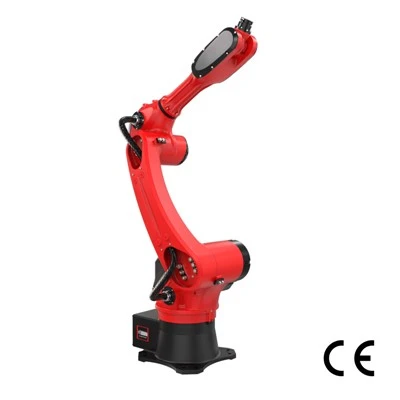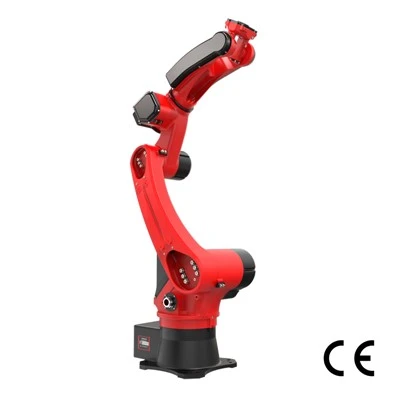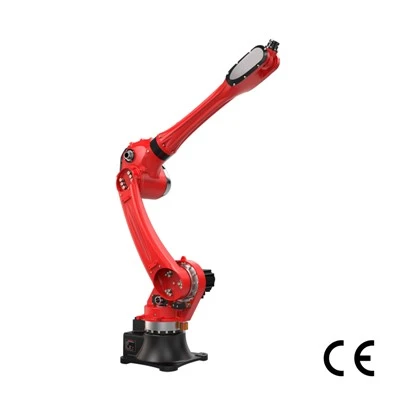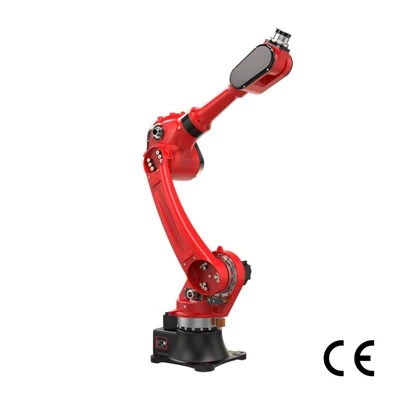


A pick and place robot should not be selected from payload and reach alone. A technically viable system depends on whether the robot can carry the complete load, reach every required pose, complete the full cycle at the target rate, repeat the motion within process tolerance, handle the required orientations, cope with the way products arrive, and operate reliably in the production environment.
These seven specifications form a practical starting point for an RFQ.
If you are planning pick-and-place automation, explore RBTIC pick-and-place robot series to review configurations and specifications.

Pick and Place Robot Payload: Calculate the Total Load
The first question is simple: what weight must the pick and place robot actually carry during the cycle?
The required payload is not just the product weight. It can include: Product + gripper + adapter/tooling + sensors + relevant cables or attached hardware
For example, a 3 kg product handled by 2 kg of end-of-arm tooling is not a 3 kg payload application. The robot is already carrying approximately 5 kg before any other wrist-mounted components are considered.
Payload also has to be considered together with the robot pose and tooling geometry. A long or offset tool can create different mechanical demands than a compact load of the same mass.
When preparing an RFQ, provide the product weight separately from the estimated EOAT weight. Do not simply state the heaviest product and assume that number represents the robot requirement.

Robot Reach and Work Envelope: Check the Usable Workspace
Robot reach and robot work envelope describe different things.
Maximum reach is the farthest distance the robot can theoretically extend under specified conditions. The work envelope is the three-dimensional region in which the robot can actually perform useful motion.
That distinction matters because a point can fall inside the quoted maximum reach while still being difficult or impossible to use at the required tool orientation. Actual workspace depends on the positions of the pick and place points, robot mounting location, required approach angles, gripper dimensions, joint limits, guarding, conveyors, fixtures, machines, and other equipment.
A useful cell-layout check is therefore:
Robot base → pick point → transfer path → place point → required tool orientation
All of those conditions must fit inside the usable workspace, not merely inside a circle defined by maximum reach.
A top-view cell layout with real equipment dimensions is often more useful for early selection than the reach number alone.

Pick and Place Robot Cycle Time and Throughput
The key question is not "How fast is the robot?" It is "How fast must the complete pick and place cell operate?"
A useful first estimate is: Required cycle time ≈ available production time ÷ required picks
For example, suppose a line must complete 1,200 picks in 60 minutes of available production time: 3,600 seconds ÷ 1,200 picks = 3 seconds per required pick
That 3 s target applies to the complete operating sequence, not just the robot's travel between two points. The real cycle may include product detection, vision processing, approach motion, gripper closing or vacuum generation, pick confirmation, robot travel, orientation changes, conveyor synchronization, placement, gripper release, verification, and return motion. The calculation can become more demanding if one finished product requires multiple robot picks. A packaging operation producing 20 cases per minute may appear moderate, but if every case requires six individual placements, the robot must execute 120 successful picks per minute.
This is why manufacturer maximum speed should never be converted directly into expected production throughput. Peak joint speed, maximum linear speed, or a benchmark cycle does not represent your complete application.
For qualification, define the required picks per minute, products per minute, picks per finished unit, travel distances, and major process delays. Then evaluate the full modeled cycle.
Robot Repeatability vs Accuracy for Pick and Place
Accuracy and repeatability are related, but they are not the same specification.
Accuracy describes how closely the pick and place robot can reach a commanded absolute position. Repeatability describes how consistently the robot can return to the same position over repeated cycles.
Many pick and place applications depend heavily on repeatability. If a product is always located in a precise fixture and the robot is taught the correct pick and place points, returning consistently to those same points may matter more than absolute positioning relative to an external coordinate system.
But that does not mean accuracy can always be ignored.
The real requirement depends on how the product is located, how the robot is calibrated, whether vision corrects the target position, how fixtures are referenced, and how much positional tolerance the downstream process allows. A loose case-packing operation may tolerate substantially more variation than inserting a component into a closely fitted assembly. Procurement teams sometimes compare one robot's accuracy specification with another robot's repeatability specification as though they describe the same performance. They do not.
The correct question is: what positional variation can the actual process tolerate, and which specification controls that result?

How Many Axes Does a Pick and Place Robot Need?
More axes do not automatically make a robot better. Additional axes provide greater freedom to control product position and orientation. They can allow the robot to approach from different directions, rotate a product during transfer, or move around equipment that blocks a direct path. That flexibility can also introduce additional programming, path-planning, and integration complexity.
Before selecting an architecture, ask three practical questions:
Does the product need to be flipped or substantially reoriented?
Does the pick and place robot need to move around obstacles?
Is the required orientation at the place point different from the orientation at the pick point?
If the answer to all three is no, a simpler architecture may perform the task effectively. If several are yes, additional axes may be necessary.
Axis count should therefore follow the required motion, rather than becoming a specification to maximize.
Product Presentation and Its Impact on Robot Selection
Product presentation is one of the strongest predictors of pick-and-place system complexity.
From a selection perspective, it can be viewed as a progression:
Fixed fixture → Indexed conveyor → Moving conveyor → Randomized single layer → Random bin
|
Feeding Dimension |
Description |
|
Fixed fixture |
At the first level, the product position is mechanically defined. The robot may be able to use fixed taught coordinates with minimal sensing. |
|
Indexed conveyor |
An indexed conveyor introduces timing and positional variation, but the product is still brought to a controlled pick location. |
|
Moving conveyor |
A continuously moving conveyor adds tracking requirements. The system must coordinate robot motion with a target that changes position during the pick. |
|
Randomized single layer |
Randomized single-layer presentation adds another level of uncertainty. Vision may need to determine individual product position and orientation and select a usable grip point. |
|
Random bin |
A random bin adds depth variation, occlusion, overlapping objects, constrained approaches, and collision risk. Robot selection may therefore need to account not only for reach and payload but also for compatible 3D sensing, grip planning, more complex trajectories, and greater clearance around the picking area. |
This complexity ladder is useful during qualification because the same product can require a very different automation system depending solely on how it arrives. Do not specify only "pick product X." Specify how product X is presented at the moment the robot must pick it.
Environmental Requirements for Pick and Place Robots
The production environment can change which robot, tooling, sensors, and cell design are suitable. Relevant constraints may include washdown, dust, moisture, food-contact requirements, cleanroom conditions, temperature extremes, or corrosive exposure.
These conditions can influence the required robot protection characteristics, materials used in the EOAT, suitable lubricants, cable and connector choices, sensor protection, camera or lighting enclosures, and the way the overall cell is constructed. For example, a vision system operating near moisture or aggressive cleaning procedures may require substantially different enclosure and mounting considerations from the same camera installed in a dry assembly environment. Likewise, gripping materials acceptable for general industrial handling may not be appropriate where direct food contact or contamination control applies.
Environmental suitability should therefore be defined before equipment is selected, not treated as a modification after the mechanical design is complete. Avoid selecting protection ratings or material specifications from generic rules alone. The requirement should be matched to the actual operating and cleaning conditions and then verified against the specific equipment manufacturer's documentation.
Pick and Place Robot Pre-Selection Checklist
Before requesting a robot or complete pick-and-place system quotation, collect the following information:
|
Check Item |
Detailed Requirements |
|
Product dimensions |
Minimum, maximum, and important geometry |
|
Product weight |
Including the heaviest expected variant |
|
Estimated EOAT weight |
Gripper, adapter, sensors, and attached tooling |
|
Pick location |
Coordinates, height, approach direction, and surrounding equipment |
|
Place location |
Coordinates, orientation, tolerance, and downstream interface |
|
Required throughput |
Picks per minute, products per minute, and picks per finished unit |
|
Orientation change |
Whether the product must rotate, flip, or change approach angle |
|
Presentation method |
Fixture, indexed conveyor, moving conveyor, random layer, or bin |
|
Environment |
Dust, moisture, washdown, food-contact, cleanroom, temperature, or corrosive exposure |
|
SKU count and changeover |
Number of product variants and how frequently the cell must switch between them |
The better these inputs are defined, the easier it becomes to eliminate unsuitable robot architectures before detailed engineering begins.
Ready to implement robotic pick and place?
Whether you are upgrading your end‑of‑line automation or searching for a reliable pick-and-place robot supplier, contact RBTIC for free custom pick-and-place solutions and layout designs, or to book a factory tour.
Frequently Asked Questions About Pick and Place Robot Specifications