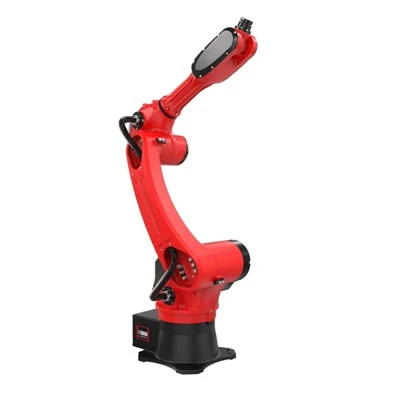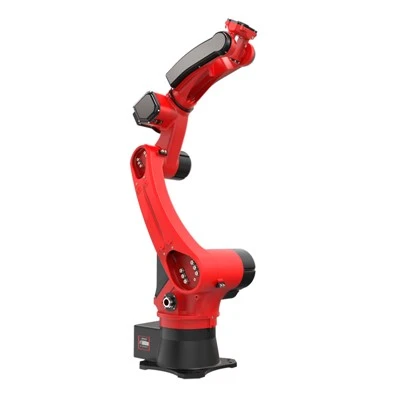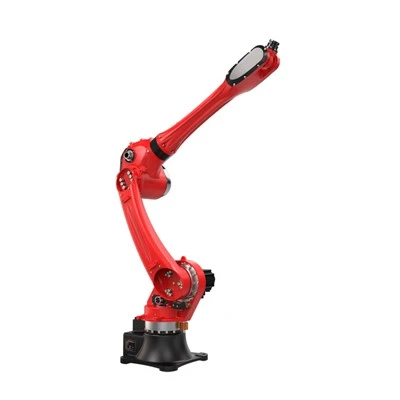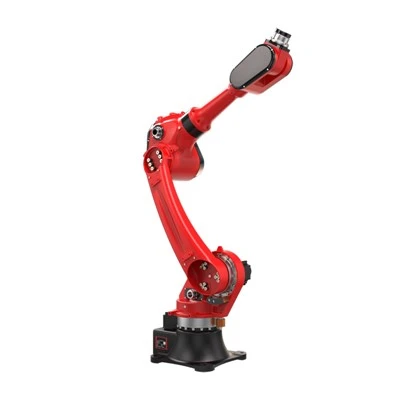

Industrial robots can be categorized into six core subcategories based on their operational functions. Different categories are suited to different production scenarios and are the core basis for enterprise selection. A detailed analysis follows:
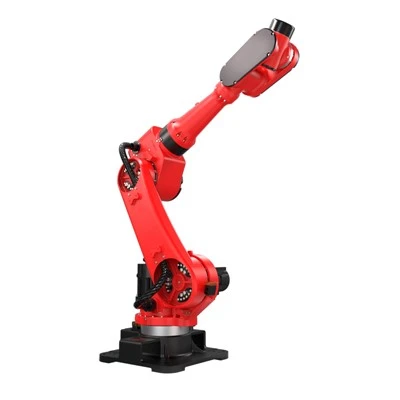
1. Welding Robots: One of the most widely used categories of industrial robots, their core function is various welding operations, including arc welding, spot welding, and laser welding. They are suitable for industries such as automotive manufacturing, machining, and steel structures. Their core characteristics are high welding precision, strong stability, and high efficiency. They can replace manual labor in high-intensity, high-risk welding operations, reducing welding defects and ensuring consistent welding quality.
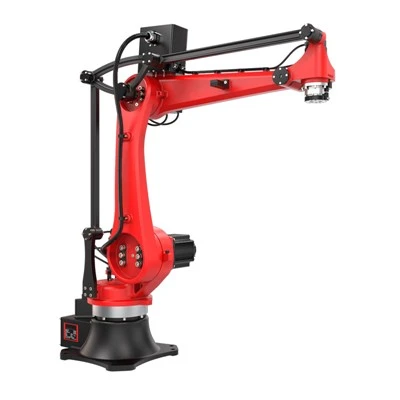
2. Palletizing Robots: Focused on material palletizing and handling, they are primarily used in industries such as food and beverage, building materials, chemicals, and logistics. They are responsible for neatly palletizing and transporting completed products to designated locations, replacing manual labor in repetitive, high-intensity palletizing tasks. Their core characteristics are strong load capacity, fast movement speed, and precise positioning. They can adapt to materials of different specifications and weights, improving palletizing efficiency and standardization.
3. Loading and Unloading Robots: Adapted to machine tools, machining centers, and other equipment, these robots are responsible for the automatic loading, unloading, and clamping of workpieces. They are primarily used in industries such as machining, electronics manufacturing, and automotive parts, enabling automated integration of processing steps, improving production efficiency, reducing manual intervention, and avoiding errors and safety hazards associated with manual operation. Their core features are flexible movement, precise positioning, and strong adaptability, allowing them to workpieces of different specifications and machine tools.
4. Grinding Robots: Used for grinding, polishing, and deburring workpiece surfaces, these robots are suitable for industries such as automotive parts, electronic components, and hardware products. They can replace manual labor in performing high-precision, highly repetitive grinding operations, avoiding errors inherent in manual grinding, improving product surface quality, and reducing labor intensity and dust hazards to operators. Their core features are high grinding precision and strong stability, adaptability to workpieces with complex shapes, and flexible grinding capabilities when combined with force sensors.
5. Assembly Robots: Focused on product assembly, these robots are responsible for picking up, locating, and assembling parts. They are primarily used in industries such as electronics manufacturing, automotive manufacturing, and medical devices. They automate and refine assembly processes, improving efficiency and product yield while reducing errors caused by manual assembly. Their core characteristics are precise movements and accurate positioning; when combined with vision sensors, they can accurately identify and assemble parts.
6. Collaborative Robots: An emerging category of industrial robots, these robots possess human-robot collaborative capabilities. They are small in size and highly flexible, able to work alongside humans to complete delicate tasks. They are suitable for small and medium-sized enterprises, complex working conditions, and multi-variety, small-batch production scenarios. Their core characteristics are strong safety features, ease of operation, and the ability to quickly switch tasks without complex safety measures, effectively improving production flexibility.