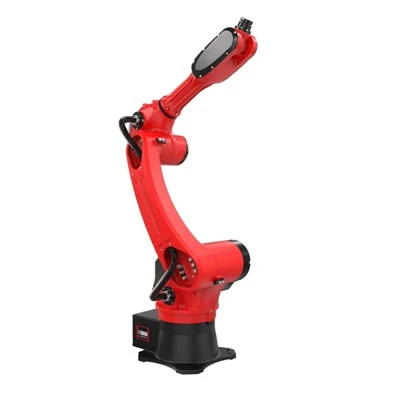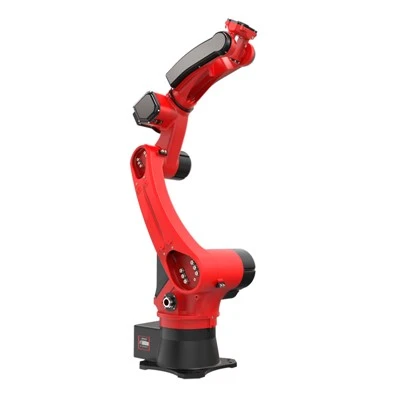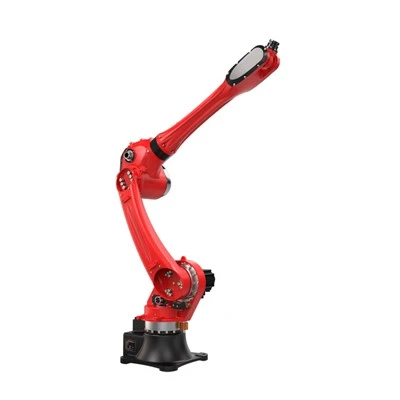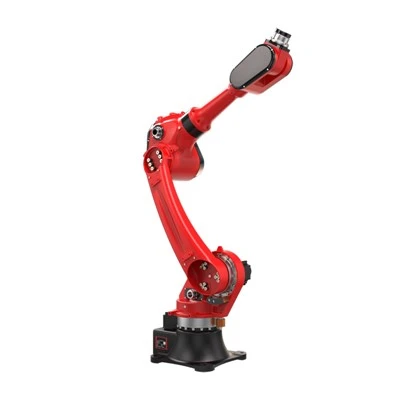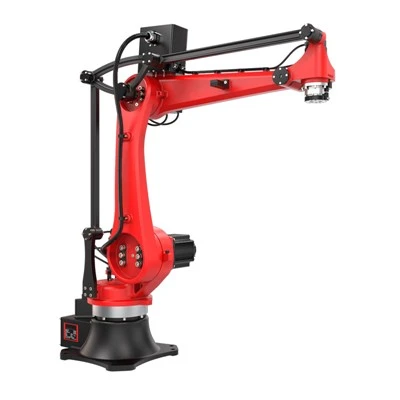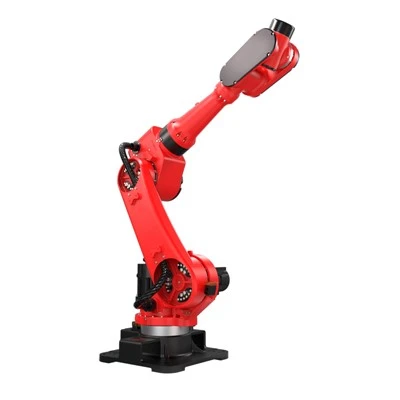

Have you ever witnessed the "steel ballet" of perfectly stacking three layers of mortar in 30 seconds? In the late-night workshop of a building materials factory in Shandong, two palletizing robots are performing a modern industrial miracle at a speed of 900 bags per hour. This palletizing position, which once required 12 workers, can now be completed by just two "steel employees." These robots work without eating, drinking, or taking leave, yet save the company 860,000 yuan in labor costs annually. This is the intelligent revolution sweeping the manufacturing industry-palletizing robots have moved from proof-of-concept to large-scale application.
Three Breakthroughs in the Efficiency Revolution
Traditional palletizing operations often face three major challenges: high incidence of occupational diseases like lumbar spine injuries among workers, transportation losses due to stacking errors, and night shift capacity utilization of less than 30%. However, intelligent palletizing systems, through 3D vision positioning and force control technology, control the stacking error of each 50kg bag of mortar within ±1mm. After implementation in a factory in Anhui, the transportation loss rate dropped by 83%. Even more astonishing is its adaptability-the multi-finger anti-slip gripper automatically adjusts its gripping force to handle different materials such as cardboard boxes, wooden frames, and plastic crates. A Guangdong company's actual test showed a bag breakage rate of less than one in ten thousand.
In the extreme environment of cold storage at -30 degrees Celsius, these "super employees" continue to operate stably. Data from a cold chain logistics center shows that robotic palletizing has increased cold storage operation efficiency by four times, while eliminating the problem of goods frost formation caused by manual operation. The breakthrough in flexible gripping systems has ended the history of manually stacking irregularly shaped items; now even specially shaped goods such as auto parts and medicine boxes can be handled fully automatically.
Domestic Technology's Leapfrog Development
Behind the impressive data that the Chinese palletizing robot market exceeded 31.5 billion yuan in 2024, with a domestic production rate reaching 65%, lies the transformation of local enterprises from catching up to leading. Palletizing robot workstations achieve industry-leading speeds of 8-12 boxes/minute on juice production lines, increasing labor efficiency by 250%. Its unique dual-line, dual-sided operation mode allows a single workstation to handle the needs of multiple production lines, resulting in a threefold increase in production efficiency reported by customers in the electronics industry.
The emergence of collaborative palletizing robots has further broken the traditional limitations of safety isolation. In a power tool factory in Shenzhen, palletizing robots work alongside workers using virtual wall protection technology, maintaining 100% production consistency while achieving near-instantaneous collision response. This new paradigm of "human-machine collaboration" is being rapidly replicated in the food and pharmaceutical industries. After its introduction, a daily chemical company saw its palletizing injury rate drop to zero.
Calculating the Economic Benefits of This Transformation
Initial investment is often the biggest concern for companies, but the Shandong case provides a clear answer: two robots replaced 12 jobs, and the cost was recovered in 14 months. A closer look reveals not only direct savings in labor costs but also hidden benefits such as a 70% reduction in transportation damage rates and a 90% reduction in customer complaints. By tracing pallet data through the MES system, the company also optimized its packaging design-discovering that 50kg mortar was prone to deformation on the third layer, they adjusted it to a 40kg/bag specification, saving 370,000 yuan in packaging costs annually.
The space optimization capabilities of intelligent algorithms also create unexpected value. After implementation in an e-commerce warehouse, the utilization rate of vertical space increased by 40%, equivalent to an additional 3,000 square meters of storage area. In an auto parts factory in the Yangtze River Delta, the pallets stacked by robots are considered "industrial works of art," and the return rate of exported products dropped by 92% due to improved transportation stability.
This silent revolution is reshaping production logic. When a "perpetual motion machine"-like intelligent system meets an algorithm-optimized warehouse brain, companies gain not only increased efficiency but also a resilient upgrade to the entire supply chain. In the next decade, we may see a scene where human managers stand in smart workshops, appreciating the precise symphony of robots, while the once arduous palletizing work has long become a historical term in textbooks.
Changzhou Leco Industrial Robot Automation provides comprehensive turnkey engineering services, including solution planning, equipment selection, installation and commissioning, and subsequent maintenance and upgrades, and tailors intelligent workshop solutions.