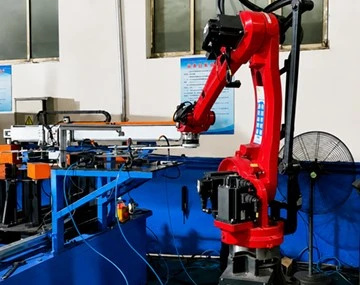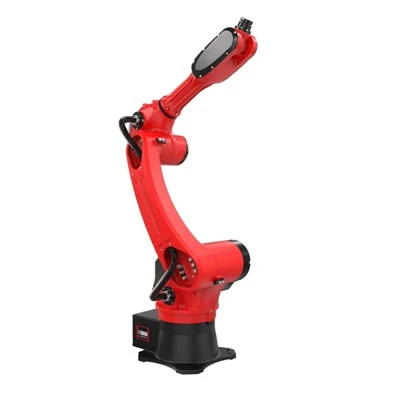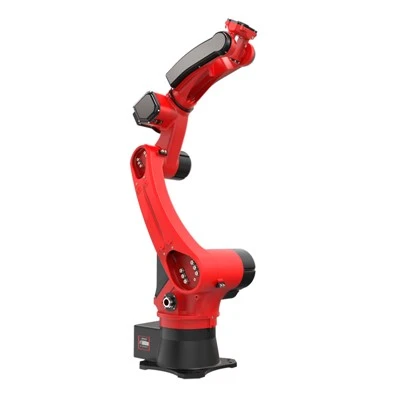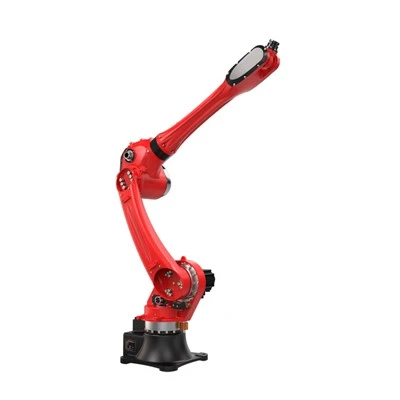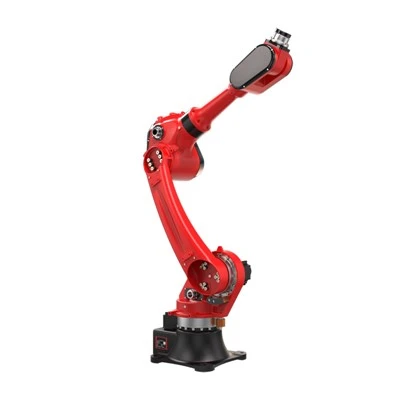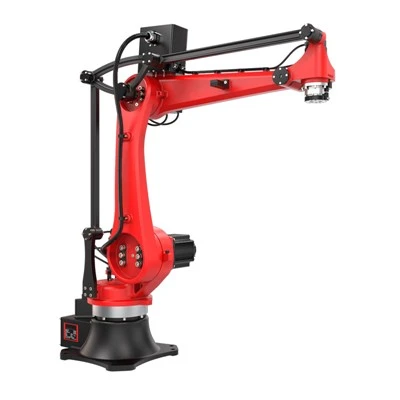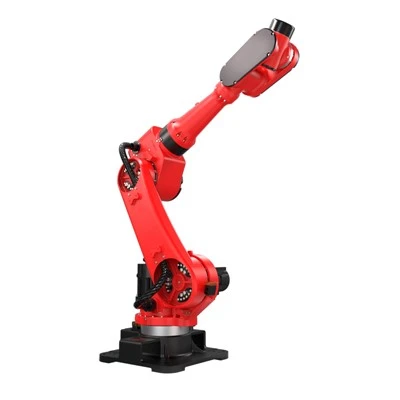

Material handling robots are industrial machines used in machine tool manufacturing to automatically complete operations such as loading, unloading, workpiece flipping, and sequence transfer. They are a key component of flexible manufacturing systems and are widely used in industries such as automotive, 3C (computers, communications, and consumer electronics), and die casting. They achieve a positioning accuracy of ±0.1mm through full servo drive and can adapt to workpieces of different shapes, such as discs and long shafts, supporting independent hoppers or assembly line configurations.
These machines are divided into two types: articulated and Cartesian coordinate robots. Articulated robots have a working range of 620mm-3503mm and a load capacity of 3kg-700kg; Cartesian coordinate robots have a horizontal travel of 10000mm-20000mm and a maximum load capacity of 1000kg. Yuejiang collaborative robots adopt a modular design, featuring a robotic arm with ±0.02mm accuracy and rapid changeover capabilities, increasing production efficiency by 20%-40%. Models such as the FANUC R-2000iB integrate vision sensing capabilities, enabling direct handling of bulk workpieces and the construction of flexible manufacturing cells. The control system supports teach programming and AS language programming, and communicates with the PLC via RS-232 serial port to achieve safety interlocking and real-time monitoring.