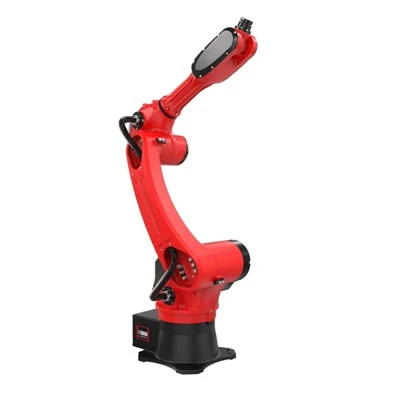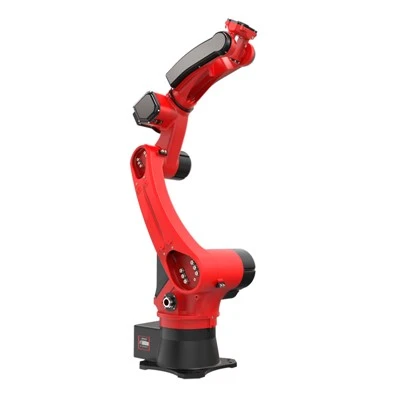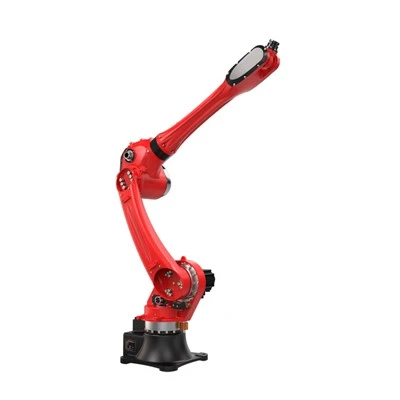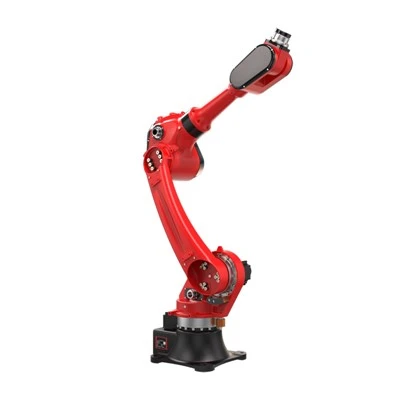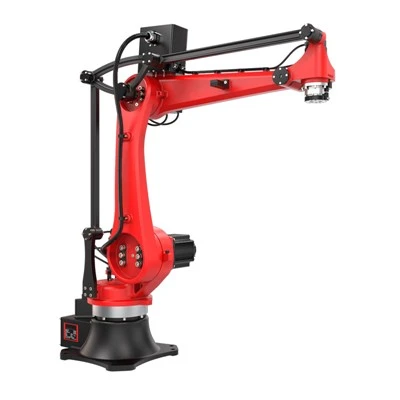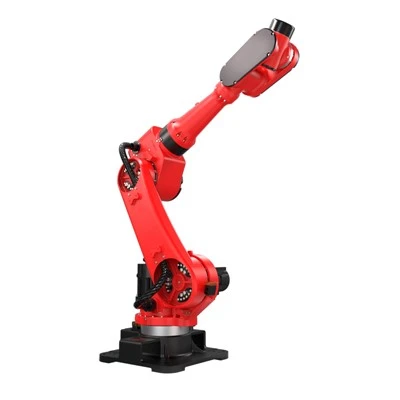

Industrial robots are multi-jointed mechanical devices designed for industrial applications. They can automatically perform tasks, acquiring sequential or positional instructions through operator teaching to complete operations. This type of equipment belongs to the earliest generation of industrial robots; the world's first CNC industrial robot prototype was successfully developed by Consolidated Control in the United States.
The robot's mechanical structure includes a waist-mounted actuator, upper arm, forearm, wrist, and gripper components. The control system operates via computer-programmed commands. The end effector can be replaced to adapt to different tasks, enabling rapid conversion to small-batch, multi-variety production modes in flexible manufacturing systems. Its technology integrates precision, flexibility, and intelligence, and its applications cover more than ten industrial sectors, including automotive manufacturing, construction machinery, rail transportation, and power equipment.
In the use of CNC robots, operators do not manually teach the robots but rather program them to execute specified tasks. Dedicated or general-purpose computers are primarily used to control the mechanical equipment, enabling automated operation and the production of qualified products. The use of CNC robots can reduce robot costs, improve operational accuracy, and eliminate the hassle of manual teaching. China also successfully developed CNC robots during the Seventh and Eighth Five-Year Plans.