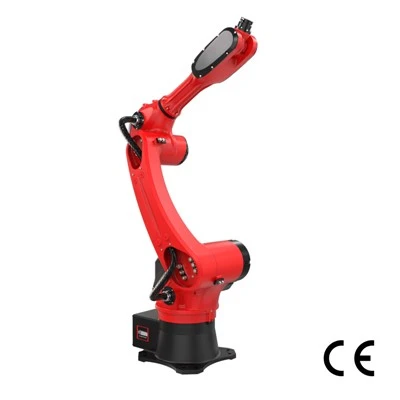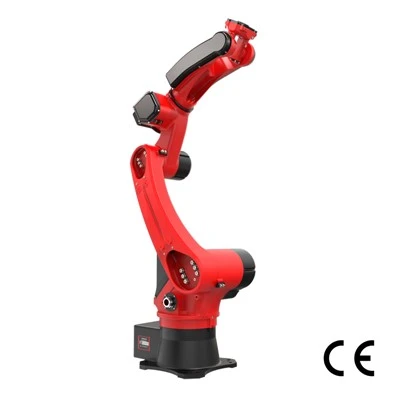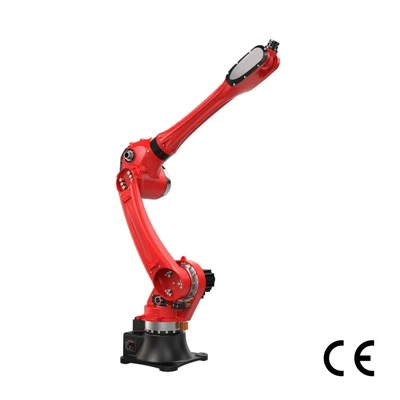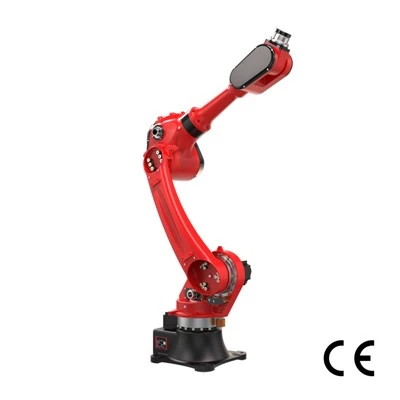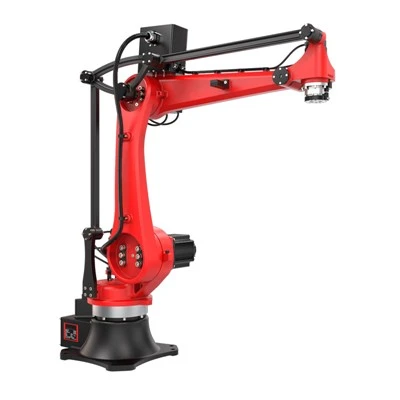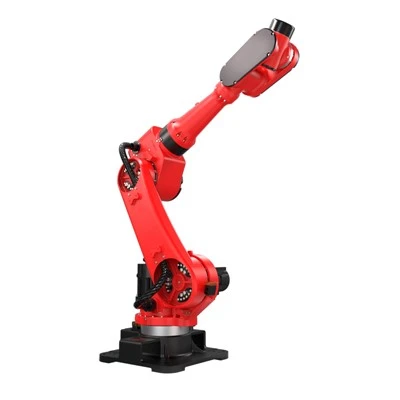

Technical parameters are the core basis for judging the performance and adaptability of industrial robots. When selecting a robot, companies should focus on the following key parameters and accurately match them with their own operational needs:
1. Load Capacity: This refers to the maximum weight (including fixture weight) that the robot's end effector can bear, measured in kg. Load capacities vary significantly depending on the product category. Palletizing robots typically have a load capacity of 5-500 kg, collaborative robots 1-10 kg, and loading/unloading and grinding robots 3-50 kg. Companies need to select a model with a 20%-30% safety margin based on the workpiece weight + fixture weight to avoid insufficient load affecting operations.
2. Working Radius (Arm Span): This refers to the maximum distance from the center of the robot's wrist to the center of the base, measured in mm. It determines the robot's working range. Companies need to select a model based on the size of the production environment and the working distance to avoid insufficient working radius to cover the work area, or excessive working radius leading to resource waste.
3. Repeatability: This refers to the deviation in positioning of the end effector when the robot repeatedly performs the same action, measured in mm. It directly affects the quality of work. For precision operations such as welding, assembly, and grinding, models with an accuracy of ≤±0.05mm should be selected; for rough operations such as palletizing and loading/unloading, an accuracy of ±0.1-±0.5mm can be chosen.
4. Motion Speed: This refers to the speed at which the robot's joints rotate or its end effector moves, measured in mm/s or °/s. It directly affects production efficiency. Companies need to select models based on production cycle requirements, while also considering accuracy and stability to avoid excessive speed affecting work quality.
5. Core Component Parameters: Pay close attention to the parameters of the reducer, servo motor, and controller. The reducer type (harmonic/RV) and transmission ratio determine the robot's rigidity and accuracy; the servo motor's power, speed, and torque determine the robot's power and response speed; the controller's motion control algorithm and signal processing capabilities determine the robot's motion smoothness and control accuracy.
6. Protection Rating: This refers to the robot's ability to resist dust and moisture. Different production scenarios have different protection requirements. For ordinary workshops, IP54 is sufficient; for humid, dusty, or corrosive environments, IP65 or higher protection ratings are required; for explosion-proof scenarios, explosion-proof robots with corresponding explosion-proof qualifications must be selected.