

What Robotic Palletizing Actually Is - and What It Isn't
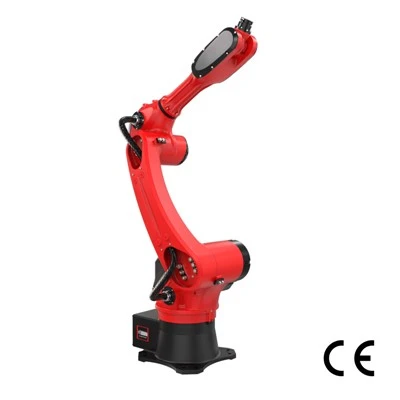
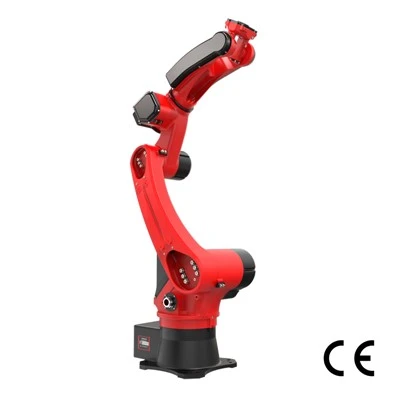
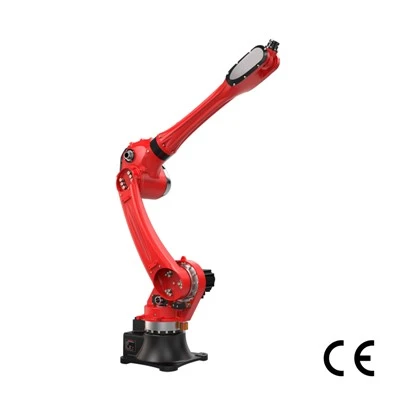
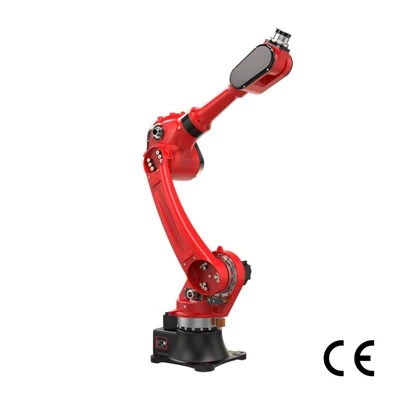
Robotic palletizing is best understood not as a machine but as a system - a coordinated set of parts that takes loose product off your line and delivers a stable, wrapped pallet ready to ship. That distinction isn't academic. Everything later in this guide - cost, throughput, safety - follows from it. So the useful question isn't "which robot do I need?" but "what does this system include, and where does it stop?"
What this guide covers: palletizing of finished cases and bags - the sealed, uniform loads that make up most end-of-line packaging. It does not cover single-piece sorting or mixed-order (each) picking. Those are different problems with different economics, and treating them as the same thing is where a lot of bad quotes start.
The 5 stages of a standard palletizing cycle

One full palletizing cycle moves product through five stages:
Infeed - Cases or bags arrive from the production line on a conveyor, one after another.
Lane division / orienting - Product is separated, squared, and rotated into the orientation the pattern needs. This stage quietly sets your ceiling speed - we come back to why in the throughput section.
Pick - The robot grips one or more units with its end-of-arm tool.
Place by pattern - Each unit is set down according to the programmed stacking pattern, layer by layer.
Pallet change / wrapping - The finished pallet is moved out, an empty one is staged, and the load is stretch-wrapped. This handoff is where many lines actually stall, not the robot itself.
Palletizing ≠ just a robot arm: what a complete palletizing cell includes
You think you're buying a robot. You're buying a palletizing cell. These are the palletizing system components you're actually paying for - and, just as important, who is expected to supply each one:
|
Component |
What it does |
Who provides it (typically) |
||
|
Robot / palletizing arm |
Picks and places product |
Robot maker |
||
|
End-of-arm tool (gripper) |
Grabs your specific case or bag |
Integrator (application-specific) |
||
|
Infeed conveyor & orienting |
Feeds, squares, and orients product |
Integrator |
||
|
Pallet magazine / dispenser |
Stores and feeds empty pallets |
Integrator or by others |
||
|
Safety fencing / area scanners |
Guards the work zone |
Integrator or by others |
||
|
Stretch wrapper & interface |
Wraps the finished load |
Often by others (separate machine) |
||
|
Controls & pattern software |
Runs the sequence and stacking patterns |
Robot maker / integrator |
||
|
Installation & commissioning |
Gets it running on your floor |
Integrator |
Quote disputes almost always land in three places: the pallet magazine, the safety fencing, and the stretch-wrapper interface - items each party quietly assumes the other is covering.

Tip: Ask every supplier for a written scope of supply, and require each line to be marked by supplier or by others. It turns hidden assumptions into a signed list - and it's the cheapest insurance you'll buy in this whole project.
Common Misconceptions & Key Distinctions
A few terms get used interchangeably but describe different things. This table defines the differences only - which option actually suits your line is the next section's job.
|
Term |
One-sentence definition |
Key difference |
Typical scenario |
|
Palletizing |
Building a loaded pallet from individual units |
Assembles loads |
End of a packaging line |
|
Depalletizing |
Breaking a loaded pallet back down into individual units |
The reverse of palletizing - it needs load detection and de-stacking logic, not just placement, so it's rarely a simple "run the robot backwards" job |
Receiving docks, line infeed, feeding raw material into production |
|
Palletizing robot |
An articulated or gantry arm that stacks to a programmed pattern |
Handles single units against a flexible, reprogrammable pattern |
Varied SKUs and patterns that change |
|
Layer palletizer |
A machine that forms a full layer and lowers it onto the pallet at once |
Moves whole layers rather than single units |
High-rate, single-SKU lines |
|
Collaborative palletizing |
A cobot palletizer that works without hard guarding |
Runs slower but shares floor space with people |
Low-rate lines, tight footprints |
Conventional vs Industrial Robot vs Cobot Palletizer

Route choice is essentially decided by three variables: throughput, SKU count, and how much integration complexity you're willing to own. Get those three straight and the field narrows fast. Most buyers arrive convinced they need a robot; a good number leave this section realizing the boundary runs somewhere they didn't expect. This is the part where palletizer types stop being a catalog and start being a filter - and where the real question, cobot palletizer vs industrial robot, turns out to be the wrong first question. The first fork is whether you belong on a robot at all.
Conventional layer palletizer: the cost-optimal answer for high-speed, single-SKU lines
The mechanical layer palletizer is not the legacy option you tolerate until you can afford a robot - for one product running fast, it's still the machine that wins on cost per case. It builds a full layer, then sets it down, so its rate scales with layer size, not pick count.
The split that matters is infeed height.
Low-level infeed forms the layer near the floor and lifts it - simple, accessible, but capped at roughly 1–3 layers/min, so realistically 15–40 cases/min.
High-level infeed forms the layer overhead and lowers it onto a descending pallet; the short down-stroke removes the per-cycle lifting penalty, pushing 5–10 layers/min and 100–180 cases/min.
The rule of thumb: above ~40–50 cases/min on a stable format, high-level is the clear engineering choice. Exact numbers depend on case size and layer count.
Here's the counterintuitive part: if your line runs a single SKU year-round above ~60 cases/min, a robot - even with a multi-pick or full-layer gripper - is usually both slower and more expensive than a layer former. Flexibility you don't use is just cost you carry. Where the layer palletizer loses is the moment you need frequent pattern or SKU changes: mechanical changeover runs 30–120 minutes.
Industrial robot palletizing: the flexibility-plus-speed middle
The industrial palletizing robot wins the widest band: mixed SKUs at medium-to-high rate. A single arm typically runs 8–12 picks/min, or roughly 20–35 cases/min, and that number multiplies when you fit a row or full-layer gripper. Payload is where it separates from cobots outright: 50 kg to 800 kg, which is what makes 25 kg bags, drums, and full layers viable from one installation. New patterns are a software change, not a retool, so changeover drops to 15–60 minutes.
The catch is what surrounds the arm. Fencing, area scanners, and (for heavier arms) a reinforced foundation are not optional add-ons - they're a material share of the total cell cost, and a big part of why an industrial cell lands well above a cobot on price.
Cobot palletizing: low barrier, movable
That question is what sells cobot palletizing, and the honest answer is that a cobot palletizer has real value - it's just not located where the marketing points. "No fence, plug-and-play" is true right up to three hard boundaries, and every serious buyer should price all three before signing.
One - payload, after the gripper. Rated payload (commonly 10–25 kg, some to 30 kg) is not your case weight. The end-of-arm tool eats into it: a vacuum head with a slip-sheet arm can weigh 15–20 kg on its own, so a 25 kg-rated arm often leaves ~18 kg per actual lift. For peak speed, plan on staying under about half the rating.
Two - cycle ceiling. Real-world collaborative palletizing runs 4–12 cases/min, and the top of that band assumes light cases and simple patterns.
Three - the speed you actually get. Vendor cycle figures are usually the non-collaborative (guarded, full-speed) number. The instant a risk assessment requires force-limited operation near people, the arm slows down - and standard versus force-limited throughput can diverge by a wide margin, quietly turning a "12/min" spec into far less on your floor. Related: a lift column / 7th axis to reach full pallet height is a near-standard configuration, not a nice-to-have - budget it in.
And the core correction: whether you need guarding depends on the risk assessment, not on the word "cobot." A collaborative arm swinging a heavy box at speed can still require protective measures.
Practical test: at proof-of-concept, make the supplier demo full-speed running with your real cases and your real pattern - not the trade-show loop.
Hybrid and multi-station: one robot, several lines
The industrial palletizing robot wins the widest band: mixed SKUs at medium-to-high rate. A single arm typically runs 8–12 picks/min, or roughly 20–35 cases/min, and that number multiplies when you fit a row or full-layer gripper. Payload is where it separates from cobots outright: 50 kg to 800 kg, which is what makes 25 kg bags, drums, and full layers viable from one installation. New patterns are a software change, not a retool, so changeover drops to 15–60 minutes.
The catch is what surrounds the arm. Fencing, area scanners, and (for heavier arms) a reinforced foundation are not optional add-ons - they're a material share of the total cell cost, and a big part of why an industrial cell lands well above a cobot on price.
Three-route comparison matrix
Read it left to right and it doubles as a filter - each row that rules you out of a column narrows the field.
|
Decision factor |
Conventional layer palletizer |
Industrial robot |
Cobot palletizer |
|
Throughput |
High-level 100–180/min; low-level 15–40 cases/min |
20–35 cases/min; more with row/layer gripper |
4–12 cases/min; less once force-limited |
|
Payload / unit weight |
Cases or bags up to ~50–100 kg |
50–800 kg; bags, drums, layers all viable |
10–25 kg rated; ~18 kg per lift after EOAT |
|
SKU / changeover |
1–2 SKUs; 30–120 min mechanical retool |
Many SKUs; software changeover 15–60 min |
Unlimited patterns; tablet changeover in minutes |
|
Footprint & clear height |
Large, 20–50 m²; high-level needs 4–5 m |
Medium, 15–30 m²; standard ceiling |
Small, 3–6 m²; needs ~3.5 m clear height |
|
Safety requirement |
Full guarding; mature, fixed machine |
Fencing + scanners required; adds real cost |
Guarding set by risk assessment, not arm type |
|
Deployment time |
Long; civil/structural work, weeks |
Weeks; fencing, foundation, commissioning |
Fast; hours to a few days |
|
Relocatable |
No - effectively permanent |
Difficult; anchored, fenced install |
Yes - often on a wheeled base |
|
Maintenance |
Mechanical, many moving parts; skilled |
Robust; skilled but well-supported |
Low; largely operator-serviceable |
|
Best fit |
One SKU, very high speed, stable format |
Mixed SKUs, medium–high rate, heavy loads |
1–3 lines, ≤~10/min, boxes / light bags |
|
Where it's the wrong tool |
Frequent SKU or pattern changes; low volume |
Ultra-high single-SKU (layer wins); tiny budget |
>12–15/min or heavy loads - it becomes the bottleneck |
When NOT to Buy a Robotic Palletizer
You run one SKU at 60+ cases/min, year-round. → A robot, even multi-pick, can't match a layer former's rate and costs more per case. → Buy a high-level layer palletizer.
You palletize a handful of pallets a day, irregularly. → Capital plus integration won't pay back against that volume; ROI runs past any reasonable window. → Keep it manual with a lift-assist or vacuum-tube ergonomic aid.
Your product is unstable, wet, or odd-shaped and the format changes often. → Per-format EOAT and pattern re-engineering eats the exact flexibility you're paying for. → Stabilize upstream packaging first; stay manual + ergonomic until formats settle.
You want cobot speed but "no fence" is the whole reason you're buying. → If the risk assessment forces force-limited speed, a fenced industrial cell is faster and cheaper per case. → Buy an industrial robot and budget the guarding - or re-scope the throughput.
How to Calculate Palletizer Cycle Time and Match Line Throughput
You've picked a robot architecture in the previous section. Now comes the question that actually decides whether that choice survives contact with your line: can it hit the palletizer cycle time your upstream process demands, day in and day out - not just on the supplier's demo reel?
From Line Throughput to Required Picks per Minute

Start with your line rate, not the robot's spec. Everything else derives from it.
Step 1 - Convert cases per minute (CPM) to required picks per minute: required picks/min = line CPM ÷ cases per pick
Step 2 - Convert that into a cycle time budget: cycle time = 60 ÷ required picks/min
Step 3 - Build in the loss chain. A robot's theoretical cycle time is never what you get on the floor. You need to stack four discounts on top of the raw number: time amortized for pallet changeovers, buffer-related slowdowns, equipment availability (the percentage of scheduled time the machine is actually running - often shortened to OEE-adjacent terms in vendor quotes), and variability in how consistently product arrives from upstream. As a working range, design your target cycle time with 15–25% headroom above the theoretical minimum - tighter lines with stable infeed can sit near the low end, lines with variable incoming flow should plan for the high end.
As a working rule of thumb:
Line rate: 47 CPM
Cases per pick: 1 (single-pick)
Required picks/min = 47 ÷ 1 = 47 picks/min
Cycle time budget = 60 ÷ 47 = 1.28 sec/pick
Availability: 92%
Adjusted requirement = 1.28 × 0.92 = 1.18 sec/pick - this is the real number the robot has to hit, not 1.28
Pallet: 8 layers, 6 cases/layer, changeover time 22 sec/pallet
Changeover loss per pick = 22 sec ÷ (8 × 6 picks) = 0.46 sec/pick
True required cycle time = 1.18 − 0.46 = 0.72 sec/pick
If your worked-through required picks/min lands north of roughly 45–50 picks/min for single-pick handling, single-pick robotic palletizing is generally no longer viable at that speed - move to the next section on multi-pick and full-layer strategies rather than trying to force a faster single-arm cycle.
How Multi-Pick and Full-Layer Picking Multiply Throughput
Multi-pick and full-layer picking raise effective throughput without a faster robot - but both carry preconditions, not just benefits. They depend on consistent case dimensions, upstream infeed equipment that can reliably lane and square product before it reaches the robot, and a pallet pattern that geometrically allows grouped placement. If any of those three isn't in place, adding multi-pick capability is a negative return, not an upgrade.
There's also a mechanical chain reaction worth tracing before you commit: a multi-pick palletizing or full layer picking end-of-arm tool (EOAT) is heavier than a single-pick gripper. That added weight eats into the robot's rated payload, which can force a move to a larger robot class - which changes footprint, cost, and sometimes cycle dynamics in the opposite direction of what you were solving for.
The cost reminder worth internalizing: the expense of full-layer picking usually isn't the tooling - it's the upstream laning and squaring section needed to feed it reliably.
The Overlooked Cycle-Time Killers
In practice, quoted cycle times and observed cycle times diverge for four repeatable reasons.
Pallet changeover time. Every empty-pallet swap costs real seconds - commonly 15–25 sec per pallet. Amortized across a full pallet's worth of picks, that can quietly cost 0.3–0.5 sec per pick, which compounds fast at high case counts.
Wrapper waiting. The downstream stretch-wrapper's cycle sets a ceiling on how fast the palletizer can actually run, not the other way around - a robot that finishes a pallet before the wrapper clears it just idles.
Incoming flow variability. Upstream case-flow gaps and surges mean the robot isn't fed at a constant rate, so its average real-world cycle time is always worse than its best-case cycle time, even with a fully capable robot.
Pattern complexity. Interlocking or cross-stacked pallet patterns require longer placement paths per case than simple column-stacked patterns - the more the pattern is optimized for load stability, the more it costs in cycle time.