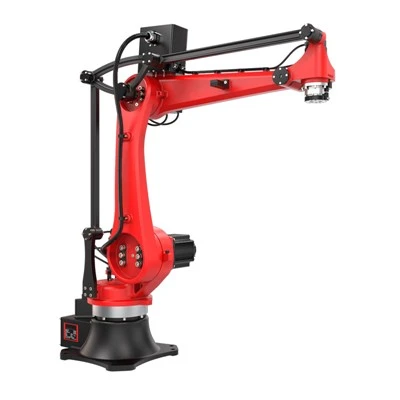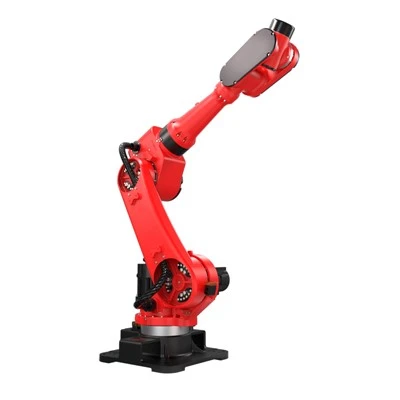

Origin and Development History
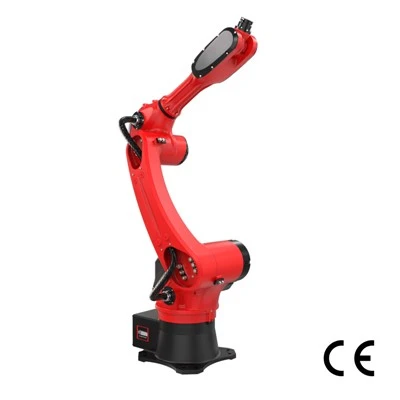
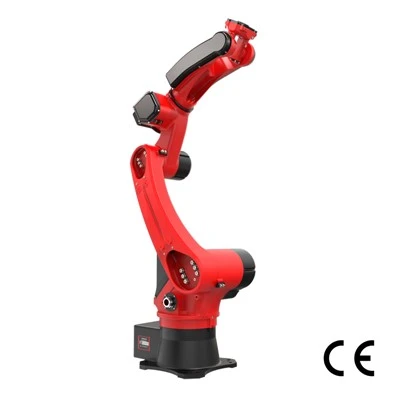
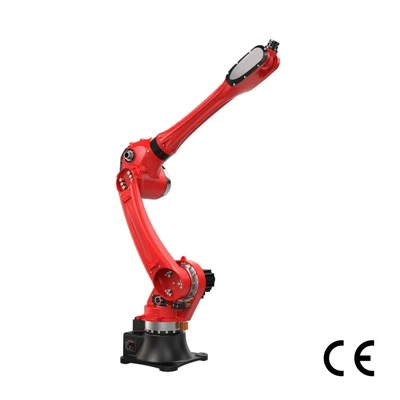
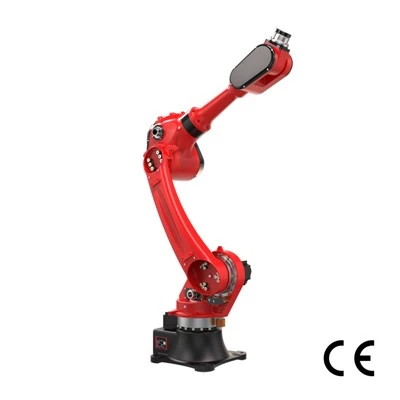
The technological prototype of industrial robots can be traced back to the mid-20th century: In 1954, American inventor George Devol applied for a patent for a "programmable transfer device", first proposing the idea of controlling the movement of a robotic arm through a program, laying the technological foundation for industrial robots; in 1961, the world's first industrial robot, Unimate, was put into use in the General Motors plant in the United States for automobile body welding operations, marking the formal entry of industrial robots into actual production scenarios. In the 1970s, Japan introduced industrial robot technology and accelerated its industrialization. Companies such as FANUC and Yaskawa Electric launched standardized products, promoting the large-scale popularization of robots in the automotive and electronics industries. Japan also became the world's largest industrial robot market at that time. During the same period, China launched related research. In 1972, Tsinghua University developed the first prototype of industrial robot in China, starting the process of independent research and development. In December 2025, the "Quality Strengthening Chain" project of industrial robots completed 33 key tasks, realizing a major transformation from initial exploration to system promotion, and from technology research to industrial verification. The project has achieved significant progress in standards, metrology, testing, and certification: seven national standards for industrial robots and five national standards for artificial intelligence have been formulated; a dynamic trajectory accuracy metrology and calibration device has been built; standard materials for lubricant viscosity have been developed; and certification rules covering complete machines, systems, and core components have been released. The project has significantly promoted industrial development: the accuracy of heavy-duty robots has doubled; the average mean time between failures (MTBF) has reached 120,000 hours; and domestically produced spot welding robots will be used in batches at automotive OEMs for the first time in 2025. Through the "one test, two certifications" international cooperation mechanism, enterprise certification costs have been reduced by 50% and the cycle shortened by 40%, and domestically produced robots have successfully entered the EU and North American markets.
Current Development Status
In 2020, the operating revenue of China's robot industry exceeded 100 billion yuan for the first time. During the 13th Five-Year Plan period, the output of industrial robots increased from 72,000 sets to 212,000 sets, with an average annual growth of 31%. In terms of technology and products, key technologies and components such as precision reducers, high-performance servo drive systems, intelligent controllers, and intelligent integrated joints have achieved rapid breakthroughs, with continuous innovation. Overall machine performance has been significantly improved, functions have become increasingly richer, and product quality has been continuously optimized. Industry applications are also expanding in depth. For example, industrial robots have been widely used in 52 major industry categories and 143 sub-categories, including automotive, electronics, metallurgy, light industry, petrochemicals, and pharmaceuticals. On September 9, 2025, the State Council Information Office held a press conference where Li Lecheng, Minister of Industry and Information Technology, and others introduced the achievements of my country's industrial and information technology development during the 14th Five-Year Plan period, noting that the newly installed capacity of industrial robots accounted for more than 50% of the global total. On October 13, 2025, the State Council Information Office held another press conference where Wang Jun, Deputy Director of the General Administration of Customs, stated that in the first three quarters of 2025, my country's exports of industrial robots increased by 54.9%.
Entering 2026, the export growth momentum remained strong. In April 2026 alone, the export volume of industrial robots exceeded 25,000 units, a year-on-year increase of nearly 90%. Among them, mobile robots demonstrated strong competitiveness, with their export order share rapidly climbing from 25.87% in 2022 to 37.12% in 2024, and exceeding 40% in 2025. Major export destinations include the e-commerce, retail, and third-party logistics industries in Europe, America, and the Asia-Pacific region, as well as emerging markets such as Southeast Asia and the Middle East.
On the morning of April 21, 2026, the State Council Information Office held a press conference to introduce the development of industry and information technology in the first quarter of 2026. In the first quarter, the application of new technologies such as artificial intelligence in the electronics and consumer goods industries accelerated, and terminal products such as drones and AI glasses became increasingly abundant. The output of products such as industrial robots and integrated circuits increased by 33.2% and 24.3% year-on-year, respectively.