

Quick Answer Box
A palletizing robot automatically picks and stacks products onto pallets. The right system depends primarily on product weight and dimensions, line speed, pallet configuration, SKU variability, available space, safety requirements and required level of automation.
Palletizing robots handle picking and stacking of cases, bags and cartons onto shipping pallets to replace manual pallet-handling work. Many manufacturers shift to automation to cut repetitive-labour costs, reduce workplace injury risks and stabilise throughput amid labour shortages. Yet most buyers make missteps by comparing only payload or upfront unit price, ignoring real-world line constraints and total operating costs.
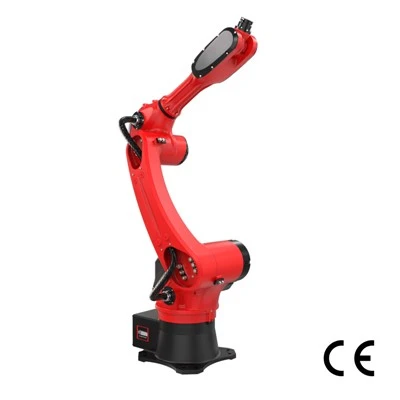
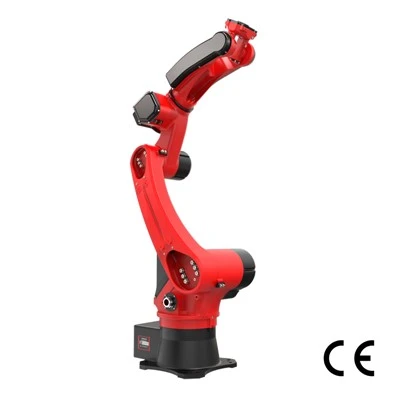
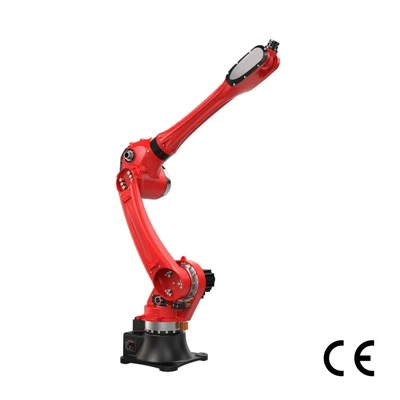
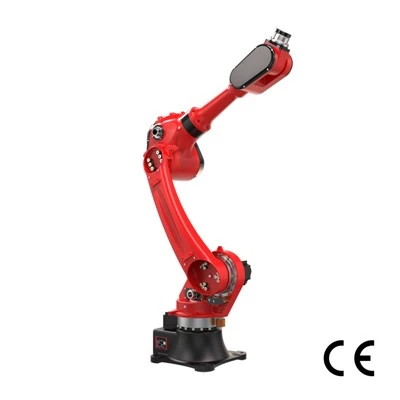
If you are planning palletizing automation, browse RBTIC palletizing robot series for configurations and specifications.
What Is a Palletizing Robot and What Does the Complete System Include?
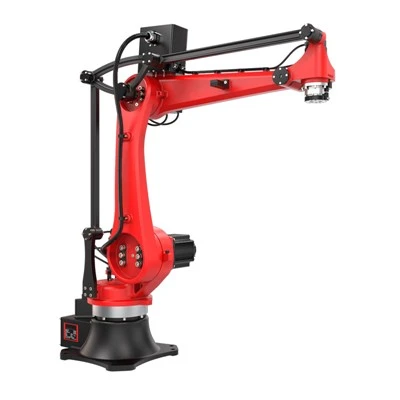
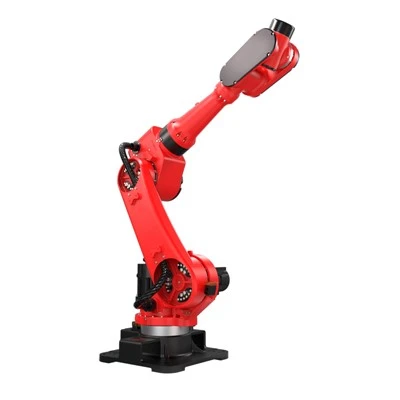
A palletizing robot is an industrial robot used to pick products-such as cases, bags, trays, or other packaged loads-and place them onto pallets in a defined stacking pattern. Its job is the physical pick-and-place motion required to build a palletized load.
However, the robot itself is only one part of the automation. In most projects, buyers are not purchasing a robot arm alone; they are purchasing an integrated robotic palletizing system designed to receive products, handle them correctly, build the required pallet pattern, and operate safely within the production line.
Robot vs. complete palletizing system
A complete palletizing system, or palletizing cell, typically combines the robot with several supporting components:
Robot: provides the motion, reach, payload capacity, and positioning required for palletizing.
End-of-arm tooling (EOAT): grips or supports the product during each pick-and-place cycle.
Conveyors: deliver products to the robot and, where required, move pallets into or out of the cell.
Sensors: detect product, pallet, position, and other conditions needed for coordinated operation.
Safety system: uses guarding, interlocks, scanners, or other protective devices to control access to the cell.
HMI and controls: allow operators to select recipes, view system status, manage faults, and control production.
Pallet and slip-sheet handling: automatically supplies empty pallets or intermediate sheets when the application requires them.
Wrapper interface: coordinates the palletizer with downstream stretch wrapping or other load-finishing equipment.

Not every application requires every module. The final architecture depends on factors such as product type, pallet patterns, throughput, available floor space, pallet handling requirements, and the level of automation expected upstream and downstream.
In other words, the robot arm is a component; the complete palletizing system is the working production solution.
Once that distinction is clear, the more commercially important question is whether your operation actually needs robotic palletizing-and whether it is ready for it.
When Does Robotic Palletizing Make Business Sense?
Robotic palletizing makes the most business sense when three conditions overlap: there is a meaningful operational problem, the production process is suitable for automation, and the expected value justifies the investment. That means the decision should not start with "Can a robot stack these products?" In many applications, the answer is technically yes. The more useful question is whether palletizing automation solves a persistent production constraint well enough to justify the system, integration, floor space, and ongoing support it requires.
A feasibility study is usually worth considering when palletizing has become difficult to staff, physically demanding, inconsistent, or restrictive to production growth. It may be less compelling when volumes are low, upstream conditions are unstable, products are highly unpredictable, or the economic case depends on assumptions that are unlikely to hold.
Operational signs that you may be ready
Several observable production conditions can indicate that robotic palletizing deserves closer evaluation.
Persistent staffing difficulty. If palletizing positions are repeatedly hard to fill or retain, automation can reduce dependence on a labor pool that is already constraining production. The business value is highest when staffing problems are recurring rather than temporary.
High physical exposure or ergonomic burden. Repetitive lifting, bending, twisting, or handling heavy products increases the value of removing operators from the palletizing task. The relevant question is not simply whether automation is "safer," but how much manual exposure the existing process creates over a full shift.
An end-of-line bottleneck. If upstream equipment can produce faster than operators can reliably palletize, the palletizing station may be limiting usable line capacity. Automation becomes more valuable when increasing palletizing throughput allows existing upstream assets to run closer to their intended output.
Planned production expansion. A new line, higher line rate, additional SKU volume, or facility expansion can change the economics even if manual palletizing is manageable today. Automation may help absorb future output without increasing end-of-line labor at the same rate.
Inconsistent pallet quality. Frequent variation in case position, layer alignment, stack height, or pattern execution can create downstream handling and transport problems. A well-designed automated cell can add value when the required pallet pattern is defined and the incoming product is sufficiently consistent.
Recurring overtime. Overtime is especially relevant when it shows that manual palletizing labor demand is expanding with the production schedule. If operators must regularly stay late simply because the line is running longer, the cost and availability of palletizing labor can become a structural constraint rather than an isolated expense.
Multiple-shift operation. The more hours a palletizing position must be staffed each day, the greater the potential utilization of an automated system. A cell running across two or three shifts generally has more opportunity to generate economic value than the same equipment serving a lightly utilized single-shift process.
Consider two simplified situations. A single-shift line running moderate volumes for only part of the day, with readily available labor and little ergonomic exposure, may have a weak automation case even if the application is technically straightforward. By contrast, a three-shift line that regularly struggles to staff palletizing positions, incurs overtime, and cannot increase production without adding more operators presents a much stronger case for evaluation.
When a palletizing robot may NOT be the right answer
Not every manual palletizing process should be automated immediately. In some environments, the technical solution is possible but the operational or financial case still needs further validation.
Low or intermittent production volume. If palletizing demand is limited to a small number of loads or a few operating hours per week, the equipment may remain underutilized. Automation can still make sense for ergonomic or strategic reasons, but labor savings alone may not support the investment.
An unstable upstream process. A robot cannot correct a production process that is fundamentally unpredictable. Irregular product arrival, frequent conveyor stoppages, poorly sealed cartons, inconsistent bag shape, or uncontrolled orientation can reduce cell performance and increase intervention requirements.
Automating before those issues are addressed may simply transfer the problem downstream: instead of operators compensating manually for upstream variation, the automated cell repeatedly stops because its expected inputs are not being delivered.
Highly unpredictable products or SKU definitions. Robotic systems can handle substantial product variety, but that variety must still be engineered. If dimensions, weights, packaging characteristics, pallet patterns, or changeover requirements are poorly defined or change continuously, the system scope and economics become harder to validate.
Severe space constraints. A complete palletizing cell requires more than the robot footprint. Product conveyors, pallet positions, guarding or safety zones, operator access, maintenance clearance, and potentially pallet dispensers or downstream equipment all consume floor space. A layout that works mathematically but restricts safe operation or maintenance is not a good system design.
Weak or uncertain economics. Automation should solve a problem valuable enough to justify capital cost, integration, maintenance, and operational change. If labor demand is minimal, utilization is low, or projected savings depend on unrealistic uptime or staffing assumptions, the economic case may remain weak.
None of these conditions automatically disqualifies robotic palletizing. They indicate where additional process work, application testing, layout analysis, or financial modeling may be necessary before committing to a system.
Which Type of Palletizing System Fits Your Operation?
Once robotic palletizing appears commercially justified, the next decision is not simply which robot to buy. It is which palletizing architecture best matches the required throughput, payload, product mix, available space, operator involvement, and desired automation level. Industrial robots and collaborative robots can all be appropriate. The better choice depends on the production environment and the trade-offs the operation is willing to make.
Industrial robotic palletizer
An industrial robotic palletizer is generally a strong fit when the application combines relatively high throughput, heavier payloads, long operating hours, or substantial pallet-pattern and SKU variation.
Its main advantage is the ability to handle demanding production requirements while retaining programmable flexibility. A single robotic platform can often support multiple case sizes, pallet patterns, product orientations, or production recipes without requiring the same degree of mechanical reconfiguration as a fixed-purpose palletizer. This becomes especially valuable in high-volume, multi-SKU production. For example, a facility running several packaged-product formats across two or three shifts may need high cycle rates during long production windows while also changing pallet patterns between products. An industrial robot can provide both continuous-duty capability and the flexibility to manage those recipe changes within one cell.
The trade-off is that higher-performance industrial robotic systems usually require more deliberate integration and safety planning. Robot reach, payload, EOAT, guarding, product flow, pallet positions, maintenance access, and surrounding equipment must be engineered as one system rather than evaluated independently.
Industrial robotic palletizing is therefore particularly attractive when performance and flexibility both matter, and the operation can support a more fully integrated cell.
Collaborative palletizer
A collaborative palletizer can be attractive when moderate throughput, limited floor space, relatively manageable payloads, and frequent operator interaction are more important than maximum speed.
Its deployment characteristics are often useful in facilities where palletizing is currently manual but the operation does not justify-or cannot easily accommodate-a larger traditional robotic cell. Compact layouts can make cobot-based systems easier to consider beside existing production lines, especially when operators still need regular access to load materials, change products, or remove completed pallets. Collaborative systems can also fit applications where SKU variation is meaningful but cycle-rate requirements remain moderate. Recipe-based operation allows the same platform to handle multiple defined products without committing the facility to a highly fixed mechanical solution.
However, a collaborative robot arm does not automatically create a safe collaborative application. Safety depends on the complete application, including the end-of-arm tooling, payload, robot speed, surrounding equipment, accessible hazards, and how people interact with the cell. A site-specific risk assessment is therefore still required.
The detailed safety implications belong in the system safety evaluation, but from an architecture perspective, the key point is simple: choose a cobot because its footprint, interaction model, and performance envelope suit the application-not merely because it carries a "collaborative" label.

Basic vs. fully automated palletizing cell
Robot technology and automation level are separate decisions.
The same industrial robot or collaborative robot can be deployed inside a relatively basic palletizing cell or as part of a much more automated end-of-line system. What changes is the automation boundary-the point at which operators stop performing supporting tasks and the system begins handling them automatically.
In a basic cell, an operator might manually place empty pallets at the palletizing position and remove completed loads with a pallet jack or forklift. Product palletizing is automated, but pallet logistics remain manual.
In a fully automated cell, the system may automatically supply empty pallets, place slip sheets, transfer completed pallets, communicate with downstream wrapping equipment, and coordinate pallet flow with the rest of the line. Human involvement shifts further toward supervision, replenishment, exception handling, and maintenance.
Neither approach is inherently better. A basic cell may offer a simpler and more economical solution where production volumes are moderate and operators are already available nearby. A higher automation level becomes more valuable when pallet flow itself creates labor demand, when several shifts must be supported, or when the objective is to automate the complete end-of-line process rather than only the stacking task.
This distinction is important during specification: choosing the robot determines how products can be handled; choosing the automation level determines how much of the overall palletizing workflow remains manual.
|
Architecture |
Throughput |
Payload |
SKU / Pattern Flexibility |
Human Interaction |
Best Fit |
|
Industrial robotic palletizer |
Moderate to high |
Moderate to very high |
High |
Usually separated from normal robot motion |
Multi-SKU operations, heavier loads, continuous-duty production, applications requiring both performance and flexibility |
|
Collaborative palletizer |
Low to moderate |
Typically lower than large industrial systems |
Moderate to high |
Can support closer operator interaction when the complete application is appropriately engineered |
Space-constrained lines, moderate rates, manageable payloads, operations with frequent operator access |
|
Basic palletizing cell |
Determined by selected palletizing technology |
Determined by selected technology |
Determined by selected technology |
More supporting tasks remain manual |
Operations seeking targeted automation without automating the complete pallet flow |
|
Fully automated palletizing cell |
Designed around complete line requirements |
Determined by selected technology |
Depends on system design |
Minimal routine operator intervention |
Multi-shift or high-utilization operations seeking broader end-of-line automation |
The useful selection sequence is therefore application first, architecture second, equipment third. Define the required throughput, product and pallet characteristics, SKU variation, operating hours, available space, human interaction, and desired automation boundary before deciding whether an industrial robot, cobot, or conventional palletizer is the best fit.
Unsure which palletizing architecture suits your production line and factory layout? RBTIC automation team provides free application evaluation. We customize industrial palletizing robot cells and collaborative palletizing solutions based on your real production data.
How to Size a Palletizing Robot
A common mistake in palletizing automation is to start by comparing robot models. A better approach is to start with the application data.
Before selecting a palletizing robot, define five sizing inputs: the product and pick load, required throughput, reach and pallet height, SKU and changeover requirements, and the pallet pattern. These determine what the robot-and the complete palletizing system-actually needs to do.
1. Product Weight and Dimensions
Palletizing robot payload should not be selected based on product weight alone.
A 20 kg box does not simply mean that any robot rated above 20 kg is suitable. The robot must carry both the product and the end-of-arm tooling (EOAT), while leaving an appropriate engineering margin for the application.
A useful starting relationship is:
Required payload > product/pick weight + EOAT weight
For example, suppose a system handles one 20 kg case per cycle and the EOAT weighs 12 kg. The robot is already carrying a 32 kg combined load is considered. Selecting a robot based only on the 20 kg case weight would therefore undersize the application.
For multi-pick applications, calculate payload using the total load handled in one pick, not the weight of an individual product. If the same system picks two 20 kg cases simultaneously, the product portion of the payload becomes 40 kg.
Product dimensions matter as well. A large or long case can move the combined center of gravity farther from the robot wrist, and its physical envelope affects gripper design, clearances, and reachable positions. Two products with the same weight can therefore impose very different requirements on the robot.
At the selection stage, document at least:
Maximum product weight
Maximum number of products per pick
Product length, width, and height
Estimated or proposed EOAT weight
Pick orientation and any unusual center-of-gravity conditions
2. Required Throughput
Statements such as "the robot needs to be fast" are not useful sizing requirements. Throughput should be translated into a measurable pick rate.
A simple first-pass calculation is:
Required picks/min = incoming products/min ÷ products per pick
Consider a line producing 20 boxes per minute.
If the robot handles one box per pick:
20 boxes/min ÷ 1 box/pick = 20 picks/min
If an EOAT can reliably handle two boxes per pick:
20 boxes/min ÷ 2 boxes/pick = 10 picks/min
This illustrates why EOAT strategy can have a major effect on robot sizing. Increasing products per pick may reduce the required number of robot cycles, although it can also increase payload, tooling complexity, and space requirements. However, picks per minute is a screening calculation, not a guarantee of achievable production rate.
3. Reach and Pallet Height
Robot reach should be evaluated as a layout geometry problem rather than as a single catalog number.
Start with the robot base and map the complete motion path:
Robot base → pick point → pallet position → highest and farthest placement point
The robot must reach all required positions while maintaining usable motion and avoiding surrounding equipment.
Key dimensions include:
Conveyor location and conveyor height
Distance from the robot base to the pick point
Pallet location relative to the robot
Pallet dimensions
Maximum finished stack height
Farthest placement position on the pallet
Guarding and other physical obstructions
A dual-pallet system deserves particular attention. Serving pallets on two sides of the robot can increase the required working envelope and may make the far corners of one or both pallets the critical reach positions. A top-view layout is useful for checking horizontal distances from the robot base to the conveyor and pallet corners. A side-view layout should then verify vertical reach from the pick height to the maximum stack height.
The important question is not simply, "Does the robot's maximum reach exceed this distance?" It is, "Can the robot reach every required pick and placement pose with the proposed EOAT and product throughout the entire pallet cycle?"
4. Number of SKUs and Changeovers
SKU count affects more than whether the robot can physically grip different products. It determines how flexible the complete palletizing system must be.
Evaluate changeover requirements at three levels.
Software: How are pallet patterns and product recipes stored and selected? Can operators switch between predefined SKUs from the HMI, or does a change require programming assistance?
Tooling: Can one EOAT handle the full product range, or are different tools required? A versatile EOAT can simplify changeovers, while a tool-changing strategy may provide better handling performance for products with very different sizes, weights, or surfaces.
Operation: What must an operator physically do when the SKU changes? This might include selecting a recipe, adjusting guides, changing tooling, repositioning equipment, loading different pallet materials, or confirming a new pattern.
For a multi-SKU line, therefore, the useful question is not simply: "Can the robot handle all of our SKUs?"
It is: "How much intervention is required when the SKU changes?"
That distinction makes changeover time, operator involvement, and recipe management explicit selection criteria rather than problems discovered after installation.
5. Pallet Pattern and Load Stability
A pallet pattern is not only an output of the palletizing process. It is also an input to automation design. Column-stacked and interlocked patterns, for example, can require different placement sequences and product orientations. Weight distribution affects where products should be placed, while allowable overhang can influence the precision required at pallet edges.
Other relevant considerations include:
Column stack versus interlocked patterns
Product orientation within each layer
Weight distribution across the pallet
Maximum allowable overhang
Layer-to-layer alignment
Finished-load stability
This leads to an important distinction: "The robot can place the product" and "the resulting pallet load is stable" are two different engineering questions.
Robot selection should therefore be based on validated pallet patterns rather than product dimensions alone.
How to Choose the Right Palletizing EOAT and Vision System
Robot selection cannot be separated from product handling. A robot may have enough payload, reach, and speed for the application, but the system will still fail if the end-of-arm tooling cannot pick, control, and release the product reliably.
The more useful starting question is therefore not "Which gripper should we buy?" but: How does the product behave when it is picked, moved, and placed-and does the robot know exactly where that product will be?
Product material, packaging condition, geometry, rigidity, surface quality, arrival orientation, and SKU variability all influence the EOAT and vision strategy.
|
Product / condition |
Common EOAT approach |
Typical vision need |
Key risk to evaluate |
|
Rigid cartons or cases with flat, sealable surfaces |
Vacuum tooling |
Often unnecessary when position and orientation are controlled |
Porous surfaces, tape/seams, damaged cartons, vacuum leakage |
|
Bags or sacks |
Clamp, fork, support-style, or application-specific tooling |
Depends strongly on how consistently the product arrives |
Product deformation, shifting contents, inconsistent shape |
|
Cylindrical containers such as pails or drums |
Geometry-specific mechanical, vacuum, or specialized tooling |
Often unnecessary with controlled positioning; useful when orientation/location varies |
Product control during motion and reliable gripping features |
|
Magnetic-compatible products |
Magnetic or hybrid tooling where appropriate |
Usually determined by positioning/identification needs rather than gripping method |
Material compatibility, surface condition, release behavior |
|
Multiple products per pick |
Multi-zone or multi-product EOAT |
Usually unnecessary if grouping is mechanically controlled |
Combined payload, spacing variation, incomplete picks |
|
Randomly positioned products |
Depends on product |
Often required for localization |
Pick-location uncertainty |
|
Products with variable orientation |
Depends on product |
Often required for orientation detection |
Incorrect gripping pose |
|
Mixed SKUs on one line |
Versatile or changeable EOAT depending on product range |
May be required if SKU identity is not provided by upstream controls |
Misidentification and incorrect pallet recipe |
|
Barcode-driven sorting or palletizing |
Product-appropriate EOAT |
Required when barcode information drives the handling decision |
Unreadable or incorrectly presented labels |
The EOAT and vision system should ultimately be evaluated as one handling solution. A camera cannot compensate for a gripper that cannot control the product reliably, and an advanced gripper does not eliminate the need for localization when the product arrives unpredictably.

What Does a Complete Palletizing Cell Need?
Once the robot, payload, reach, and product-handling requirements are understood, the next step is to define the system boundary.
A palletizing robot does not operate in isolation. Products must arrive in a predictable way, empty pallets must be available, finished loads must leave the work area, operators need a way to control the process, and the entire cell must operate within an appropriate safety architecture.
This is why comparing quotations based only on robot arm price can be misleading. Two suppliers may propose the same or similar robot but include very different levels of conveying, pallet handling, controls, software, safety equipment, and downstream integration. A complete palletizing cell may include the following functions depending on the production process.
Infeed Conveyors
In a palletizing cell, the infeed conveyor does more than transport products from one location to another. Its main role is to present products to the robot in a controlled condition.
The robot needs to know when a product is available and, in most applications, where it will be when the pick occurs. That makes several infeed functions important:
Product spacing
Product orientation
Accumulation
Metering or indexing
Flow control between upstream production and the robot
For example, products may arrive continuously from a case packer, but the palletizing robot may need defined gaps between cases to execute reliable picks. If upstream production temporarily exceeds the robot's instantaneous handling rate, accumulation may also be needed to prevent frequent line stops.
Orientation matters as well. If every carton must arrive with the same side facing the robot, guides or other mechanical controls may be used to establish that condition before the pick point. If orientation cannot be controlled mechanically, the handling and vision strategy may need to compensate.
The relevant engineering question is therefore not simply whether a conveyor is included. It is: Can the infeed consistently present products at the rate, spacing, position, and orientation required by the robot?
Pallet Dispenser
Every palletizing process needs empty pallets. The system design must determine whether those pallets are supplied manually or automatically.
In a simpler cell, an operator may place an empty pallet into the palletizing position after each completed load is removed. This reduces automation equipment but keeps pallet handling as part of the operator's work.
For applications intended to run with less intervention, a pallet dispenser can store multiple empty pallets and feed them into the system automatically.
For example, automating the robot while requiring an operator to load a new pallet every few minutes may deliver very different labor savings from a system that automatically supplies empty pallets and removes completed loads.
Outfeed and Stretch Wrapping
A palletizing cycle does not necessarily end when the final product is placed.
The completed pallet must leave the robot's work area so that the next pallet can be processed. The system architecture therefore needs to define how finished loads move downstream.
At the simplest level, a completed pallet may remain in position until it is removed manually by a forklift or pallet jack. More automated systems can transfer finished pallets onto powered conveyor sections and move new empty pallets into place automatically.
The design should also consider what happens after palletizing.
If finished loads require stretch wrapping, labeling, weighing, inspection, or another packaging operation, the palletizing cell may need to interface with those systems. That can involve both physical material flow and controls communication.
For stretch wrapping in particular, several architectures are possible. Wrapping may be performed in a separate downstream station, integrated into a common conveyor line, or incorporated more closely into the palletizing process.
HMI and Pallet-Pattern Software
The HMI and control software determine how operators interact with the palletizing system during normal production, product changes, and faults.
For a production cell, the interface commonly needs to support functions such as:
Recipe selection
SKU selection
Pallet-pattern management
Production status
Alarm and fault information
Manual or maintenance functions
Operator prompts and recovery procedures
In multi-SKU applications, the HMI provides the operational layer between stored palletizing recipes and the people running the line.
The key issue is not simply whether the robot controller can store multiple programs. The complete system must coordinate the selected product with the correct pallet pattern, handling parameters, destinations, and related equipment. Pattern management is particularly important where plants routinely introduce new case sizes or pallet configurations. Depending on the system, creating or modifying a pattern might require robot programming expertise, supplier support, or only authorized input through a higher-level pallet-pattern interface.
These differences can have a significant effect on long-term usability.
Fault visibility also deserves attention. When production stops, operators need enough information to understand what happened and what action is required. An alarm such as "robot fault" provides far less operational value than a system designed to identify where the process stopped and guide appropriate recovery.
When comparing solutions, consider not only what the controls can do, but: What does an operator actually need to do to run, change, and recover the system?
Safety Systems
A palletizing robot cell also requires a safety architecture appropriate to the hazards and operating modes of the complete system. Safety should not be treated as an optional accessory added after the robot and conveyors have been selected. Personnel may need access for normal operation, pallet replenishment, maintenance, jam recovery, tooling work, or other tasks, while the robot and material-handling equipment can create hazardous motion.
The cell therefore needs a defined method for controlling access and bringing hazardous equipment to an appropriate safe state when necessary. The specific solution may involve physical guarding, interlocked access, presence-sensing devices, and other protective measures, depending on the application and applicable safety requirements. Those technologies are best evaluated as part of the complete cell risk assessment rather than selected from a generic component list.
At this stage of system definition, the important point is simpler: A complete palletizing-cell quotation should include the required safety scope, not just the equipment that performs the production task.
This is another reason robot price alone is a poor basis for comparison. A proposal that excludes guarding, access controls, safety integration, or risk-reduction measures can appear substantially less expensive while representing a very different system boundary.
At RBTIC, we follow an application‑first selection principle: every palletizing robot and integrated cell is configured strictly around your product weight, pallet pattern, line speed and site layout. We provide robot bulk wholesale and one‑stop solution services for manufacturing enterprises.
Final Summary: Select Palletizing Systems Around Your Real-World Operating Conditions
Many purchasing teams begin their palletizing automation journey by short-listing robot brands first. However, the most reliable palletizing performance comes from matching the complete system to your production reality, not brand preference alone.
Payload, reach, cycle rate are only partial metrics. Your actual operating conditions - including product weight & packaging, incoming material stability, line throughput, SKU change-over frequency, floor layout, multi-shift operation, safety requirements and expected manual intervention - should govern every decision.
A robot arm with well-known brand names cannot compensate for poorly-matched EOAT, insufficient infeed control, incomplete safety setup or mis-calculated working envelope. Even high-quality hardware will deliver poor ROI if the system architecture fails your site-specific constraints.
Start from your application data: define throughput, product specs, pallet patterns, automation boundary and space limits first. Then evaluate integrated palletizing cell solutions against those requirements. Brand becomes a secondary factor, after the system satisfies your operational needs.
Ready to implement robotic palletizing?
If you are upgrading your end‑of‑line automation or looking for reliable palletizing robot suppliers, contact RBTIC to get your free customized palletizing solution and layout design. Browse our industrial and collaborative palletizing robot models for configurations and specifications.