
From "Manual Palletizing" to "Machine Palletizing": The Turning Point for Palletizing in Manufacturing Has Arrived
Traditional manual palletizing is a double-edged sword: on one hand, it leads to a high rate of workplace injuries due to heavy physical labor; on the other hand, efficiency and neatness fluctuate with worker moods. As order pace accelerates and product specifications become increasingly diverse, "human palletizing" becomes the weakest link in the production line. Collaborative palletizing robots were created to dismantle this wall-they can carry heavy loads, operate with millimeter-level precision, and operate 24/7 without blinking.
1. Three Major Pain Points Solved by Collaborative Robots
Zero Risk of Workplace Injuries
The robot comes with built-in protection levels, featuring emergency stops, force control, and collision buffering-a triple safety measure that makes "carrying heavy objects = high risk" a thing of the past.
Stable Efficiency and Neatness
Servo motors and trajectory optimization algorithms achieve repeatability accuracy of ±0.04 mm, with each layer's stacking error not exceeding the thickness of a bank card.
Flexible Production: "Change Tracks Anytime"
Complete loading in 2 hours, change routes in 5 minutes; one-click switching of pallet specifications, product sizes, and packaging methods allows for flexible small-batch, multi-variety production, much like racing on a track.
2. One Robot Enough for Different Load Scenarios
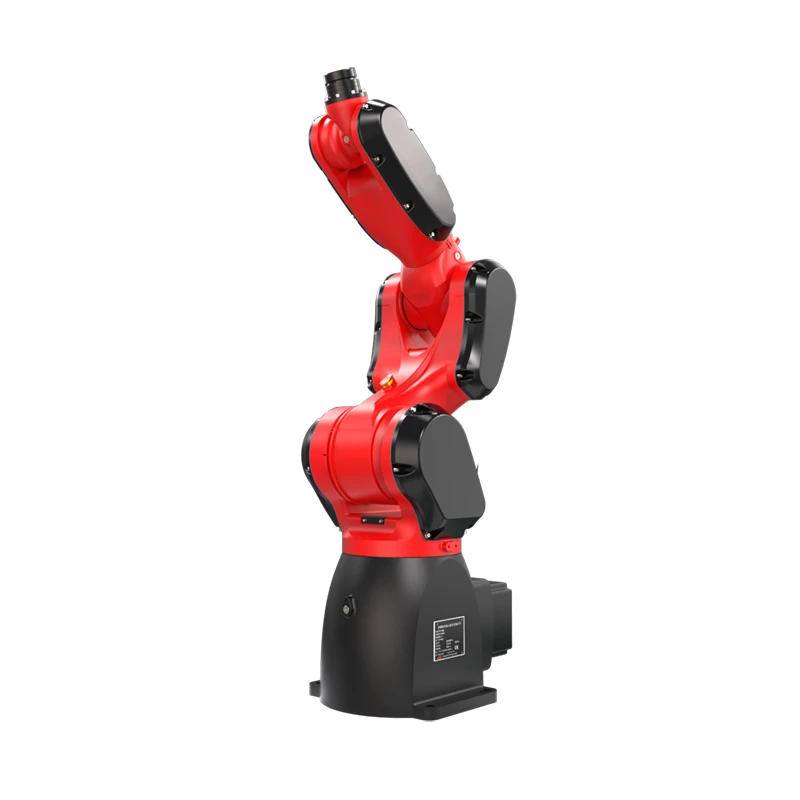
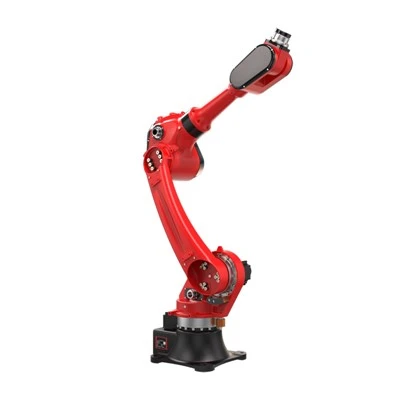
Heavy-Duty "Juggernaut"-40 kg Class
Rapid deployment is its killer feature: pre-assembled, requiring only power and gas connections on-site; speeds of 8–14 boxes/minute ensure "zero waiting time" on production lines. Full coverage of 1400 mm × 1400 mm pallets, even handling mixed material stacking is no problem.
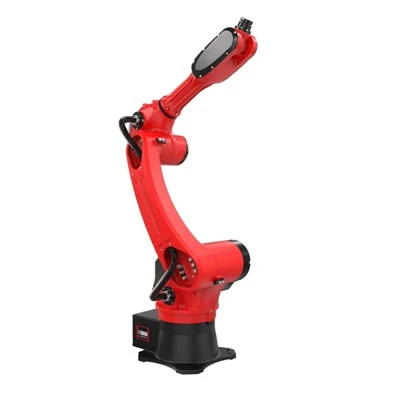
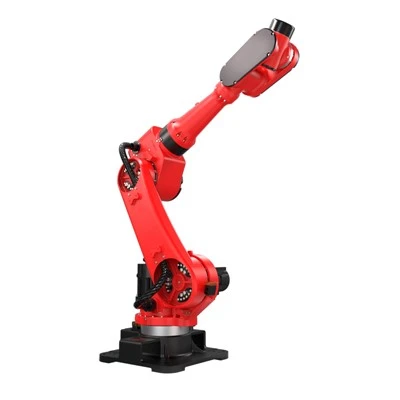
Precision Palletizing "Artist"-30 kg Class
Repeat positioning ±0.04 mm, directly reducing the collision rate of pharmaceutical, cosmetic, and electronic product outer boxes by an order of magnitude; 1600 mm working radius + 3.3–4.2 kW low power consumption, saving energy and reducing temperature rise.
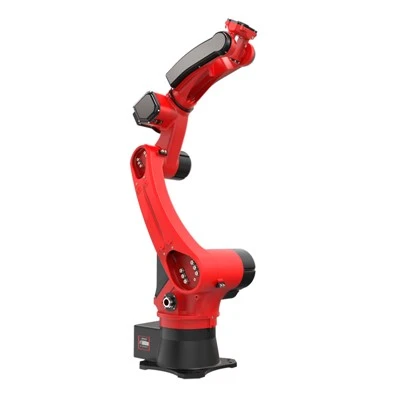
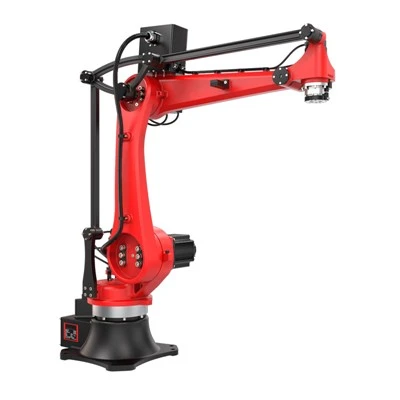
Narrow Space Survival "Mini-Cannon"-20 kg Class
Occupying only 1.4 m × 1.6 m, its lifting design allows for a stacking height of 2.4 m, enabling even older factories to accommodate this "robotic arm" without requiring extensive redevelopment.
3. Technical Foundation: Enabling Robots to "Think"
Rapid Deployment: Wizard-style interface; drag and drop to generate paths, allowing for deployment even with zero programming.
Multi-Interface Compatibility: Directly connects to mainstream conveyors, inkjet printers, and AGVs, making production line upgrades as simple as building with Lego.
Precision and Lifespan: Servo drive + reducer requires no maintenance for life; ten years of operation results in an error drift less than the thickness of an A4 sheet of paper.
Intelligent Sensing: With integrated vision or force control modules, the robot can identify tilted, dented, and abnormally shaped products, automatically adjusting its gripping strategy to prevent defects at the source.
4. Industry Applications: "Full-Scenario Coverage" from Food to Building Materials
The food industry demands high hygiene standards, so all contact surfaces between the robot body and the pallet are made of easy-to-clean materials. The building materials industry experiences high dust and impact, so the equipment is equipped with sealed dust collection and shock-resistant joints, ensuring rock-solid stability even in cement plants and fertilizer plants.
5. Three-Step Selection Method: Don't Let "High-Precision" Become "High Inventory"
First, Calculate the Requirements List
Weight, dimensions, speed, pallet type, workshop dimensions, and power interfaces are all essential. Treat the "requirements list" like a written interview; eliminate those who are missing items.
Then, Calculate the Total Life Cycle Cost
Don't just look at the equipment price tag. The real "hidden bomb" is the annual cost of energy consumption, spare parts, maintenance, and depreciation.
Finally, Consider the Service Radius
Choosing a supplier is like choosing a hospital-the closer they are to you, the more complete their spare parts, and the faster their response, the lower the downtime losses.
6. Future Trends: Flexibility + Intelligence + Digital Twin = The Next "Lighthouse Factory"
AI Vision + Force Control: Robots learn to grasp anything they need, adapting even to changes in packaging or shape.
Modular Reconfiguration: Joints, arms, and end effectors are plug-and-play like Lego bricks, enabling production line upgrades within two weeks – not science fiction.
Digital Twin Pre-launch: The stacking path is tested in a virtual world before deployment, ensuring success on the first power-on, saving on expensive downtime.
When collaborative palletizing robots shed their "heavy physical labor + high risk + low flexibility" labels, the palletizing process in manufacturing will truly enter a new decade of "lightweight operation." Choose the right model, calculate costs, and set up services; the next efficient and precise "mechanical transporter" awaits you at the end of the production line.