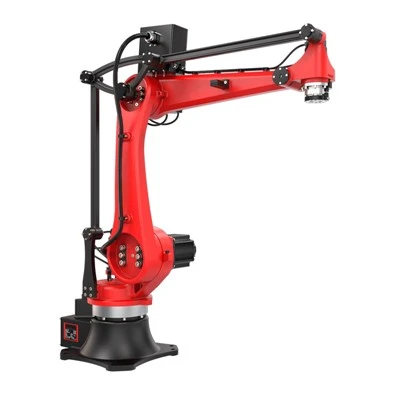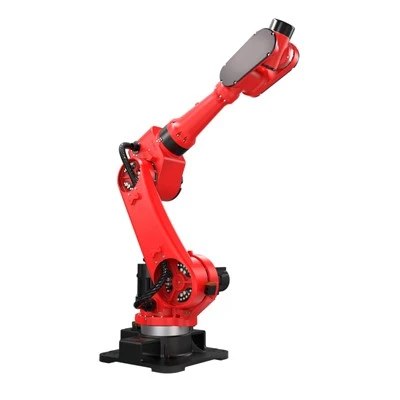


China is now the world's largest industrial robot market. According to the International Federation of Robotics (IFR), China installed approximately 295,000 industrial robots in 2024, accounting for 54% of global installations. Chinese manufacturers also captured 57% of their domestic market that year, marking an important shift in the competitive landscape.
For international buyers, however, choosing a Chinese industrial robot manufacturer should not come down to brand recognition or robot price alone. Payload, reach, process expertise, controller compatibility, integration capability, overseas service and spare parts support can have a much greater impact on the success of an automation project.
This guide compares 10 established Chinese industrial robot manufacturers based on their product portfolios, application strengths, engineering capabilities and suitability for international projects.
The list is intended as a buyer shortlist rather than a strict 1 to 10 ranking. The best manufacturer depends on your application, production environment and local service requirements.
Comparison of the Top 10 Chinese Industrial Robot Manufacturers
|
Manufacturer |
Main Strength |
Key Applications |
Best Fit for Buyers |
|
RBTIC |
Industrial robots combined with complete automation solutions |
Welding, palletizing, material handling, CNC machine tending, metal processing |
Overseas buyers looking for robot equipment plus project engineering and commissioning |
|
ESTUN |
Broad robot portfolio and integrated automation technology |
Automotive, welding, handling, palletizing, die casting, general manufacturing |
Large factories requiring broad payload coverage and scalable automation platforms |
|
EFORT |
Strong welding, painting and automotive integration capability |
Automotive, body in white, welding, painting, handling |
Manufacturers with process intensive automotive or surface treatment projects |
|
SIASUN |
Broad robotics portfolio and system integration capability |
Automotive, electronics, welding, logistics, assembly |
Buyers requiring robots combined with larger intelligent manufacturing systems |
|
Inovance |
Robotics integrated with motion control and automation components |
3C electronics, lithium batteries, photovoltaics, display manufacturing |
High speed and precision automation projects |
|
STEP |
Motion control, robotics, semiconductor and automation platforms |
Electronics, welding, machine tending, semiconductor, palletizing |
Factories looking for integrated motion control and robot technologies |
|
GSK CNC |
CNC systems combined with industrial robots |
CNC machine tending, polishing, stamping, palletizing |
Machine shops and production lines requiring close CNC and robot coordination |
|
Peitian Robot |
Broad industrial robot range with in house control technologies |
Handling, machining, welding, assembly, general automation |
Buyers looking for a broad Chinese robot platform across several payload classes |
|
Turin Robot |
Application focused robots for welding and general automation |
Welding, grinding, CNC tending, material handling, palletizing |
Cost conscious manufacturers with conventional automation applications |
|
EVST |
Robot equipment combined with welding and automation accessories |
Welding, handling, palletizing, painting, bending, polishing |
International buyers seeking flexible robot and workstation packages |

Top 10 Chinese Industrial Robot Manufacturers: Company Profiles
A comparison table is useful for initial screening, but it does not explain why one manufacturer may be better suited to a project than another. The profiles below focus on product scope, differentiation and the questions international buyers should consider before adding each company to a supplier shortlist.
RBTIC
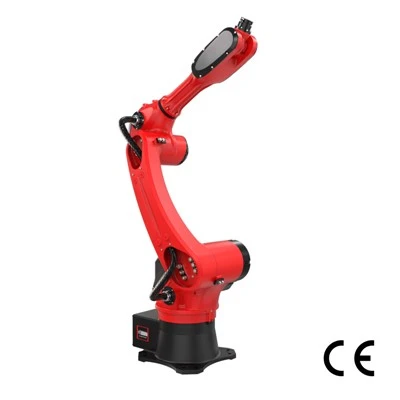
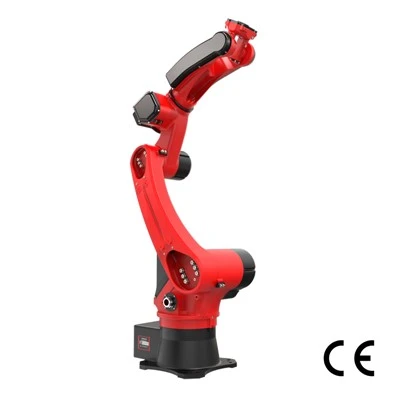
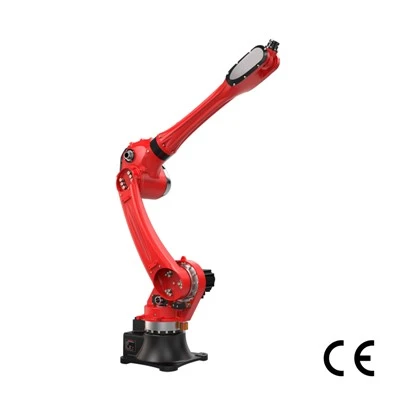
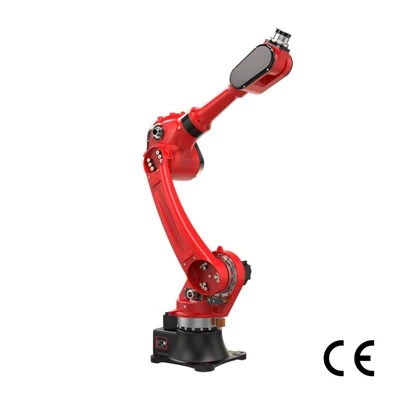
RBTIC, operated by Robotic Technology (GD) Co., Ltd., focuses on industrial robots and complete automation solutions. Its manufacturing base covers approximately 12,000 square meters, it has delivered more than 1,000 automation projects and its robots and automation systems have reached more than 40 countries and regions. Its application portfolio is centered on practical factory automation, including robotic welding, material handling, palletizing, CNC machine tending, metal processing and related robot workstations.
RBTIC is positioned less as a robot arm only supplier and more as an automation project provider. This can be useful for overseas buyers that need the robot, tooling, process equipment, electrical controls, commissioning and engineering support from one supplier.
It is worth considering for small and medium sized manufacturers that want to source a complete automation project from China rather than coordinate several independent suppliers. Typical projects include welding cells, CNC tending systems, palletizing lines and material handling automation.
ESTUN
Founded in 1993, ESTUN has developed from a motion control company into one of China's largest industrial automation and robotics groups. Its current portfolio includes approximately 95 industrial robot models covering payloads from 3 kg to 1,200 kg, including SCARA robots, collaborative robots, general purpose articulated robots and specialized models for welding, palletizing, press handling, clean environments and other applications.
ESTUN also develops automation components such as servo systems, motion controllers and CNC systems. The company reports 75 service locations worldwide and operations covering China, Europe, Southeast Asia and the Americas.
Its strongest differentiator is the breadth of the automation stack. ESTUN is not limited to robot mechanics; it also has substantial capabilities in servo technology, motion control and intelligent manufacturing systems.
This makes the company particularly relevant where robots need to become part of a larger production platform rather than operate as isolated equipment.
EFORT
EFORT Intelligent Robot has developed a broad industrial robot platform covering SCARA, small and medium articulated robots, palletizers, high payload robots, welding robots and painting robots. Its group also has system integration expertise in welding, painting and automotive manufacturing.
A notable part of EFORT's positioning is its European industrial presence. The group operates through companies and subsidiaries in countries including Italy, Germany, France and Poland, alongside operations in other international markets.
EFORT stands out from many Chinese robot suppliers because its overseas expansion includes established European automation and engineering businesses rather than relying only on export distributors. Its strengths are particularly relevant to applications where process engineering is as important as the robot itself, such as painting, arc welding and automotive body production.
SIASUN
SIASUN is one of the best established Chinese robotics companies and offers industrial robots, collaborative robots, mobile robots and broader intelligent manufacturing systems.
The company states that its products have been exported to more than 40 countries and regions and that it has served more than 4,000 international customers. It also maintains subsidiaries or regional operations in markets including Germany, Singapore, Thailand, Malaysia, Japan and Mexico. Beyond robot arms, SIASUN provides automation systems for areas such as welding, assembly and intralogistics.
The main distinction is the breadth of the robotics ecosystem. SIASUN can participate in projects involving stationary industrial robots, mobile robotics, production logistics and complete automation systems. That makes it particularly relevant to factories undertaking larger digital manufacturing or material flow projects.
Inovance
Inovance was founded in 2003 and has developed into a major industrial automation group with more than 30,000 employees and operations in Europe and Asia. Its broader automation portfolio includes drives, motion control, motors, controllers and precision machinery technologies. Its robot portfolio includes SCARA robots and articulated robots with six axes. Inovance focuses particularly on applications in 3C electronics, lithium battery manufacturing, photovoltaics, display production and related precision automation sectors. The company also offers heavy load SCARA models. For example, its IR S60 and GS60 series reaches payloads up to 60 kg.
Inovance's major advantage is the connection between robotics and its broader industrial automation platform. A factory using Inovance control, motion and drive products may be able to build a more integrated automation architecture around a common supplier ecosystem.
Its robot development also has a clear emphasis on speed, compact installation and electronics related manufacturing.
STEP
Shanghai STEP Electric was founded in 1995 and is active in motion control, industrial automation and robotics. Its robot product line includes articulated industrial robots, SCARA robots, collaborative robots, semiconductor robots, control systems, programming software and machine vision technologies.
STEP states that its service network covers more than 110 countries and regions. Its current SCARA range includes models with payloads up to 50 kg, while its collaborative robot portfolio covers payloads from 3 kg to 30 kg. It also develops robot products for semiconductor wafer handling.
STEP combines robotics with a long history in motion control and industrial control technologies.
Its semiconductor robotics, SCARA products and machine vision capabilities also give the company a broader technology mix than manufacturers focused mainly on conventional articulated arms.
GSK CNC
Guangzhou CNC Equipment, commonly known as GSK CNC, combines CNC control technology with industrial robots and factory automation equipment.
Its robot portfolio includes articulated RB series robots, SCARA models and palletizing robots. The RB family covers applications such as machine loading and unloading, polishing, material transfer and press automation. GSK's RMD palletizing range includes models with payloads from 120 kg to 300 kg.
The most obvious difference is GSK's CNC background. For machine shops and automated machining lines, the relationship between CNC controls, robot communication, automatic doors, chucks, fixtures and production logic can be more important than having the widest possible robot catalog. GSK therefore deserves attention when robot automation is closely connected to CNC equipment.
Peitian Robot
Beijing Peitian Technology develops industrial robots together with robot controllers, servo technologies and related automation products.Its current industrial robot portfolio spans multiple payload classes. Peitian states that its industrial robot range extends from approximately 3 kg to 280 kg, while product pages include models for light, medium and heavy applications. The company also reports exports to Europe, Southeast Asia and South Korea.Its product documentation continued to receive updates during 2026, including new light and heavy payload models.
Peitian's value proposition is based on a relatively broad industrial robot platform combined with internally developed control technologies.The product range allows buyers to evaluate the same manufacturer for light assembly, general handling and heavier industrial applications.
Turin Robot
Shanghai Turin Smart Robot develops articulated robots, SCARA robots and automation solutions for applications including welding, stamping, grinding, material handling, inspection, assembly, palletizing and CNC machining. Its product catalog includes compact articulated robots and SCARA models as well as dedicated welding and palletizing solutions. For example, current articulated products include models such as a 7 kg robot with 960 mm reach, while SCARA products cover several payload and reach combinations.
Turin's positioning is strongly application oriented.Rather than focusing only on flagship robot specifications, much of its product presentation connects robots with welding, machining, palletizing and other conventional factory automation tasks. This can make the company easier to evaluate for buyers with a clearly defined process.
EVST
EVST supplies industrial robots and automation equipment for welding, painting, handling, palletizing, bending and polishing. Its product portfolio includes articulated robots, SCARA robots, welding positioners, robot tracks and related automation hardware. The company states that its QJAR robot systems support offline programming and common industrial communication interfaces. It also reports ISO 9001:2015 quality management certification and CE testing for QJAR robots through SGS.
EVST is positioned toward buyers that want to combine a robot with supporting automation equipment rather than source every element separately.
How to Evaluate Chinese Industrial Robot Manufacturers
Once a shortlist has been established, the next step is to compare manufacturers against the actual production process. The goal is not to select the robot with the highest specification. It is to select a robot and supplier that can deliver the required performance with acceptable integration and lifecycle risk.
Product and Technology Fit
Five technical parameters usually determine the initial robot selection:
|
Selection Item |
What to Evaluate |
|
Payload |
Total weight of the workpiece, gripper, cables, sensors and any wrist mounted equipment |
|
Reach |
Actual robot path, working positions, joint limits and equipment interference |
|
Repeatability |
Accuracy required by welding, assembly, insertion, dispensing or handling |
|
Controller |
PLC communication, industrial protocols, safety functions and coordinated motion |
|
Mechanical Platform |
Reliability, protection rating, wrist capacity and suitability for the operating environment |
Payload should include everything carried by the robot, not only the workpiece. Center of gravity and inertia also become important when the load is large or the robot moves at high speed.
Reach should be evaluated using the real workstation layout rather than the maximum reach shown in a catalog.
Application Experience
A mechanically capable robot does not automatically make a capable automation system.
Process experience becomes particularly important in welding, machine tending, palletizing and other applications where the robot must coordinate with additional equipment.
|
Application |
What Matters Most |
|
Robotic Welding |
Welding power source integration, torch package, seam tracking, positioners, process parameters and path planning |
|
Palletizing |
Gripper design, pallet pattern, conveyor communication, stacking height and real cycle time |
|
CNC Machine Tending |
CNC communication, automatic doors, chuck control, fixtures, part orientation and fault recovery |
|
Electronics Automation |
Robot speed, repeatability, vision, dispensing, screw fastening, feeding systems and traceability |
|
Painting and Hazardous Areas |
Environment rating, applicable certification, ventilation, electrical design and complete cell safety |
Project references should be similar in process complexity, not simply from the same industry.
A supplier that has completed ten conventional handling projects is not automatically experienced in robotic welding, even if both projects use the same robot arm.
Export Documentation and Compliance
For international projects, certification should be treated at both robot level and workstation level.
Documentation may include:
Applicable CE documentation
Declaration of conformity
Test reports
Technical files
Operating manuals
Electrical drawings
Risk assessment documentation
Export documentation required by the destination market
Certification for an industrial robot does not automatically mean that a completed robot cell complies with every requirement of the destination market.
Safety fencing, interlocks, light curtains, safety PLCs, external axes, fixtures and integration work can all affect the compliance of the final system.
Integration and Software
A production robot normally communicates with several external systems:
PLCs
Machine vision
End of arm tooling
CNC machines
Welding equipment
Conveyors
Safety devices
Factory networks
Before placing an order, the interface architecture should already be clear enough to establish which supplier is responsible for each connection.
For more complex projects, offline programming, simulation and production data integration may also affect the choice of robot platform.
Service, Spare Parts and Total Cost of Ownership
Robot price is only one part of an automation project.
A practical cost comparison should include:
|
Cost Area |
Examples |
|
Robot Equipment |
Robot arm, controller and standard software |
|
Integration |
Mechanical design, electrical work, PLC programming and peripherals |
|
Process Engineering |
Welding development, cycle optimization and application programming |
|
Commissioning |
Installation, debugging, trial production and acceptance |
|
Maintenance |
Spare parts, preventive maintenance and repairs |
|
Production Risk |
Downtime caused by faults or delayed technical support |
|
Long Term Support |
Training, remote diagnostics, software updates and field service |
A lower robot purchase price can lose its advantage quickly if a minor failure results in several days of production downtime.
For this reason, spare parts location, technical response time and the capability of the local service team should be evaluated before the purchase order is issued.
Which Chinese Industrial Robot Manufacturer Is Best for Your Application?
There is no single manufacturer that is best for every factory.
A more practical approach is to select suppliers according to the process that creates the greatest engineering risk.
|
Application |
Manufacturers Worth Evaluating |
Main Selection Focus |
|
Robotic Welding |
RBTIC, ESTUN, EFORT, Turin, EVST |
Welding process package, seam tracking, positioners, power source integration and commissioning experience |
|
Palletizing and Handling |
RBTIC, ESTUN, SIASUN, GSK, Peitian, EVST |
Payload, reach, cycle time, gripper design and conveyor integration |
|
CNC Machine Tending |
RBTIC, GSK, Peitian, Turin, STEP |
CNC communication, doors, chuck control, fixtures and fault recovery |
|
3C and Electronics |
Inovance, STEP, SIASUN, ESTUN |
SCARA speed, repeatability, machine vision, dispensing and production data integration |
|
Automotive Automation |
ESTUN, EFORT, SIASUN |
Heavy payload capability, welding expertise, system integration and large project delivery |
|
Painting and Surface Treatment |
EFORT, EVST |
Process expertise, hazardous environment design and complete system compliance |
|
Large Integrated Automation Projects |
ESTUN, SIASUN, EFORT, STEP |
Engineering organization, software ecosystem, global delivery and service infrastructure |
|
Export Oriented SME Projects |
RBTIC, Turin, EVST, Peitian |
Flexible engineering, application fit, export documentation and service response |
This table should be used as an initial sourcing guide rather than a substitute for technical evaluation.
Two manufacturers offering robots with similar payload and reach can still deliver very different results once tooling, process software, PLC integration, commissioning and service are included.
Procuring an Export Ready Chinese Robot Production Line
International sourcing becomes more complex when the purchase includes a complete workstation or production line rather than a standalone robot.
In these projects, buyers should define responsibility for the complete system before production begins.
A typical automation package may include:
Industrial robot
Robot controller
End of arm tooling
Fixtures
Welding or process equipment
Machine vision
PLC and electrical controls
Safety system
External axes or robot tracks
Installation and commissioning
Training
Technical documentation
Spare parts
The strongest supplier is therefore not always the company with the most advanced robot arm. For complete projects, engineering coordination and accountability can be equally important. RBTIC, for example, positions itself as both an industrial robot manufacturer and an automation solution provider, with projects delivered to more than 40 countries and regions. Its offering includes robot equipment as well as integration, commissioning and overseas technical support.
Ready to Automate Your Production?
Share your workpiece information, production process, cycle time and automation requirements with our engineering team.
RBTIC can evaluate robot selection, tooling, workstation layout and automation requirements and provide a customized project proposal and quotation.
FAQ