
Fundamentals of Kinematics and Dynamics
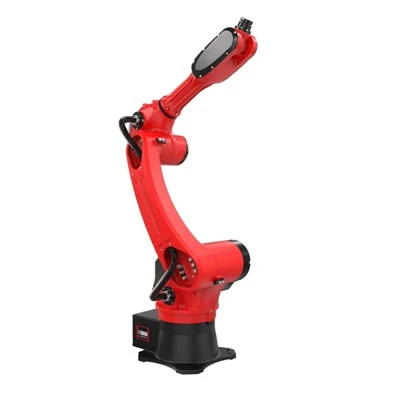
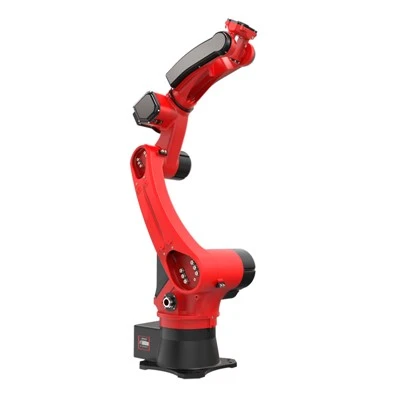
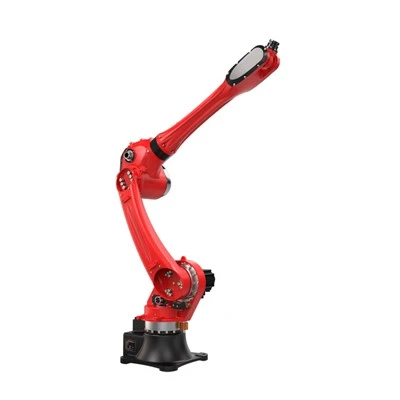
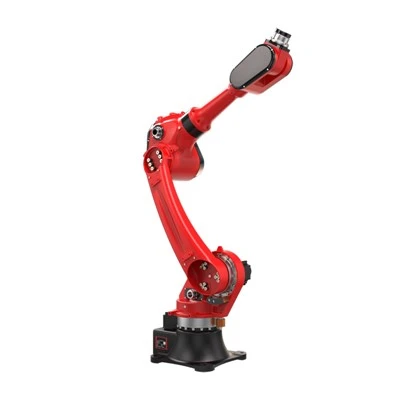
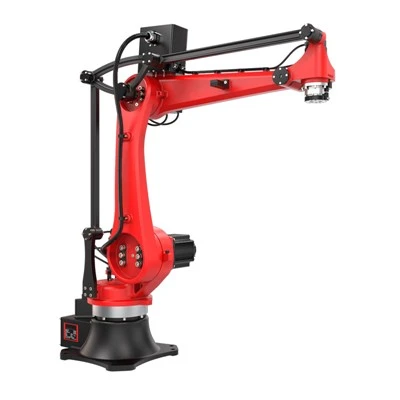
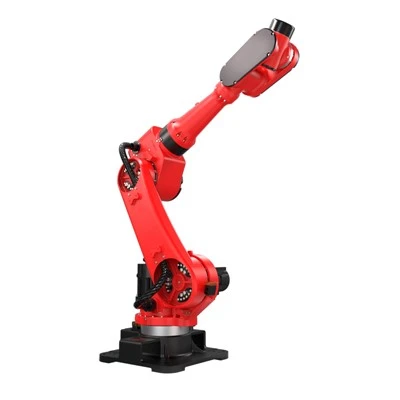
Kinematics and dynamics form the theoretical foundation for precise motion control of industrial robots. Kinematics primarily studies the geometric relationships between robot joint variables and end effector poses, describing and solving for the robot's spatial position and orientation by establishing forward and inverse kinematic models. Dynamics focuses on the relationships between forces, torques, and motion states during robot movement, providing a theoretical basis for drive control and load analysis.
In industrial robot applications, kinematic models are used for trajectory planning and posture control, forming the foundation for automated operations. Through reasonable mechanism design and parametric modeling, the controllability and stability of robot motion can be improved. Dynamic analysis helps evaluate the robot's performance under high-speed operation and varying load conditions, providing support for control strategy design and mechanical structure optimization.
Control Systems and Trajectory Planning
The control system is the core of automated operation in industrial robots. Its main task is to generate motion commands based on operational requirements and coordinate the corresponding actions of each joint. Industrial robot control systems typically employ multi-axis cooperative control, uniformly scheduling position, velocity, and acceleration to ensure smoothness and accuracy of the motion process.
Trajectory planning is a key technology in control systems. Its goal is to generate reasonable motion paths and time patterns for robots while meeting process requirements and mechanical constraints. Trajectory planning needs to comprehensively consider factors such as joint limits, motion smoothness, and operational efficiency to avoid shock, vibration, or collision problems. In practical industrial applications, the results of trajectory planning directly affect production cycle time and processing quality, making it an important aspect of evaluating industrial robot performance.
Sensing and Perception Technologies
Sensing and perception technologies provide industrial robots with the ability to acquire information about their own state and the external environment, providing crucial support for achieving precise control and adapting to complex working conditions. Common sensing technologies include position and velocity sensing, force and torque sensing, and vision sensing, used for real-time feedback on robot motion status and the characteristics of the workpiece.
By introducing sensor information, industrial robots can, to a certain extent, perceive and compensate for workpiece position deviations, assembly errors, or external interference, improving operational accuracy and reliability. With the development of visual recognition and multi-sensor information fusion technologies, the adaptability of industrial robots in complex environments is constantly increasing, and their application scenarios are gradually expanding from fixed workstations to more flexible and varied production tasks.
Safety and Collaboration Technologies
Safety technology is a crucial safeguard in the application of industrial robots. Due to the high speed and heavy load characteristics of industrial robots, their operation may pose potential risks to personnel and equipment. Therefore, safety protection, control logic, and management measures are necessary to reduce the probability of accidents during design and application. Common safety technologies include emergency stop, area protection, and speed and force limiting to ensure the safety of personnel and equipment.
In recent years, with the increasing demand for human-robot collaboration, industrial robots have continuously developed in terms of safety control and collaboration technologies. By introducing force control, collision detection, and safety monitoring mechanisms, industrial robots can collaborate with humans under limited conditions, expanding their application scope in assembly, inspection, and other scenarios. Advances in safety and collaboration technologies enable industrial robots to better meet the dual requirements of flexibility and safety in modern manufacturing while maintaining production efficiency.