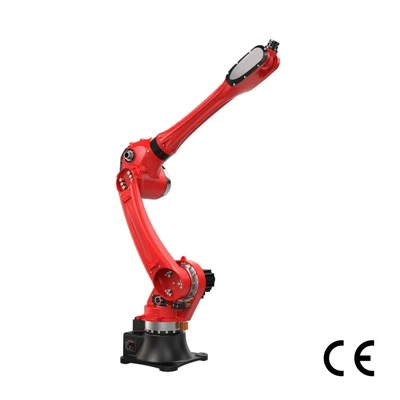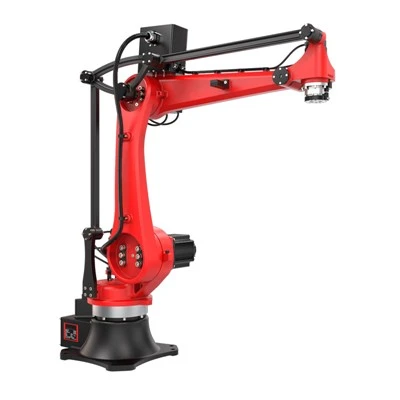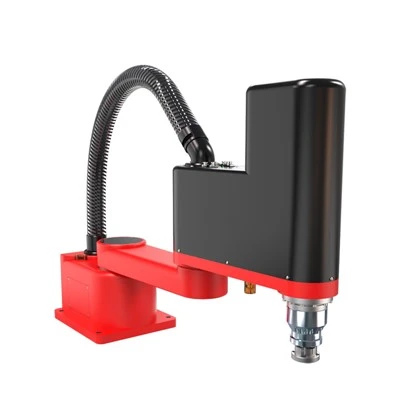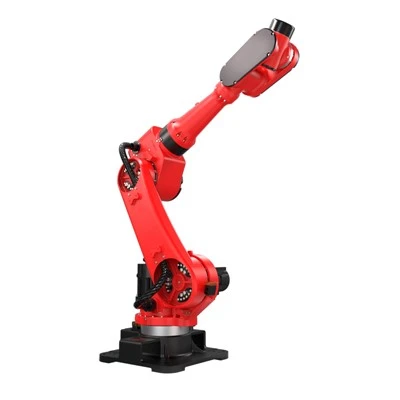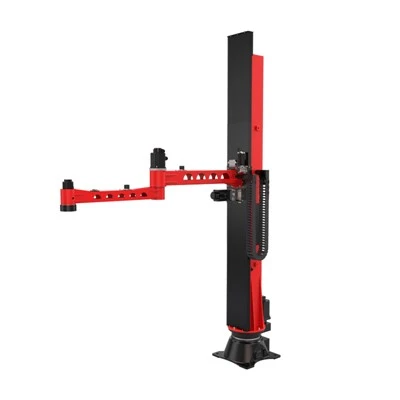


Calibration is a critical process in ensuring the precision and accuracy of a CNC robot arm. As a supplier of high - quality CNC Robot Arm, we understand the significance of proper calibration methods. This blog aims to explore the various calibration methods for a CNC robot arm, providing in - depth knowledge to our potential customers and industry enthusiasts.
1. Geometric Calibration
Geometric calibration is one of the most fundamental calibration methods for a CNC robot arm. It focuses on determining the geometric parameters of the robot's kinematic model. These parameters include link lengths, joint offsets, and joint angles. By accurately measuring these values, we can reduce the errors caused by manufacturing tolerances and mechanical wear.
The main steps in geometric calibration usually involve using a measurement device, such as a laser tracker or a coordinate measuring machine (CMM). These devices can precisely measure the position of specific points on the robot arm in space. By comparing the measured positions with the theoretical positions calculated from the kinematic model, we can identify the errors in the geometric parameters. Then, through mathematical algorithms, we can adjust these parameters to minimize the position errors.
For example, if the measured position of the robot's end - effector is different from the expected position, it could be due to an incorrect link length. By adjusting the link length parameter in the kinematic model according to the error analysis, we can improve the positioning accuracy of the robot arm.
2. Kinematic Calibration
Kinematic calibration takes geometric calibration a step further. In addition to considering the geometric parameters, it also takes into account the dynamic characteristics of the robot arm, such as joint compliance and backlash. These dynamic factors can cause additional errors during the robot's motion, which are not easily addressed by geometric calibration alone.
To perform kinematic calibration, advanced measurement techniques and algorithms are required. One approach is to use force sensors to measure the forces and torques at the joints. By analyzing the relationship between the applied forces and the resulting joint displacements, we can model the joint compliance. Another important aspect is to measure and compensate for backlash. Backlash occurs when there is play in the gear or transmission system of the joint, causing a delay or inaccuracy in the motion.
For instance, in a CNC Tending Robot, which needs to perform repeated and precise loading and unloading tasks, kinematic calibration is essential to ensure that the robot can accurately pick up and place workpieces, even under different loads and motion conditions.
3. Calibration Using External References
External reference - based calibration methods rely on external fixtures or landmarks with known positions and orientations. These references can be used to calibrate the absolute position and orientation of the robot arm in the workspace.
One common way is to use a calibration plate with precisely marked features. The robot arm is programmed to touch specific points on the calibration plate, and the measured positions are compared with the known positions of these points. This process helps to correct any errors in the robot's coordinate system and improve the overall accuracy of the robot's movement in the workspace.
Another approach is to use visual markers or sensors. For example, a camera can be installed in the workspace to detect the position of visual markers on the robot arm. By tracking the markers, the position and orientation of the robot arm can be determined accurately, and any calibration errors can be corrected. This method is particularly useful in applications where the robot needs to interact with other objects in a shared workspace, such as in a Machine Tending Robot scenario.
4. Sensor - Based Calibration
In modern CNC robot arms, various sensors are often used to improve the robot's performance. Sensor - based calibration methods use these sensors to calibrate the robot's position, orientation, and other parameters.
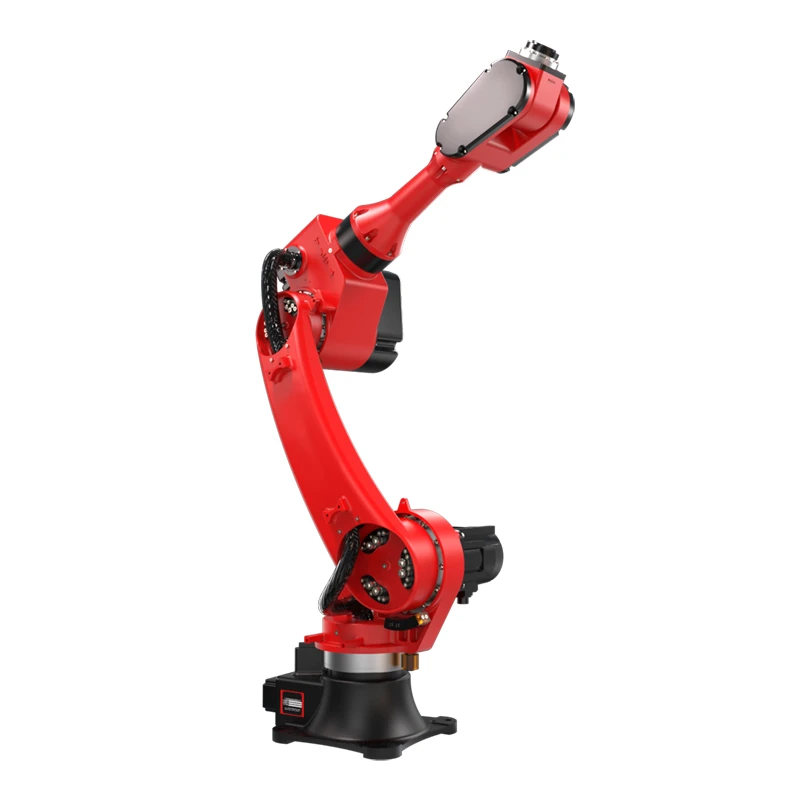
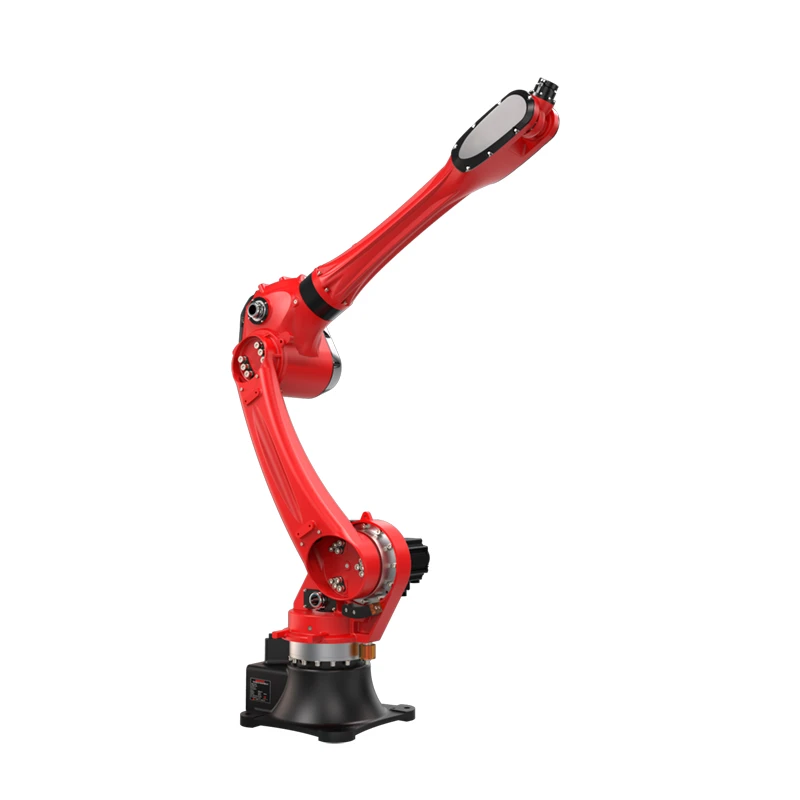
For example, inertial measurement units (IMUs) can be used to measure the robot's acceleration and angular velocity. By integrating the data from the IMUs, we can estimate the robot's position and orientation in real - time. However, IMUs are subject to drift over time, so calibration is required to correct the accumulated errors. This can be done by comparing the IMU - based measurements with other more accurate measurement methods, such as laser tracking.
Force sensors can also be used for calibration. In a CNC Machine Tending Robot, when the robot arm interacts with the workpiece or the machine tool, the force sensors can detect the contact forces. These forces can be used to calibrate the robot's position and orientation to ensure a proper and safe interaction.
5. Self - Calibration
Self - calibration is an emerging and promising calibration method for CNC robot arms. It allows the robot to calibrate itself without the need for external measurement devices or complex setups.
One self - calibration approach uses redundant information in the robot's joint sensors. For example, if a robot has more joints than are strictly necessary for a particular task, the extra joint sensors can provide additional information for calibration. By analyzing the relationships between the joint sensor readings and the robot's motion, the robot can detect and correct any internal errors.
Another aspect of self - calibration is the use of machine learning algorithms. The robot can collect data during its normal operation, such as the joint angles, positions, and forces, and use machine learning models to learn the relationship between these data and the calibration errors. Over time, the robot can continuously improve its calibration accuracy through self - learning.
Why Calibration Matters for Your CNC Robot Arm
Proper calibration has several significant benefits for CNC robot arms. Firstly, it improves the accuracy and precision of the robot's movement. In applications such as machining, welding, and assembly, high precision is crucial to ensure the quality of the final product. A well - calibrated robot arm can reduce the dimensional errors of the workpieces, resulting in higher - quality products.
Secondly, calibration enhances the repeatability of the robot's motion. In mass production scenarios, the robot needs to perform the same task repeatedly with high consistency. Calibration helps to ensure that the robot can achieve the same position and orientation every time it performs a task, reducing the variability in the production process.
Finally, calibration can increase the reliability and lifespan of the robot arm. By reducing the mechanical stress caused by inaccurate motion, calibration can prevent premature wear and tear of the robot's components, leading to lower maintenance costs and longer service life.
Contact Us for Your CNC Robot Arm Needs
As a professional supplier of CNC Robot Arm, we are committed to providing our customers with high - quality products and comprehensive calibration services. Our team of experts has extensive experience in calibrating CNC robot arms using various methods, ensuring that your robot can achieve the best performance.
If you are interested in our products or need more information about calibration methods for CNC robot arms, or if you want to discuss a potential purchase, please feel free to reach out to us. We are looking forward to working with you to meet your industrial automation needs. Whether you need a CNC Tending Robot, a Machine Tending Robot, or a Loading and Unloading Robot, we have the right solution for you.
References
- Siciliano, Bruno, and Oussama Khatib, eds. Springer Handbook of Robotics. Springer, 2016.
- Craig, John J. Introduction to Robotics: Mechanics and Control. Pearson, 2009.
- Spong, Mark W., Seth Hutchinson, and M. Vidyasagar. Robot Modeling and Control. Wiley, 2006.