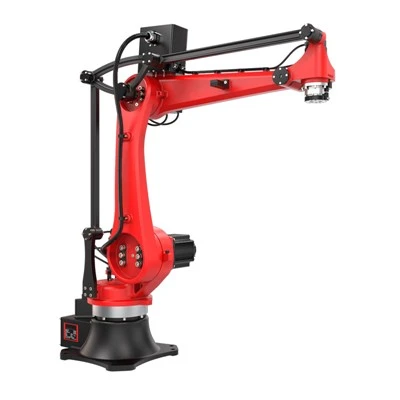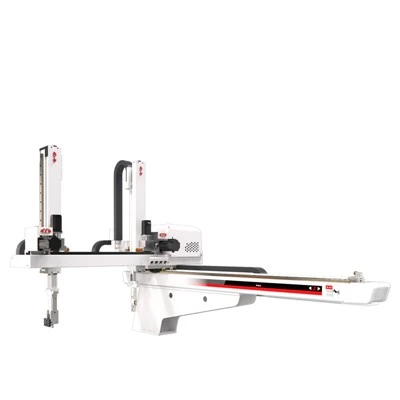


Hey there! As a supplier of welding robots, I often get asked about how these nifty machines ensure consistent weld strength. It's a crucial question, especially in industries where the quality of welds can make or break a product. So, let's dive right in and explore the key factors that contribute to maintaining that consistent weld strength.
Precise Programming and Control
One of the primary ways a welding robot ensures consistent weld strength is through precise programming and control. Unlike human welders, robots don't get tired, distracted, or make mistakes due to fatigue. They follow a pre - programmed set of instructions to the letter.
We use advanced software to program our Automatic Welding Robot. This software allows us to define every aspect of the welding process, from the speed of the welding torch to the amount of current and voltage applied. For example, we can set the exact travel speed of the torch along the weld joint. If the travel speed is too fast, the weld might not penetrate deeply enough, resulting in a weak joint. On the other hand, if it's too slow, the metal can overheat, causing distortion and a change in the mechanical properties of the weld.
The control system of the robot also monitors and adjusts these parameters in real - time. If there's a slight variation in the material thickness or the joint geometry, the robot can make small adjustments to ensure that the weld quality remains consistent. This level of precision is hard to achieve with manual welding, making robots a great choice for applications where consistent weld strength is a must.
High - Quality Sensors
Another important factor is the use of high - quality sensors. Our Welding Industrial Robot is equipped with a variety of sensors that help it adapt to different welding conditions.
For instance, arc sensors can detect the distance between the welding torch and the workpiece. If the distance changes due to uneven surfaces or part misalignment, the sensor sends a signal to the robot's control system, which then adjusts the position of the torch to maintain the correct arc length. A consistent arc length is essential for a stable welding process and strong welds.
Laser sensors are also used to measure the joint width and depth. This information is used to adjust the welding parameters such as the amount of filler metal and the welding speed. By accurately measuring the joint dimensions, the robot can ensure that the weld fills the joint properly and provides the required strength.
Repetitive Motion and Consistency
Robots are great at performing repetitive tasks with high accuracy. In welding, this means that every weld is made in the same way, over and over again. Whether you're welding thousands of parts or just a few, the robot will produce welds with the same strength and quality.
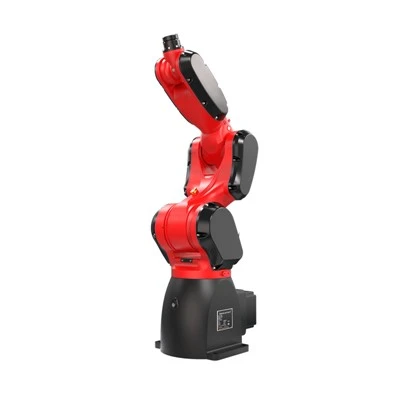
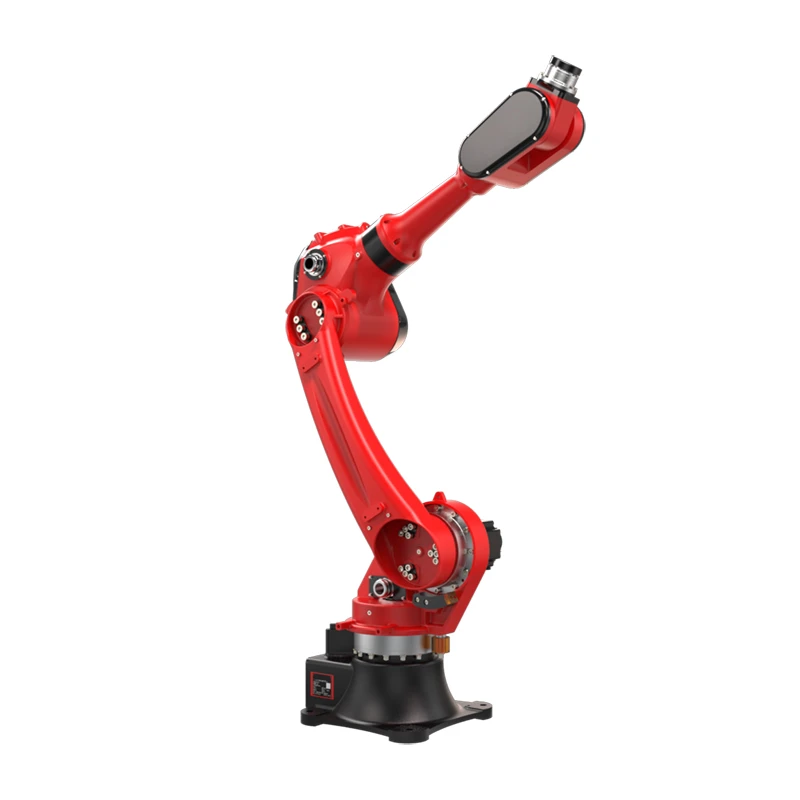
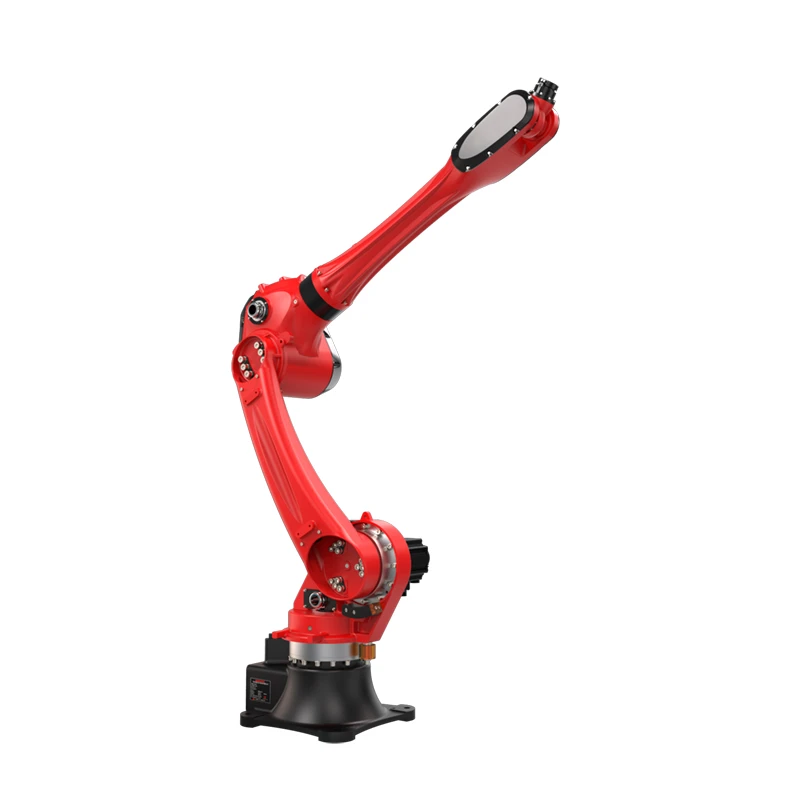
Our 6 - axis Welding Robot has six degrees of freedom, which allows it to reach different angles and positions with ease. This flexibility enables it to weld complex joints consistently. The robot's arm moves smoothly and precisely, following the programmed path. This consistent motion ensures that the heat input and the distribution of the filler metal are uniform across the weld, resulting in a strong and reliable joint.
Material Handling and Preparation
Proper material handling and preparation are also crucial for consistent weld strength. Our Robotic Arm for Welding can be integrated with material handling systems to ensure that the workpieces are properly positioned and clamped before welding.
Before welding, the surfaces of the workpieces need to be clean and free of contaminants such as oil, rust, and dirt. The robot can be programmed to perform pre - welding cleaning operations, such as grinding or brushing, to ensure a good surface for welding. Additionally, the workpieces need to be clamped firmly to prevent movement during the welding process. Any movement can cause the weld to be inconsistent and weak.
Quality Assurance and Monitoring
To further ensure consistent weld strength, we implement quality assurance and monitoring systems. During the welding process, the robot's control system continuously monitors various parameters such as the welding current, voltage, and wire feed speed. If any of these parameters deviate from the set values, the system can take corrective action immediately.
We also use non - destructive testing methods, such as ultrasonic testing and X - ray inspection, to check the quality of the welds after they are made. These tests can detect internal defects such as cracks and porosity, which can weaken the weld. By identifying and addressing these issues early, we can ensure that only high - quality welds are produced.
Training and Support
As a supplier, we also provide training and support to our customers. We understand that the proper operation and maintenance of the welding robot are essential for achieving consistent weld strength. Our team of experts can train your operators on how to program, operate, and maintain the robot.
We also offer technical support in case you encounter any problems. Whether it's a software issue or a mechanical problem, our support team is always ready to help you get your robot back up and running as quickly as possible.
Conclusion
In conclusion, a welding robot ensures consistent weld strength through a combination of precise programming, high - quality sensors, repetitive motion, proper material handling, quality assurance, and training and support. These features make our welding robots a reliable choice for industries that require high - quality and consistent welds.
If you're in the market for a welding robot and want to ensure consistent weld strength for your products, we'd love to have a chat with you. Contact us to discuss your specific needs and see how our welding robots can help you improve your production process.
References
- ASME Boiler and Pressure Vessel Code
- AWS Welding Handbook