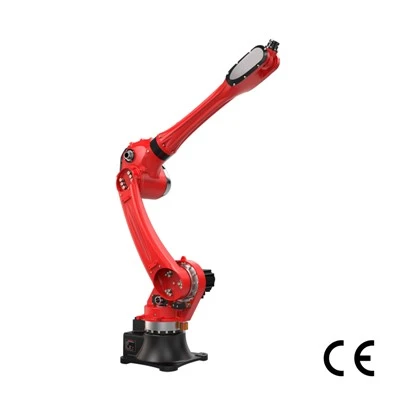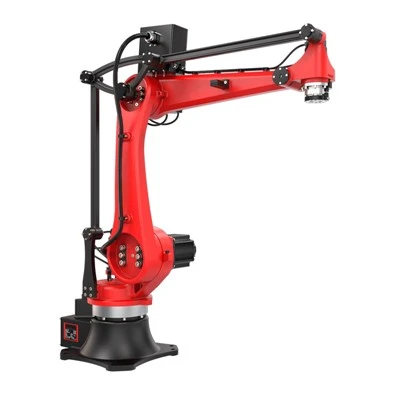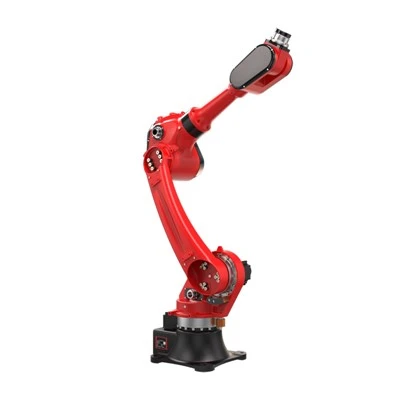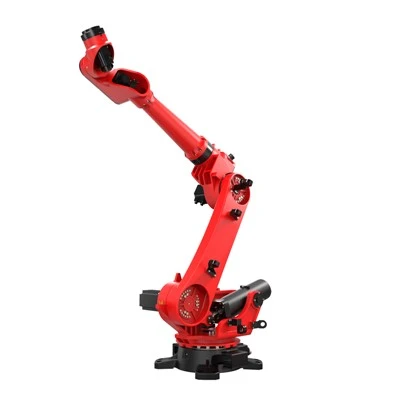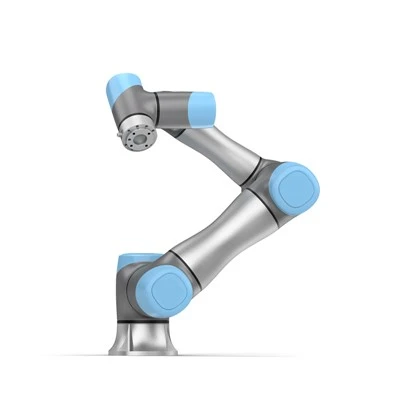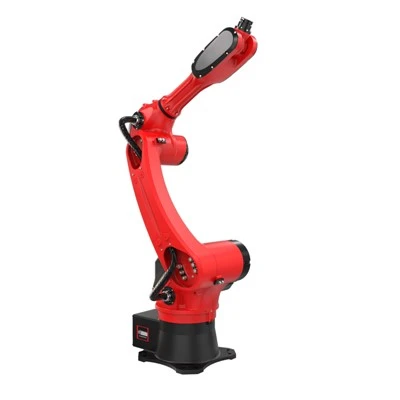


Palletizing robots have become an integral part of modern industrial operations, especially in warehouses and logistics centers where efficiency and precision are paramount. As a leading Palletizing Robot Arm supplier, we often encounter a critical question from our clients: How does a palletizing robot arm handle products with different densities? In this blog post, we will delve into the technical details and intelligent solutions that enable our palletizing robot arms to manage products of varying densities seamlessly.
Understanding the Challenges Posed by Different Product Densities
Product density is a crucial factor in the palletizing process. Different products possess distinct densities, which can significantly impact how a robot arm handles them. For instance, a product with high density might be heavier for its size, while a low - density product could be large but relatively light. This variance in density affects several aspects of the palletizing operation, such as gripping force, load distribution, and stacking stability.
When a palletizing robot arm encounters products with different densities, it must be able to adapt quickly to ensure that the products are handled safely and efficiently. Mishandling can lead to product damage, unstable stacks, and reduced overall productivity. For example, if the gripping force is too low for a high - density product, it may slip from the robot's gripper during the palletizing process, causing delays and potential damage to the product. Conversely, excessive gripping force on a low - density product could crush it, rendering it unusable.
Sensory Systems for Density Detection
Our Palletizing Robot Arm is equipped with advanced sensory systems to detect the density of products accurately. These sensors play a vital role in the initial assessment of the product, allowing the robot to adjust its handling parameters accordingly.
One of the key sensors used in our palletizing robot arms is the force - torque sensor. This sensor can measure the force exerted on the gripper when it picks up a product. By analyzing the force - torque data, the robot can estimate the mass and density of the product. For example, if a relatively small - sized product exerts a high force on the gripper, it indicates a high - density product. Based on this information, the robot can adjust its gripping force and movement speed to handle the product safely.
In addition to force - torque sensors, we also utilize vision sensors. Vision sensors can capture detailed information about the product's shape, size, and volume. By combining this visual data with the force - torque data, the robot arm can make a more accurate determination of the product's density. For example, if a vision sensor detects a large - volume product that exerts a low force on the gripper, it is likely a low - density product.
Adaptive Gripping Technologies
Once the palletizing robot arm has determined the density of the product, it needs to use an appropriate gripping technology to handle it. Our Palletizing Robot Arm is equipped with adaptive grippers that can adjust their gripping force and shape according to the product's density and characteristics.
For high - density products, the gripper can apply a stronger gripping force to ensure a secure hold. The grippers are designed with materials that provide high friction, which helps prevent the product from slipping. In some cases, the grippers may also have a more rigid structure to support the weight of the high - density product.

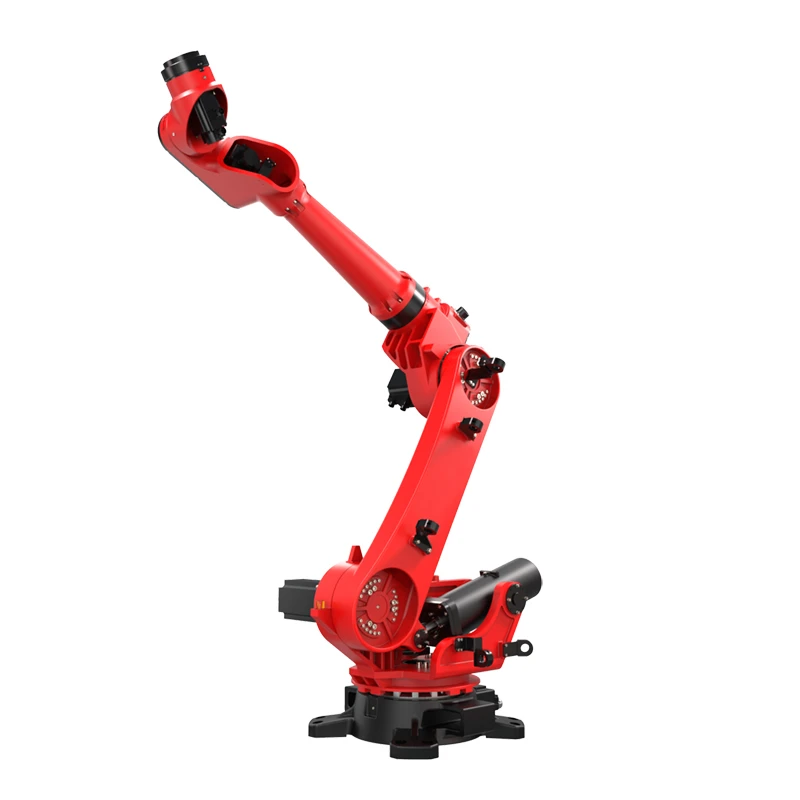
On the other hand, when handling low - density products, the gripper can reduce the gripping force to avoid crushing the product. The gripper may also have a more flexible or conforming design to adapt to the shape of the low - density product. For example, for products with irregular shapes or made of soft materials, the gripper can adjust its fingers to wrap around the product gently.
Intelligent Path Planning and Stacking Strategies
Product density also influences the path planning and stacking strategies of the palletizing robot arm. High - density products are often heavier and require more stable stacking patterns to prevent the pallet from toppling over. Our palletizing robot arm uses intelligent path planning algorithms that take into account the product's density and weight distribution.
For high - density products, the robot may stack them closer to the center of the pallet to ensure better stability. It may also use a more compact stacking pattern to maximize the use of space while maintaining the stack's integrity. In contrast, low - density products can be stacked in a more open pattern, as they are less likely to cause stability issues.
The robot arm's intelligent control system continuously monitors the status of the stack during the palletizing process. If the stack starts to become unstable due to the density differences between the products, the robot can make real - time adjustments to the stacking pattern or the position of the next product.
Customizable Solutions for Different Industries
As a Palletizing Robot Arm supplier, we understand that different industries have unique requirements when it comes to handling products with different densities. For example, the food and beverage industry often deals with products of various packaging sizes and densities, such as cans, bottles, and cartons. Our palletizing robot arms can be customized to meet the specific needs of this industry, ensuring gentle handling of fragile food products and efficient stacking of different packaging types.
In the manufacturing industry, products may have a wide range of densities, from small, high - density metal parts to large, low - density plastic components. Our robots can be equipped with different types of grippers and programmed with industry - specific stacking strategies to handle these products effectively.
We offer a variety of palletizing solutions, including Robotic Case Palletizer, Automatic Robotic Palletizer, Column Palletizer, Palletizing Robot Arm, and Automated Palletizing Robot. Each solution can be tailored to the specific density and handling requirements of the products in different industries.
Conclusion and Call to Action
In summary, our Palletizing Robot Arm is designed to handle products with different densities through a combination of advanced sensory systems, adaptive gripping technologies, intelligent path planning, and customizable solutions. These features ensure that the robot can safely and efficiently palletize products of various densities, reducing product damage and increasing productivity.
If you are looking for a reliable and efficient palletizing solution for your products with different densities, we are here to help. Our team of experts can work with you to understand your specific requirements and provide a customized palletizing solution. Contact us today to start a discussion about how our Palletizing Robot Arm can meet your needs and improve your industrial operations.
References
- "Industrial Robotics: Technology, Programming, and Applications" by Peter Corke
- "Automation and Robotics in Manufacturing" by Mikell P. Groover